
Pests and Diseases
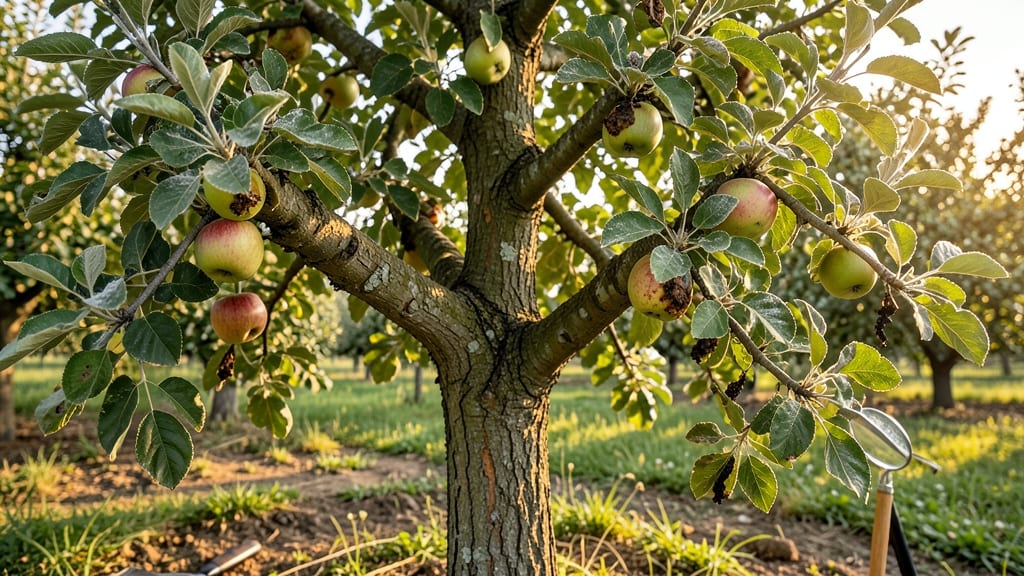
Your apple tree’s blackened leaves and chewed fruit aren’t just cosmetic—they’re a cry for help. 🌿 Apple tree pests and diseases turn lush canopies into battle zones, but organic solutions can bring them back to life without harsh chemicals.
I’ve saved my own orchard from codling moths and fire blight using these targeted, eco-friendly fixes.
The real culprits? Codling moths tunneling into fruit, apple scab turning leaves into unsightly sludge, and fire blight that blackens branches like a wildfire. These problems thrive when trees are stressed—whether from poor pruning, overwatering, or neglect.
The good news? Most can be prevented with simple, sustainable habits like proper spacing, copper sprays, and beneficial insect allies.
By the end of this guide, you’ll spot early warning signs (think: telltale webbing or oily leaf spots) and act fast with organic sprays, pruning techniques, and soil boosts.
Your tree won’t just survive—it’ll rebound with healthier foliage and bigger harvests next season. No more helplessly watching your orchard decline.
Whether you’re dealing with a single infestation or a full-blown crisis, these methods work for backyard growers and homesteaders alike. Let’s turn that blighted mess into a thriving, productive tree—naturally.
Root causes behind tree troubles
Apple trees, with their lush foliage and sweet fruit, are a gardener’s pride—but they’re also a magnet for pests and diseases. Understanding why these issues arise is the first step to protecting your orchard.
Below, we break down the science behind the most common culprits, from fungal spores to hungry insects, and how environmental factors create the perfect storm for trouble.
Fungal diseases like apple scab and powdery mildew thrive when moisture lingers on leaves and bark. Here’s why:
- Overhead Watering: Splashing water onto leaves (especially in the evening) spreads fungal spores like wildfire. Wet foliage provides the ideal breeding ground for pathogens.
- Poor Air Circulation: Dense planting or thick canopies trap humidity, slowing evaporation and keeping spores active longer.
- Cool, Wet Springs: Temperatures between 50–70°F (10–21°C) with frequent rain create the perfect fungal buffet. Spores germinate rapidly in these conditions.
Pro Tip: 🌡️ Use a hygrometer to monitor humidity—keep it below 70% to starve fungi of their favorite environment.
Pests like codling moths, apple maggots, and borers don’t attack healthy trees—they target stressed ones. Here’s how stress opens the door:
- Nutrient Deficiencies: Trees lacking nitrogen, potassium, or micronutrients (like boron) produce weak wood, making them easier for borers to penetrate.
- Drought or Overwatering: Both extremes disrupt the tree’s natural defenses. Drought weakens roots, while waterlogged soil suffocates roots, inviting pests like root weevils.
- Physical Damage: Cracks from hail, pruning wounds, or animal bites create entry points for bacteria (e.g., fire blight) and insects.
Pro Tip: 🔍 Inspect trees quarterly for early signs of stress—yellowing leaves, oozing sap, or sawdust-like frass (insect droppings).
Apple trees are sensitive to temperature swings and seasonal changes, which directly impact pest/disease cycles:
| Season | Risk Factor | Why It Happens |
|---|---|---|
| Spring | Early Blossoms + Rain | Blooms attract pollinators and fungal spores. Wet conditions turn petals into spore launchpads for apple scab. |
| Summer | Heatwaves + Drought | Stressed trees produce less resin (a natural pest repellent), making them vulnerable to borers and aphids. |
| Fall | Leaf Litter + Cool Nights | Decaying leaves harbor overwintering pests (e.g., woolly aphids) and fungal spores. |
Pro Tip: ✨ Time interventions right: Apply copper fungicides before bud break in spring, and prune in late winter to remove diseased wood before pests wake up.
Pests and diseases don’t disappear—they overwinter in your garden. Here’s how neglect fuels cycles:
- Mulch Piles: Old mulch, fallen fruit, and leaf litter become hiding spots for codling moth pupae and fire blight bacteria.
- Infected Tools: Pruners, saws, or loppers contaminated with Venturia inaequalis (apple scab) spread pathogens to healthy trees.
- Wildlife Vectors: Birds and rodents spread spores and eggs between trees. A single starling can carry thousands of codling moth eggs.
Pro Tip: 🧹 Clean up all debris in fall, disinfect tools with 70% alcohol, and remove mummified fruit (dried, shriveled apples) from the ground.
Fixing Apple Tree Troubles Naturally
Now that you know what’s attacking your apple tree, it’s time to roll up your sleeves and restore its health—without harsh chemicals. Below are targeted, organic solutions for the most common pests and diseases, paired with prevention tips to keep your tree thriving long-term.
Think of this as your green thumb’s battle plan!
**🔥 Cause: Venturia inaequalis (a fungus that thrives in wet, humid conditions) 🥘 Fix It:
1. Prune for Airflow 🌬️
- Remove infected leaves, twigs, and mummies (dried-up fruit) in late fall or early spring.
- Thin out dense branches** to improve sunlight and airflow—fungi love damp, shaded spots.
- Pro Tip: Sterilize pruners with rubbing alcohol between cuts to avoid spreading spores! ✨
2.
Copper Fungicide Spray 🛡️ - Use copper-based sprays (like Copper Soap or Fixed Copper) before bud break (late winter) and after harvest. - Reapply every 7–14 days during wet springs—consistency is key! - DIY Hack: Mix 1 tbsp baking soda + 1 tsp horticultural oil + 1 gallon water for a mild preventive spray. 💡
3. Mulch & Soil Care 🌱
- Apply 3–4 inches of organic mulch (straw or wood chips) to keep soil moist but prevent splashing spores onto leaves.
- Avoid overhead watering—use drip irrigation to keep foliage dry.
4. Resistant Varieties 🌟
- If scab is chronic, consider planting resistant cultivars like ‘Liberty,’ ‘Enterprise,’ or ‘GoldRush.’
**🔥 Cause: Larvae burrow into fruit, making it inedible 🍳 Treat It:
1. Pheromone Traps 🕵️♂️
- Hang codling moth traps in early spring (before adults emerge).
- Replace lures every 4–6 weeks—traps disrupt mating cycles.
2. Kaolin Clay Spray 🏋️♂️
- Apply Surround WP (kaolin clay) every 10–14 days starting at petal fall.
- Creates a physical barrier** that confuses moths and deters egg-laying.
- Bonus: Also repels apple maggots and Japanese beetles! 🎯
3. Nematode Nematodes 🐍 (Yes, Really!)
- Beneficial nematodes (Steinernema carpocapsae) target larvae in soil.
- Apply at dusk during peak moth activity (late spring/early summer).
- Pro Tip: Water nematodes in immediately—they dry out fast! 💦
4. Handpick & Destroy 🧤
- Check fruit weekly—remove stingy apples (tiny holes = moth eggs).
- Drop infested fruit into soapy water (not compost!) to kill larvae.
**🔥 Cause: Larvae tunnel into bark, weakening the tree 👨🍳 Stop the Spread:
1. Band the Trunk 🛡️
- Wrap the main trunk and scaffold branches with sticky tree bands (like Tanglefoot) in early spring.
- Check weekly—remove trapped adults and reapply if needed.
2. Drill & Treat 🔪
- Drill 1/8-inch holes into exit holes (look for sawdust-like frass).
- Inject beneficial nematodes or spinosad** (organic insecticide) into tunnels.
- Safety First: Wear a mask—borer frass is itchy! 😷
3. Encourage Natural Predators 🦋
- Ladybugs, parasitic wasps, and birds love borer eggs/larvae.
- Plant native flowers (like dill, fennel, or yarrow) nearby to attract them.
4. Prune & Seal Wounds 🪒
- Cut out infested branches 6–12 inches below the damage.
- Seal pruning wounds with pruning paint (optional) to prevent secondary infections.
**🔥 Cause: Podosphaera leucotricha (fungus that thrives in dry heat) ⏰ Turn It Around:
1. Neem Oil Spray 🌿
- Mix 1 tbsp neem oil + 1 tsp mild soap + 1 quart water.
- Spray every 7–10 days at dawn or dusk** (avoid direct sun—it burns leaves).
- First Aid: Apply immediately when you see white powder on leaves!
2. Sulfur Dust 🧂
- Lightly dust elemental sulfur on leaves before symptoms appear (spring).
- Caution: Avoid sulfur if temps exceed 90°F—it can burn foliage! 🌡️
3. Improve Air Circulation 🌬️
- Space trees 15–20 feet apart (if replanting).
- Thin out lower branches to reduce humidity near the canopy.
4. Baking Soda Blast 🧴
- 1 tsp baking soda + 1 quart water + a drop of soap = a fungicidal spray.
- Spray undersides of leaves (where mildew hides).
- Sanitation: Rake and remove fallen leaves/fruit in fall (burn or compost separately).
- Soil Health: Test soil pH (6.0–7.0)—amend with compost for strong roots.
- Monitor Weekly: Check for holes, spots, or webbing early—catch problems before they spread!
- Crop Rotation: If possible, avoid planting apples in the same spot for 3+ years.
Final Thought: 🌟 An ounce of prevention is worth a pound of cure—but if your tree’s already under siege, act fast with these organic fixes.
With patience and persistence, your apple tree will bounce back stronger than ever—and next season’s harvest will be pest-free and delicious! 🍏💚
Frequently asked questions
How do I tell if my apple tree has apple scab vs. powdery mildew?
Apple scab shows up as oily, dark brown spots on leaves and fruit that may crack open. Powdery mildew, on the other hand, appears as white, powdery patches on leaf surfaces. Check undersides of leaves—scab rarely appears there, while mildew loves shaded areas. Early morning is best for spotting symptoms when leaves are still damp.
Can I use the same organic spray for both pests and diseases?
No, different problems need different solutions. For fungal diseases (like scab or mildew), use copper-based sprays or neem oil. For insect pests (like codling moths), try kaolin clay or spinosad. Mixing them can reduce effectiveness—always apply targeted treatments at the right time (e.g., copper before bud break, kaolin at petal fall).
Why do my apples keep getting wormy even after I spray?
Codling moths develop resistance quickly, so rotate treatments—combine pheromone traps, kaolin clay, and handpicking for best results. Also check for hidden larvae in fruit by cutting open suspect apples. Remove all infested fruit immediately to break the cycle. Timing matters: start sprays before moths emerge in spring.
Is it safe to eat apples from a tree with minor pest damage?
Minor surface damage (like aphids or light scab) is usually safe to eat—just wash thoroughly. However, wormy apples (from codling moths) or heavily infected fruit should be discarded. For peace of mind, harvest early when fruit is small and less attractive to pests. Store harvested apples in a cool, dry place to prevent further infestation.
How often should I inspect my apple tree for problems?
Check your tree every 2 weeks during growing season (spring to fall). Look for new leaf spots, chewed edges, webbing, or sawdust-like frass (borer droppings). Early detection is key—catch issues when they're small (like tiny brown spots) before they spread. Keep a simple log to track changes over time.