
Watering
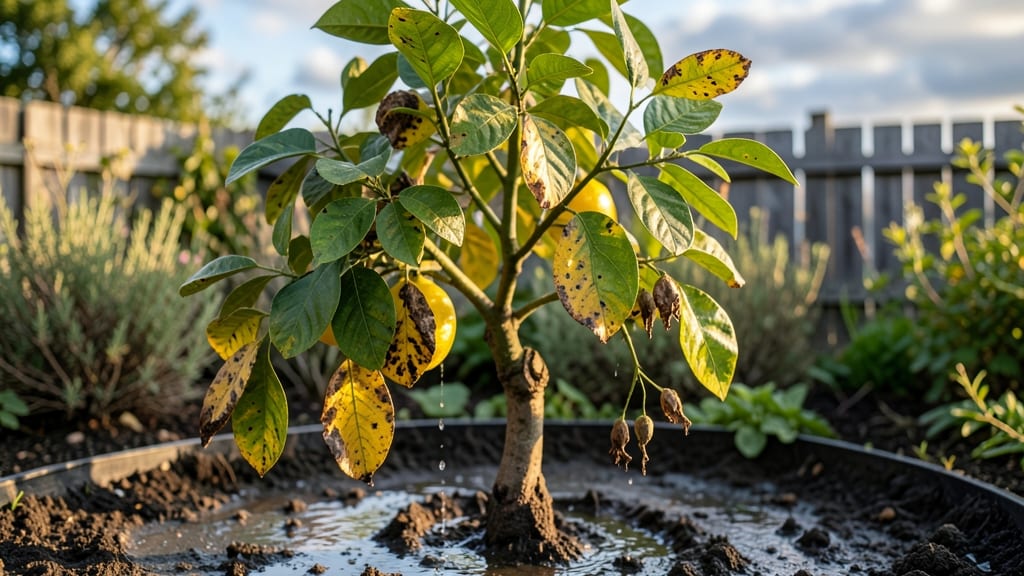
What does an overwatered citrus tree look like? That sad droop and yellowing leaves aren’t just a bad hair day—they’re screaming "I’m drowning." 🌿 I’ve seen it too many times: that telltale soggy soil, the mushy roots, and the leaves that turn from glossy green to sad, limp yellow. The good news? You can fix it before it’s too late.
Start by checking the soil—it should smell fresh, not rotten. Press your finger in: if it’s damp more than an inch down, you’re overdoing it. Roots need air too, so if they look brown and mushy instead of white and firm, that’s your problem.
Even the leaves tell the story: yellowing between the veins, especially on older leaves, is a classic overwatering sign.
Here’s the fix: cut back on watering until the top 2-3 inches of soil dry out completely. Add organic matter like compost to improve drainage, and consider repotting if roots are circling. Prune any dead or yellowed branches to redirect energy to healthy growth.
Once you adjust, give it time—healthy roots take 4-6 weeks to bounce back. Keep an eye on the soil moisture and you’ll see those glossy green leaves return faster than you think. Trust me, your tree will thank you with juicy fruit next season.
Root Causes of Overwatering
Overwatering your citrus tree isn’t just a gardening mistake—it’s a silent killer that disrupts the plant’s delicate balance. When water overwhelms the roots, it triggers a cascade of problems that can stifle growth, invite disease, and even kill your tree if left unchecked.
Let’s break down the key reasons this happens, so you can avoid repeating the same mistakes.
Citrus trees thrive in well-draining soil because their roots hate sitting in soggy conditions. If your soil is heavy clay, compacted, or lacks organic matter, water pools around the roots instead of draining away. Here’s why this matters:
- Oxygen deprivation: Roots need oxygen to breathe. When soil stays waterlogged, oxygen levels drop, suffocating the root system. Without oxygen, roots can’t absorb nutrients or water efficiently—even if it’s right there in the soil.
- Fungal infections: Excess moisture creates the perfect breeding ground for Phytophthora and Pythium, fungi that rot roots. These pathogens thrive in anaerobic (low-oxygen) conditions, turning healthy roots into mushy, brown messes.
- Nutrient lockout: Overwatered soil flushes out essential nutrients like nitrogen, phosphorus, and potassium. Even if you fertilize, the roots can’t access them because the soil is too saturated.
Pro Tip: 💡 Test your soil’s drainage by digging a hole, filling it with water, and timing how long it takes to drain. If it takes more than 30 minutes, amend your soil with perlite, sand, or compost to improve airflow.
Many gardeners assume citrus trees—especially those in containers—need frequent watering. But citrus trees are drought-tolerant once established, and their shallow root systems can’t handle excess water. Here’s how human error leads to overwatering:
- Ignoring the soil’s moisture level: Watering on a schedule (e.g., every 2–3 days) without checking soil moisture is a recipe for disaster. Citrus trees need water when the top 2–3 inches of soil feel dry, not on a rigid timetable.
- Using the wrong watering method: A slow, deep watering (like soaking the root zone) is ideal. But shallow, frequent waterings keep the topsoil wet while leaving deeper roots thirsty—and prone to rot.
- Container-specific risks: Potted citrus trees dry out faster but are also more prone to overwatering because containers lack natural drainage. Without proper drainage holes, water pools at the bottom, drowning the roots.
Pro Tip: 🌡️ Stick your finger into the soil before watering. If it’s damp below 2 inches, wait. For containers, lift the pot—if it’s heavy with water, hold off until it feels lighter.
Even the most careful gardener can fall victim to overwatering when external conditions interfere. Here’s how weather and location contribute:
- Heavy rainfall or poor site selection: Planting citrus in low-lying areas or under trees that trap rainwater means the roots stay soaked for days. A single downpour can leave soil saturated for weeks, especially in clay-heavy soils.
- Lack of mulch: Mulch (like wood chips or straw) helps regulate soil moisture by reducing evaporation and preventing water from pooling. Without it, rainwater runs off or soaks in too quickly, overwhelming the roots.
- High humidity or poor airflow: Citrus trees in humid climates or shaded spots transpire less (lose water through leaves), making them more susceptible to overwatering. Stagnant air also slows evaporation, keeping soil damp longer.
Pro Tip: ✨ If you’re in a rainy climate, plant citrus on a slight slope or mound to improve drainage. Add 2–3 inches of mulch around the base (but keep it away from the trunk) to protect roots.
Potted citrus trees are especially vulnerable because their roots have nowhere to escape excess water. Here’s why containers accelerate overwatering:
- No natural drainage: Without proper drainage holes, water collects at the bottom of the pot, creating a waterlogged “root prison.” Even with holes, if the pot sits in a saucer of standing water, roots absorb too much moisture.
- Smaller root zones: Containers limit root growth, so the entire root system gets waterlogged faster than in-ground trees. A small pot means less soil to absorb and release excess water.
- Material matters: Terracotta pots dry out faster than plastic, but plastic traps moisture longer. If you’re using plastic, monitor soil moisture more closely.
Pro Tip: 🔥 Always use pots with drainage holes and elevate them on pot feet or a stand to prevent saucer water from seeping back in. Repot every 2–3 years to refresh the soil and give roots room to grow.
How to Fix Overwatered Citrus Trees
Overwatering your citrus tree can feel like a slow-motion disaster—yellowing leaves, soggy soil, and drooping branches are all red flags that your tree is drowning. But don’t worry! With the right steps, you can nurse it back to health and prevent future waterlogging.
Below, we’ll break down cause-specific fixes and prevention tips to get your citrus tree thriving again.
The first rule of reviving an overwatered citrus tree? Cut off the water. Keep it dry for at least 3–5 days to allow the soil to drain and roots to recover. This might feel counterintuitive, but soggy roots can’t breathe—and they’re the first step toward root rot.
- Pro Tip: 💡 If your tree is in a pot, lift it to check the weight. If it feels heavy, it’s still too wet. Let it sit in a dry, shaded spot while you assess.
Citrus trees hate "wet feet." If your tree is in containers, ensure pots have drainage holes (no exceptions!).
For in-ground trees, amend the soil with: - Perlite or coarse sand (20–30% of the soil mix) to aerate it. - Compost or well-rotted manure (10–15%) to improve structure without compacting. - Avoid heavy clay or peat-heavy mixes—they trap moisture like a sponge.
Quick Fix Table:
| Problem | Solution | Tools Needed |
|---|---|---|
| No drainage holes | Drill holes in the pot bottom | Drill, sandpaper |
| Compacted soil | Loosen soil with a fork or trowel | Garden fork, gloves |
| Waterlogged in-ground | Create a raised bed or mound | Soil, mulch, shovel |
If the roots smell foul, look mushy and dark, or pull away easily, root rot has set in.
Here’s how to treat it:
- Remove the tree from its pot (or dig it up if in-ground) and trim away black, mushy roots with sterilized pruners (soak in rubbing alcohol first).
- Repot in fresh, dry soil with a fungicide (like copper-based or neem oil) to prevent fungal spread.
- Hold off on watering for 7–10 days to let roots heal.
⚠️ Warning: If more than 50% of roots are rotted, the tree may not recover. Sad but true—sometimes it’s kinder to replace it.
Overwatered citrus trees often develop yellow, wilted, or moldy leaves. Prune them 1–2 inches above a healthy bud to encourage new growth. Focus on:
- Yellow or brown leaves (signs of stress or disease).
- Mushy or blackened stems (fungal infection).
- Drooping branches (lack of oxygen to roots).
Pruning Pro Tips: 🔥 Use sharp, clean shears to avoid tearing bark. 🌡️ Prune in the morning when humidity is lower (reduces fungal risk). ✨ Don’t over-prune—remove only the dead/dying parts.
Now that your tree is stable, rewrite your watering rules: - Water deeply but infrequently—citrus prefers dry spells between waterings. - Check soil moisture before watering: Stick your finger 2–3 inches deep.
If it’s dry, water; if damp, wait. - Water at the base, not the leaves, to prevent fungal diseases. - Morning watering is best—it gives leaves time to dry before evening humidity sets in.
Watering Schedule Cheat Sheet:
| Season | Frequency | Amount per Watering |
|---|---|---|
| Spring/Summer | Every 5–7 days | 1–2 gallons (pot) |
| Fall/Winter | Every 10–14 days | ½–1 gallon (pot) |
| In-Ground Trees | Every 7–10 days | Soak deeply (2–3 inches) |
Once your citrus tree is back on track, lock in these habits to avoid future overwatering:
- Upgrade your pots to ones with reservoir trays (to catch excess water).
- Mulch around the base (2–3 inches of wood chips or straw) to retain moisture without suffocating roots.
- Monitor weather—adjust watering during heavy rains or high humidity.
- Consider a moisture meter ($10–$20) for foolproof soil checks.
- Rotate pots occasionally so sunlight (and thus water needs) is evenly distributed.
Final Thought: 🌟 Overwatering is reversible—act fast, adjust your approach, and your citrus tree will bounce back stronger. With the right care, you’ll be back to harvesting juicy oranges and lemons in no time!
Frequently asked questions
How can I tell if my citrus tree is overwatered versus underwatered?
Check the leaves first: overwatered trees show yellowing between the veins (especially on older leaves), while underwatered trees have crispy, brown edges. Press your finger 2 inches into the soil—if it's damp, you're overwatering; if dry, it's thirsty. Also, overwatered trees often have drooping branches that don't perk up when watered.
Why do my citrus leaves turn yellow when overwatered?
Yellowing occurs because roots can't absorb nutrients in waterlogged soil. The plant prioritizes survival by shedding leaves, starting with older ones. This is different from nutrient deficiencies (which cause yellowing between veins) or pests. If you see yellowing paired with mushy stems or foul-smelling soil, root rot is likely the culprit.
Can I save my citrus tree if I see black, mushy roots?
Yes, but act fast! Trim away all black/mushy roots with sterilized shears, then repot in fresh, dry soil with perlite for drainage. Hold off watering for 7-10 days to let roots recover. If over 50% of roots are rotted, the tree may not survive—sometimes replacement is kinder than prolonged suffering.
How often should I water my potted citrus tree to prevent overwatering?
Water when the top 2-3 inches of soil are completely dry. In summer, this might be every 5-7 days; in winter, every 10-14 days. Lift the pot—if it feels light, it needs water. For containers, always use pots with drainage holes and elevate them to prevent saucer water from seeping back in.
Will overwatering kill my citrus tree quickly?
Not immediately, but chronic overwatering leads to root rot within 2-4 weeks if unchecked. The tree may survive for months with yellow leaves and stunted growth, but without intervention, it'll eventually die. The key is catching it early—once you see wilting or leaf drop, act within 3-5 days to give it a fighting chance.