
Plants
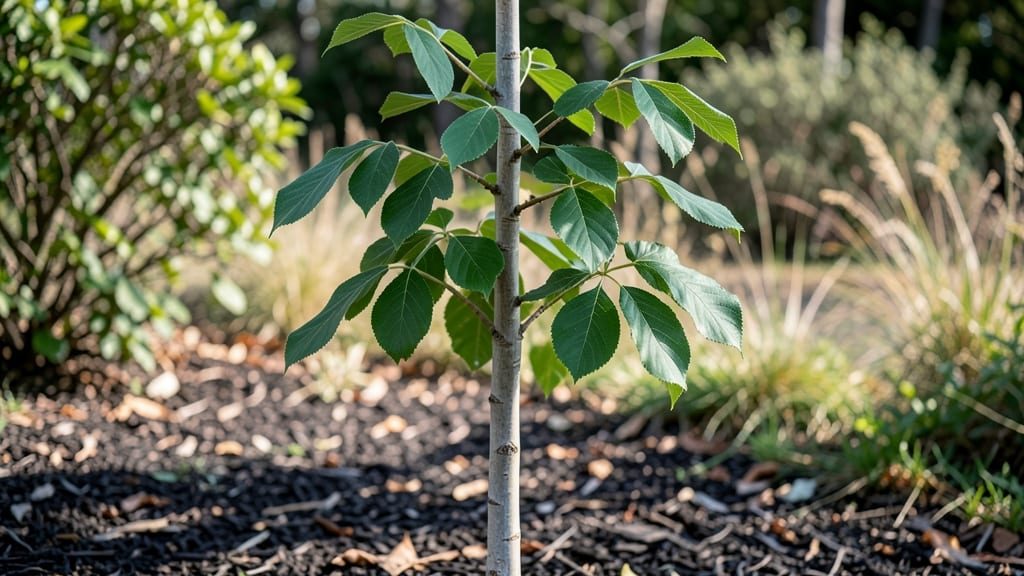
A young walnut tree looks like a delicate, upright shrub with compound leaves featuring 7-9 jagged-edged leaflets that emerge bright green in spring. Its smooth, silvery-gray bark gradually develops deep grooves as it matures, and its small, pointed buds appear before leaves in early spring.
A young walnut tree's most distinctive feature is its pinnate leaf structure, where each leaf consists of 7-9 elongated leaflets with serrated edges that create a feathery appearance. 🌿 The bark starts smooth and silvery-gray but develops characteristic diamond-shaped ridges as the tree ages, which helps differentiate it from similar species like hickory.
In its first year, expect a slow but steady growth of 3-6 feet, with a sturdy, upright trunk that becomes more robust over time.
One key identifier is the tree's buds, which are small and pointed, emerging in late winter or early spring before the leaves unfurl. This early growth pattern helps gardeners spot young walnut trees even when they're still dormant.
The leaves themselves are a vibrant green in spring, turning to a deeper green in summer, and often develop a golden-brown hue in fall before dropping.
💡 In This Article
- Identifying Young Walnut Tree Leaves and Bark
- Growth Stages of a Walnut Sapling: What to Expect Year by Year
Identifying young walnut tree leaves and bark
The compound leaves of a young walnut tree are its most striking feature, arranged in a pinnate pattern with 7-9 leaflets per leaf.
Each leaflet measures about 2-4 inches long and has finely serrated edges, creating a delicate, almost lace-like appearance. 🌿 The central leaflet (terminal leaflet) is typically the largest, while the side leaflets gradually decrease in size toward the stem.
When young, these leaflets emerge bright green and slightly fuzzy, developing a glossy finish as they mature.
The bark of a young walnut tree starts smooth and silvery-gray, almost metallic in appearance when viewed in sunlight. This smooth texture helps distinguish it from hickory trees, whose bark develops rougher ridges earlier.
Over time—usually after 5-10 years—the bark begins forming deep, diamond-shaped grooves that run vertically along the trunk, giving mature walnut trees their signature rugged look. The contrast between the smooth juvenile bark and ridged adult bark is a key identification clue.
What sets walnut seedlings apart from similar trees like butternut or hickory is their leaf arrangement and bud structure. Walnut buds are small, pointed, and clustered at the ends of branches, emerging in late winter before leaves appear—a trait shared with hickory but more pronounced in walnut.
The terminal bud (at the tip of branches) is slightly larger than lateral buds, creating a distinctive "pointed crown" shape in early spring. 🌱 This bud pattern helps gardeners identify young walnuts even when they're still dormant.
Another distinguishing feature is the vein structure of walnut leaves. Each leaflet has prominent, parallel secondary veins that arch toward the serrated edges, creating a web-like pattern when viewed against light. This venation differs from butternut leaves, which tend to have more rounded leaflets with less pronounced serration.
The leaves also emit a faint, bitter almond scent when crushed—a chemical defense mechanism against pests that's unique to walnut species.
Seasonal color changes provide additional clues. In spring, new leaves emerge bright green, often with a slight reddish tint. By summer, they darken to a rich, deep green, and in fall, they develop golden-brown hues before dropping.
This progression contrasts with hickory leaves, which typically maintain greener tones longer into autumn. The combination of leaf shape, bark texture, and seasonal color shifts makes young walnut trees relatively easy to identify once you know what to look for.