
Plants
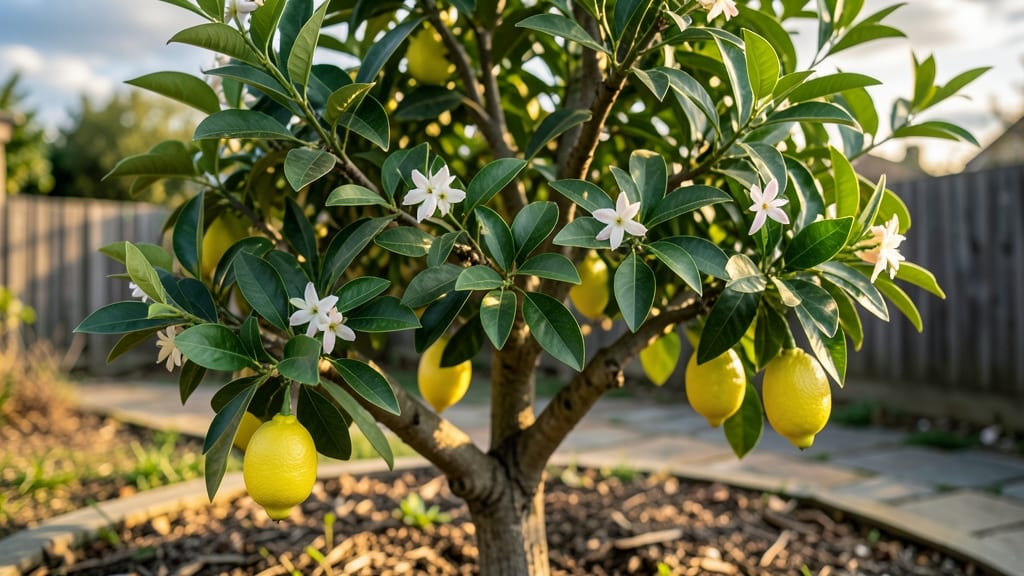
A lemon tree leaf looks like an elongated oval with a sharp point, typically 2-4 inches long and 1-2 inches wide, showcasing a vibrant dark green hue and delicate serrated edges. Its smooth surface features prominent veins and a faintly waxy sheen.
A lemon tree leaf's shape is one of its most distinctive features, often resembling a lanceolate or elliptical form that tapers to a fine point. 🌿 The glossy dark green color comes from a thick cuticle layer that helps retain moisture, while the serrated edges create a subtle sawtooth pattern along the leaf's perimeter.
What really sets it apart from other citrus leaves is its slightly aromatic quality when crushed, releasing a fresh citrus scent that's subtly different from lime or orange varieties.
These leaves aren't just pretty—they're functional too. The prominent midribs running through the center provide structural support, while the waxy texture helps protect against pests and excessive evaporation.
When comparing to other citrus leaves, lemon leaves tend to be slightly narrower and more pointed than lime leaves, which often have a more rounded appearance. The vibrant green color stays consistent year-round, though older leaves may develop slightly yellowed edges as the tree matures.
💡 In This Article
- Lemon Tree Leaf Anatomy and Botanical Features
- Identifying Lemon Tree Leaves vs Other Citrus Varieties
Lemon tree leaf anatomy and botanical features
The lanceolate shape of a lemon tree leaf—longer than it is wide—is its most defining characteristic. Botanically, this form falls between elliptical and ovate, with the widest point typically occurring near the base before tapering to a sharp, almost needle-like tip.
The average mature leaf spans 2.5 to 3.5 inches in length, though younger leaves may be as small as 1.5 inches, while older ones can stretch closer to 4 inches. This gradual elongation occurs as the leaf matures over 4 to 6 weeks after sprouting.
The serrated edges of a lemon leaf create a delicate sawtooth pattern, with 5 to 10 tiny teeth per inch along the perimeter. These fine serrations aren't as pronounced as those on a lime leaf, which often have more jagged, irregular edges.
The leaf's glossy dark green color comes from a thick cuticle layer—a waxy protective coating that reflects light and reduces water loss. This same cuticle gives the leaf its slightly waxy texture, which you can feel when running your fingers along the surface.
The prominent midrib (central vein) is flanked by secondary veins that branch out at 45-degree angles, creating a web-like pattern that strengthens the leaf's structure.
What makes lemon leaves truly unique is their subtle citrus aroma. When crushed, they release limonene and other volatile oils that create a fresh, slightly tart scent—more delicate than the sharpness of lime leaves but more pronounced than the mild fragrance of orange leaves.
This aroma isn't just for show; it acts as a natural pest deterrent, repelling insects like aphids and spider mites. The leaves also contain citral, a compound that gives them a faintly herbal, almost medicinal note when steeped in hot water for tea.
One fascinating detail is how lemon leaves change with the seasons. In cooler months, they may develop a slightly duller green hue due to reduced chlorophyll production, though they rarely turn yellow unless the tree is stressed.
The leaf arrangement is also distinctive—lemon trees exhibit alternate phyllotaxis, meaning each leaf grows at a 90-degree angle from the one below it, creating a spiral pattern along the stem. This spacing maximizes sunlight exposure while allowing airflow to reduce fungal risks.
If you've ever noticed lemon leaves curling at the edges, it's often a sign of underwatering or high temperatures. The tree's natural response is to reduce surface area and limit moisture loss.
In contrast, overwatering can cause yellowing between the veins—a classic sign of chlorosis, where the leaf struggles to absorb nutrients. The waxy cuticle helps mitigate these issues, but extreme conditions can still stress the plant.
For gardeners, understanding these features is key to identifying healthy leaves. A true lemon leaf should feel firm yet flexible, with no brown spots or holes—signs of pest damage or disease.
The vein pattern should be clearly visible without dark streaks, which could indicate fungal infections like citrus greening. When comparing to other citrus, lemon leaves stand out for their narrower shape, sharper tip, and more uniform serrations—unlike the broader, rounded lime leaves or the thicker, leathery orange leaves.