
Plants
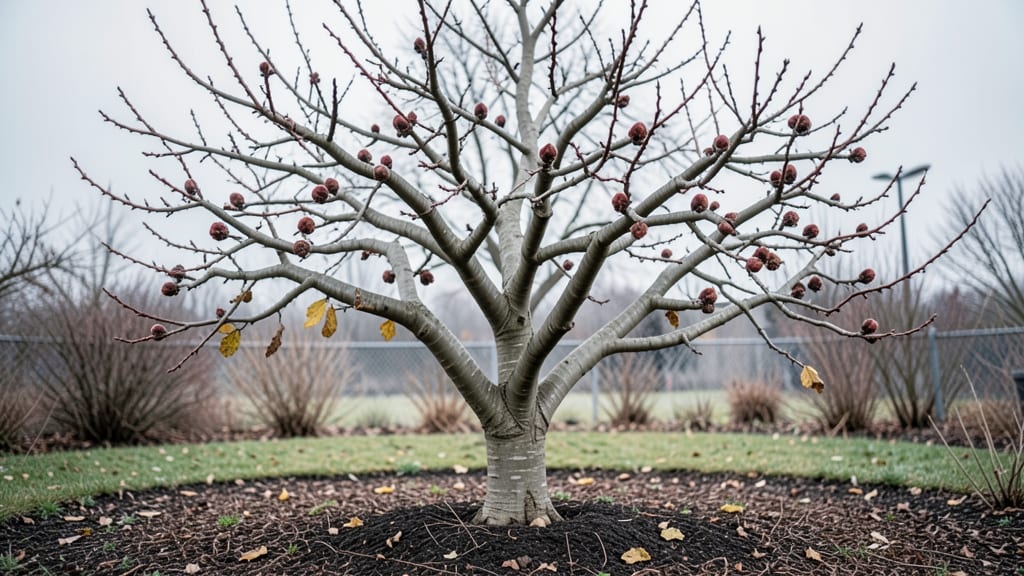
A fig tree in winter looks like a skeletal framework of bare, twisted branches with smooth gray-brown bark, often dotted with small dormant buds. Most varieties shed nearly all leaves, though some may cling to a few tiny ones, while others sprawl with knobby stems and stubby twigs.
A fig tree's winter appearance reveals its true architectural beauty. The gnarled branches, often twisted and sprawling, create an intricate network that's both striking and functional. 🌿 These branches aren't just random—they're designed to withstand harsh conditions while storing energy for spring growth.
The smooth bark, ranging from light gray to deep brown, helps protect the tree from cold and pests. Some varieties even develop a slightly textured surface, adding character to their winter silhouette.
What's fascinating is how different fig species handle winter. For example, the common fig (Ficus carica) might keep a few small leaves, while others like the weeping fig become nearly leafless.
The dormant buds along the branches are where all the action happens—they'll burst into life when temperatures rise, revealing the tree's lush foliage once again.
💡 In This Article
- Identifying Fig Tree Branches and Bark in Winter
- How to Care for a Fig Tree During Winter Dormancy
Identifying fig tree branches and bark in winter
The winter transformation of a fig tree begins with its branches—thick, contorted stems that resemble abstract sculptures. These aren't random twists; they're the result of years of growth patterns where branches grow in opposite directions to maximize sunlight exposure.
The common fig (Ficus carica) develops particularly striking branches with knobby joints where leaves once attached, creating a textured surface that feels almost sculptural to the touch. 🌱
Bark texture varies dramatically between species. Young fig trees typically have smooth, gray-brown bark that resembles elephant skin, while mature trees develop deeper ridges and fissures. The bark's color shifts with age—starting light gray when young and darkening to nearly black as the tree matures.
This color variation helps distinguish between species: for example, the Mediterranean fig's bark often develops a slightly reddish tint in winter, while tropical varieties maintain a more uniform gray.
Dormant buds are the winter's most important feature—they're where all spring growth originates. These small, rounded swellings appear along the branches, typically 1/4 to 1/2 inch in diameter, and may be covered with a thin, waxy coating.
Some varieties develop tiny scale-like leaves around these buds, which help protect them from freezing temperatures. The placement of these buds follows a specific pattern: they usually appear in clusters at the branch joints or along the stem's underside.
One distinguishing feature between fig species is their winter leaf retention. While most figs become nearly leafless, some varieties like the Smyrna fig might retain 10-20% of their leaves, which appear as small, curled structures along the branches.
These persistent leaves are usually 1-2 inches long and have a leathery texture that prevents them from freezing. The contrast between bare branches and these few remaining leaves creates a striking visual effect that's one of winter's most beautiful botanical displays. 🍃
Branch arrangement also varies significantly. Some figs grow with a sprawling, vine-like habit where branches spread horizontally, while others develop a more upright, tree-like structure. The common fig's branches often grow at 45-degree angles from the trunk, creating a distinctive zigzag pattern.
This growth habit helps the tree conserve energy during dormancy while positioning branches to catch early spring sunlight.
For identification purposes, examine the branch tips—they often reveal the tree's true nature. Fig branches typically end in small, pointed buds rather than the rounded growth tips of many other trees.
The presence of air roots (aerial rootlets) along the branches is another key identifier, especially in tropical fig varieties that grow in warmer climates. These roots help the tree anchor itself and absorb moisture from the air.