
Plants
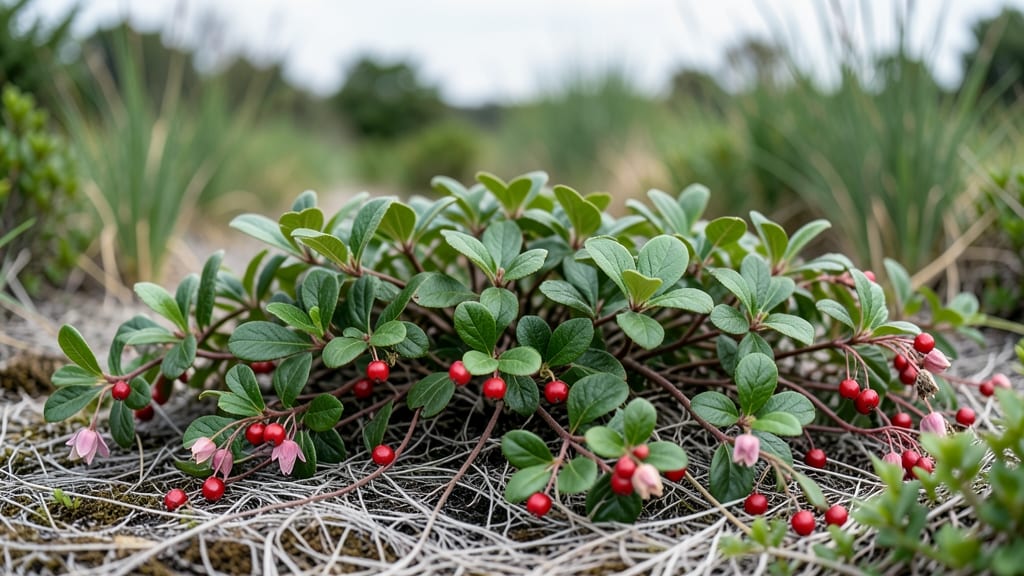
A cranberry tree looks like a low-growing, spreading shrub with glossy dark green leaves, clusters of small white flowers in spring, and vibrant red berries that hang in tight bunches. Its smooth gray bark stays close to the ground, creating a dense, ground-hugging appearance.
A cranberry plant's distinctive look starts with its leaves, which are small, oval-shaped, and leathery with serrated edges. 🌿 In late spring, it bursts into clusters of delicate white flowers that eventually transform into the iconic bright red berries—though these aren't true trees but rather trailing vines.
What sets cranberries apart from similar plants is their preference for acidic, boggy soils, which keeps them low to the ground and prevents them from growing tall like other shrubs.
These plants thrive in wet conditions, often forming dense mats along the forest floor. The berries remain on the plant well into winter, providing a striking contrast against the snow.
If you're comparing it to blueberries, note that cranberries have a more sprawling habit and their berries stay attached longer after ripening.
💡 In This Article
- Identifying Cranberry Plant Key Features
- Growing Conditions That Shape Cranberry Tree Appearance
Identifying cranberry plant key features
The cranberry plant's leaves are its first identifying clue—small (1-2 inches long), oval-shaped, and dark green with a glossy finish that reflects light like polished mahogany. 🌿 These leaves have fine, serrated edges that create a delicate scalloped pattern when viewed closely.
Unlike blueberry leaves, which are slightly larger and more elliptical, cranberry foliage stays low to the ground, forming dense mats that can spread 6-10 feet wide but rarely grow taller than 3 feet.
Spring brings clusters of delicate white flowers that hang downward like tiny bells, each with 5 petals and 10 stamens that release a faint, sweet fragrance. These flowers transform into the iconic berries—½-inch diameter, bright red, and covered in a waxy coating that keeps them buoyant in water.
Unlike lingonberries (which grow on upright shrubs) or blueberries (which dangle from woody stems), cranberries grow on trailing vines that spread horizontally, creating a carpet-like appearance.
The berries' unique buoyancy comes from their air pockets, which allow them to float on water—a key adaptation for their wetland habitat. 🍒 When fully ripe, they turn a deep ruby color and remain attached to the plant for months, even after frost.
The plant's root system is shallow but extensive, spreading horizontally to absorb nutrients from the acidic, peaty soil where cranberries thrive. This contrasts with blueberry bushes, which have deeper taproots and grow more upright.
One distinguishing feature is the plant's bark—a smooth, grayish-brown surface that stays close to the ground, never developing the rough, ridged texture seen on older blueberry shrubs. The stems are woody but flexible, allowing them to bend and spread rather than stand erect.
In winter, the leaves turn a muted bronze color before falling, while the berries may persist until spring if left on the plant.
To distinguish cranberries from lookalikes, focus on these key traits:
- Growth habit: Sprawling, ground-hugging mats (3 feet tall max) vs. upright shrubs (blueberries, lingonberries)
- Berry attachment: Berries stay on vines long after ripening vs. dropping quickly
- Soil preference: Requires acidic, boggy soil (pH 4.5-5.5) vs. well-drained soil for blueberries
- Leaf texture: Leathery, glossy leaves vs. duller, thinner foliage on other berry plants
If you're growing cranberries, these features help you maintain their distinctive shape through light pruning—removing dead stems in early spring while preserving the low, spreading form. The plant's natural growth habit makes it ideal for wetland gardens or container growing in acidic soil mixes. 🌱