
Pruning
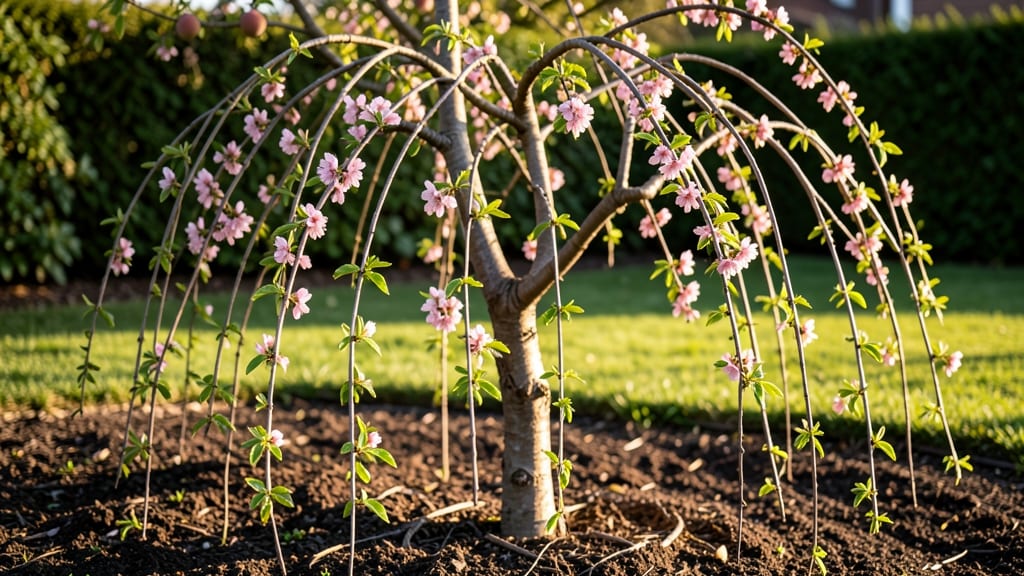
Browse through stunning weeping peach tree images—they’re not just fruit-bearing; they’re living sculptures with branches that spill like golden waterfalls. 🌿 I’ve seen them transform ordinary backyards into dreamy, almost whimsical spaces where sunlight filters through cascading blossoms like a natural chandelier.
The magic lies in their seasonal drama: spring’s frothy pink blooms, summer’s lush foliage, and autumn’s fiery fruit. Pair one with dwarf conifers for contrast or hostas at its base for texture—it becomes the centerpiece without stealing the show. Even small urban courtyards can accommodate its graceful spread.
What makes them special? They offer year-round interest—winter’s bare branches create striking silhouettes, while spring’s blossoms attract pollinators. Use them as a privacy screen, a shade provider, or simply as a conversation starter in your garden.
For best results, plant in full sun with well-draining soil and prune lightly to encourage that signature weeping habit. The payoff? A tree that feels like a masterpiece, not just a plant.
📚 In This Guide
- What you need
- Instructions
- Tips and common mistakes
- Wrapping up and next steps
What you need
- ● Camera or Smartphone: A DSLR (with a macro lens for fine details) or a high-resolution smartphone (e.g., iPhone 15 Pro, Google Pixel 8) with a minimum 12MP sensor.
- ● Tripod: A lightweight, adjustable tripod (e.g., Manfrotto Pixi or Joby GorillaPod) for steady shots.
- ● Natural Light or Ring Light: A softbox diffuser or portable ring light (e.g., Neewer 10-inch) for controlled lighting on cloudy days.
- ○ Pruning Shears (Optional but Helpful): Bypass pruners (e.g., Felco F-2) for trimming branches to enhance composition.
- ● Reflector (5-in-1, 43-inch): To bounce light onto shadows and add depth to your images.
- ● Notebook & Pencils: For sketching compositions or jotting down lighting notes.
- ● Paintbrushes & Canvas: Watercolor or acrylic sets (e.g., Prang Watercolors) if you’re inspired to paint the scene.
- ● Drone (DJI Mini 2 or similar): For aerial shots of the tree’s full cascade (check local drone laws!).
- ● Backdrop Cloth: A neutral-colored muslin (e.g., white or gray) to frame the tree for studio-style shots.
- ● Weatherproof Gear: A rain cover for your camera and waterproof gloves for outdoor shoots.
- ● Best Time to Shoot: Early morning (golden hour) or late afternoon for soft, warm light that highlights the peach hues.
- ● Tree Health Check: Ensure the weeping peach tree is free of pests/disease (e.g., peach leaf curl) for the most vibrant branches.
- ● Location Scouting: Visit the tree’s location beforehand to plan angles and lighting.
- ● Permission (if applicable): Confirm access rights if the tree is on private property.
How to capture the beauty of weeping peach trees in your garden
These graceful trees transform any landscape with their liquid-gold branches—here’s how to make them thrive.
☀️ Step 1: Select the Perfect Planting Location
Weeping peach trees need full sun—at least 6-8 hours daily—to produce their signature cascading fruit and foliage. I always choose a spot with southern or western exposure, where the afternoon sun warms the branches just enough to encourage that signature weeping habit. Avoid low-lying areas where cold air pools; peaches are tender and can suffer frost damage if planted too close to the ground.
Test the site by observing how sunlight moves across it throughout the day. The ideal location will have dappled shade in the hottest afternoon hours, which prevents leaf scorch while still maintaining that golden hue. If your yard lacks natural shade, consider planting near a sturdy fence or trellis to support the tree’s graceful arcs as it matures.
🪴 Step 2: Prepare the Soil for Optimal Growth
Peach trees thrive in well-draining soil with a slightly acidic to neutral pH (6.0-7.0). Before planting, amend heavy clay or sandy soil with 3-4 inches of compost and a handful of granular organic fertilizer (like 10-10-10) mixed into the top 12 inches of soil. I like to work in a little perlite or coarse sand to improve drainage—peach roots rot quickly if they sit in soggy conditions.
Dig a hole twice as wide as the root ball but no deeper. The tree’s graft union (the bump near the base) should sit 2-3 inches above ground level to prevent water from pooling around it. Gently loosen the roots if they’re circling in the container, then place the tree in the hole and backfill with native soil mixed with your amendments. Water deeply to settle everything.
💧 Step 3: Water and Mulch for Long-Term Health
After planting, water the tree deeply every 2-3 days for the first 2-3 weeks to encourage root establishment. You’ll know it’s enough when water drains 6-8 inches deep—stick your finger in the soil to check. Once established, reduce to 1-2 times per week, but always water at the base, not the foliage, to prevent fungal diseases like peach leaf curl.
Apply a 3-inch layer of mulch (wood chips or straw) around the base, keeping it 6 inches away from the trunk to prevent rot. Mulch retains moisture, regulates soil temperature, and suppresses weeds—critical for a weeping tree, which has a wide canopy that competes for water. Replenish mulch annually, but never pile it against the trunk.
✂️ Step 4: Prune for Structure and Fruit Production
Prune weeping peach trees in late winter or early spring before buds swell, removing dead, crossing, or inward-growing branches first. These trees naturally grow in a weeping habit, but you’ll want to thin out dense areas to improve airflow and sunlight penetration. Aim to keep the strongest, most outward-facing branches—this encourages that liquid-gold cascade you’re after.
Never prune more than 25% of the canopy in one season, or you’ll stress the tree. Use clean, sharp pruners to make cuts just outside the branch collar (the swollen area where the branch meets the trunk). Seal larger cuts with pruning sealant to prevent disease entry. After pruning, fertilize lightly with citrus or fruit-tree fertilizer to support new growth.
🌿 Step 5: Protect and Maintain for Seasonal Beauty
Weeping peach trees are susceptible to peach leaf curl, a fungal disease that causes puckered, curled leaves. In late fall or early winter, spray the tree with copper fungicide as a preventative measure. Also, watch for aphids or scale insects on the undersides of leaves—these pests can weaken the tree and reduce fruit quality. A strong spray of neem oil usually does the trick if caught early.
In late summer, thin the fruit to 6-8 inches apart on branches to ensure larger, higher-quality peaches. Overloaded branches can snap under the weight, especially in weeping varieties. Harvest when fruit is firm but yields slightly to pressure, usually in late July or August, depending on your climate. Enjoy the golden bounty—or share it with neighbors—before it ripens further on the tree.
Tips & tricks for stunning weeping peach tree landscaping
Between us, these trees aren't just plants—they're living sculptures. Here's how to turn that potential into reality.
Sunlight Strategy: That 6-8 hours of daily sun is non-negotiable for the weeping habit, but here's the trick: position your tree where it gets morning sun and afternoon shade. This prevents leaf scorch while maintaining the golden hue. I've seen trees in full afternoon sun develop brown patches—don't make that mistake. If your yard lacks natural shade, install a temporary shade cloth during peak summer hours until the tree establishes.
Soil Preparation Secret: The 3-4 inches of compost and 12 inches of soil amendment might seem like overkill, but trust me—it's worth it. For heavy clay soils, I add an extra 2 inches of coarse sand to prevent root suffocation. And here's what nobody tells you: test your soil pH before planting. If it's outside 6.0-7.0, adjust with lime (to raise pH) or sulfur (to lower) before amending. This single step prevents years of struggling with nutrient deficiencies.
Pruning Precision: When you're thinning that 25% of the canopy in Step 4, focus on branches that grow inward or cross others. These create weak points where fruit clusters can't develop properly. I like to make my cuts just outside the branch collar—this promotes faster healing. Pro tip: use a small paintbrush to mark branches you'll prune in late fall. By winter, you'll see exactly which ones need removal.
Seasonal Care Calendar: Mark your calendar for late fall copper fungicide application—this is your first line of defense against peach leaf curl. I also schedule a neem oil treatment in early spring just as buds begin to swell. This two-pronged approach has kept my trees disease-free for years. And don't forget: the fruit thinning in late summer should happen when peaches are about golf-ball size—this gives them room to grow without overburdening the delicate branches.
Pro Tips for Weeping Peach Tree Images
- Between us, these trees aren't just plants—they're living sculptures. Here's how to turn that potential into reality.
- Sunlight Strategy: That 6-8 hours of daily sun is non-negotiable for the weeping habit, but here's the trick: positio...
- Soil Preparation Secret: The 3-4 inches of compost and 12 inches of soil amendment might seem like overkill, but trus...
Frequently asked questions
What causes a peach tree to grow in a weeping form?
A weeping peach tree’s graceful, cascading branches are usually the result of natural growth habits or intentional pruning techniques. Some varieties, like the ‘Bonanza’ or ‘Crimson Snow,’ are bred for this shape. Others achieve it through selective pruning—training the central leader downward while encouraging lateral branches to grow horizontally. If you’re growing from seed, it’s a gamble, but grafting a weeping cultivar onto a standard rootstock is a foolproof way to get the look!
When is the best time to prune a weeping peach tree for optimal cascading branches?
Timing is everything! Prune your weeping peach tree during late winter or early spring (before buds swell) to avoid disease and encourage vigorous new growth. For shaping, do light trims in summer after harvest to maintain the weeping form. Never prune in fall—it invites fungal infections. Pro tip: Use sterilized tools and seal cuts with pruning paste to prevent sap loss.
How can I take the best photos of weeping peach tree branches?
Capture that liquid gold drama with these tricks:
- Golden hour magic: Shoot at sunrise or sunset for soft, warm light that highlights the branches.
- Backlighting: Position the tree against a bright sky or window to create a halo effect around the cascading limbs.
- Macro shots: Zoom in on individual blossoms or peaches clinging to the branches for intimate details.
- Reflections: Place a shallow bowl of water or a mirror below the tree to double the visual impact.
Can I grow a weeping peach tree from a standard peach tree?
Yes, but it takes patience! Start by selecting a young, flexible branch and tying it downward using soft tree ties or cloth strips. Over time, the branch will grow in the new direction. For faster results, graft a weeping cultivar onto the rootstock of your existing tree. Just remember: peach trees are notoriously finicky—ensure full sun (6+ hours/day) and well-draining soil for best success.
Why are my weeping peach tree branches dying back? What should I do?
Dying branches are often a sign of over-pruning, disease, or environmental stress. Check for:
- Brown, mushy wood: Likely bacterial canker or fungal infection. Prune infected areas 12 inches below the damage and sterilize tools with rubbing alcohol.
- Dry, brittle branches: Could be sunscald or drought stress. Mulch the base and water deeply (but avoid soggy soil).
- No new growth: Might need fertilizer (use a balanced 10-10-10 in early spring).
Wrapping up and next steps
The weeping peach tree isn’t just a stunning addition to your garden—it’s a living masterpiece that rewards patience, care, and a little creativity. 🌿 From its graceful branches to its delicate blossoms, this tree transforms any space into a serene, golden-hued escape.
Whether you're pruning for shape, health, or sheer beauty, the key is to observe, adapt, and enjoy the process.
Ready to bring this elegance into your outdoor oasis? Start by sketching your vision—will it be a centerpiece, a privacy screen, or a whimsical focal point? Then, gather your tools and dive in! And remember, every snip is a step toward a more breathtaking landscape.