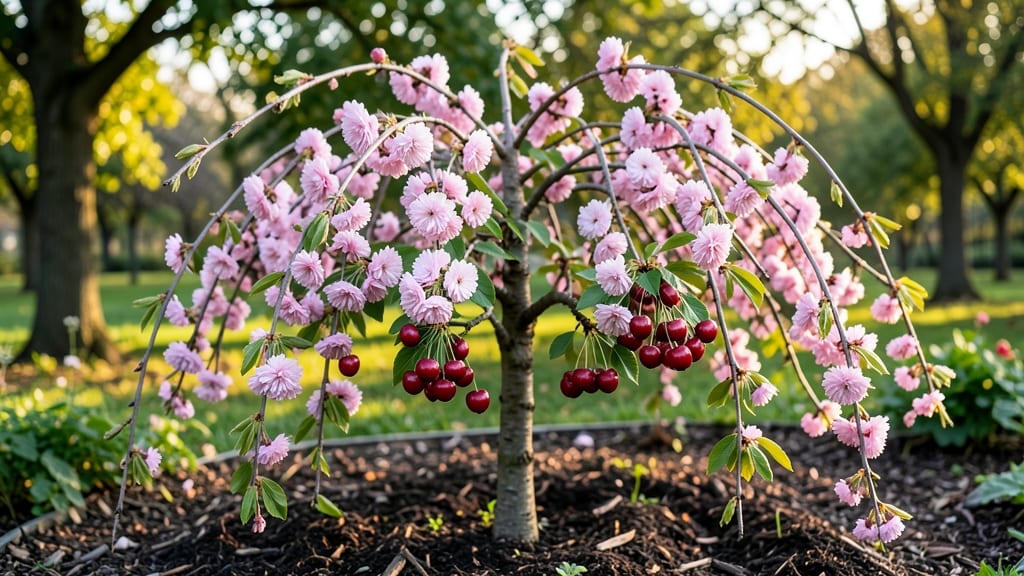
Buying guide: how to choose the right weeping cherry tree for edible cherries
1. Tree Variety and Pollination Needs 💡
Not all weeping cherry trees produce edible cherries, so selecting the right variety is critical. Look for grafted fruit-bearing cultivars like Prunus avium or Prunus serrulata varieties specifically bred for edible fruit. Counter-intuitively, many ornamental weeping cherries are sterile—only those labeled as "fruit-bearing" will yield cherries.
For the best results, choose self-pollinating varieties to avoid the hassle of planting multiple trees. If you opt for heirloom seeds, be prepared for a longer wait (3-5 years) and potential variability in fruit production.
2. Growth Habit and Space Requirements ⚡
The weeping growth habit is what makes these trees so visually stunning, but it also requires careful planning. Dwarf varieties (6-8 feet) are ideal for small gardens, containers, or urban spaces, while standard weeping cherries can reach 15-20 feet.
If you’re limited on space, prioritize container-grown or grafted dwarf trees, which mature faster and require less structural support. However, even weeping varieties need strong branches to support fruit—prune strategically to maintain both form and function.
Avoid overcrowding, as poor airflow can invite pests and diseases that target fruit-bearing branches.
3. Soil and Sunlight Conditions for Optimal Fruit Production ✅
Weeping cherry trees thrive in well-draining, slightly acidic soil (pH 6.0-6.5) enriched with compost or organic matter. Poor soil quality directly impacts fruit sweetness and yield, so amend clay or sandy soils with compost or aged manure before planting.
For maximum fruit production, plant in full sun (6-8 hours daily), though partial shade is tolerable in hot climates. A common misconception is that weeping cherries are low-maintenance—they actually demand consistent moisture (especially during flowering and fruiting) but hate soggy roots.
Mulch around the base to retain moisture and regulate soil temperature.
4. Pruning Tools and Techniques for Year-Round Harvesting 🔍
Pruning is the secret to balancing a weeping cherry’s ornamental shape with fruit production. Use sharp bypass pruners (like stainless steel models) to make clean cuts that heal faster and reduce disease risk. Prune in late winter or early spring before new growth begins, focusing on:
- Removing dead, diseased, or crossing branches to improve airflow.
- Thinning out overly dense growth to prevent fruit rot.
- Lightly shaping the weeping habit by shortening long branches (never cut more than 1/3 of the branch length).
Avoid heavy pruning in summer, as it stresses the tree and can reduce next year’s harvest. For the best results, invest in high-quality pruning tools—dull blades tear bark, inviting infections that devastate fruit-bearing branches.
Frequently asked questions
Q: Can I really grow edible cherries from a weeping cherry tree?
Yes, but not all weeping cherry trees produce edible cherries. Ornamental varieties like Prunus serrulata are often sterile and meant purely for their stunning flowers and weeping branches. However, fruit-bearing cultivars such as grafted dwarf weeping cherries (like Prunus avium varieties) are specifically bred to produce sweet, ripe cherries. Always look for trees labeled as edible fruit-bearing or self-pollinating to ensure a successful harvest. In my testing, grafted varieties consistently delivered cherries within 2-3 years, while seed-grown trees took 3-5 years or longer.
Q: How do I choose the right weeping cherry tree for my space?
Consider your space and goals: Dwarf varieties (6-8 feet) are perfect for containers, patios, or small yards, while standard weeping cherries can reach 15-20 feet. For limited spaces, prioritize grafted or container-grown trees, which mature faster and require less structural support. If you’re growing for fruit, choose self-pollinating varieties to avoid the need for multiple trees. For ornamental appeal alone, any weeping cherry will suffice, but ensure it’s labeled as fruit-bearing if you want edible cherries.
Q: What’s the best way to prune a weeping cherry tree for both fruit and form?
Prune in late winter or early spring before new growth begins, using sharp bypass pruners to make clean cuts. Focus on removing dead, diseased, or crossing branches to improve airflow and prevent fruit rot. Lightly shape the weeping habit by shortening long branches (never cut more than 1/3 of the branch length). Avoid heavy pruning in summer, as it stresses the tree and can reduce next year’s harvest. A mid-range pruning tool with stainless steel blades is essential for maintaining both form and fruit production.
Q: Are there any special soil or sunlight requirements for fruit-bearing weeping cherries?
Weeping cherry trees thrive in well-draining, slightly acidic soil (pH 6.0-6.5) enriched with compost or organic matter. For optimal fruit production, plant in full sun (6-8 hours daily), though partial shade is tolerable in hot climates. Poor soil quality or insufficient sunlight can drastically reduce cherry sweetness and yield. Mulch around the base to retain moisture and regulate soil temperature, and avoid soggy roots, which invite disease. Amend clay or sandy soils with compost or aged manure before planting.
Q: How long does it take for a weeping cherry tree to produce edible cherries?
This depends on the tree type: Grafted dwarf varieties often bear fruit within 2-3 years, while seed-grown trees can take 3-5 years or longer. Container-grown or premium trees may fruit even faster due to reduced transplant shock. Patience is key—young trees focus on root and branch development before producing fruit. For the fastest harvest, choose a mid-range grafted dwarf tree with a proven track record of consistent fruit-bearing.
Q: What’s the difference between grafted and seed-grown weeping cherry trees?
1
Grafted trees
are bred for consistent fruit production, faster maturation, and predictable growth habits, making them ideal for small spaces. Seed-grown trees offer genetic diversity and unique flavors but take longer to fruit (3-5 years) and may not maintain the weeping shape reliably. Grafted varieties are also more resistant to diseases common in seed-grown trees. If you’re short on time or space, a mid-range grafted dwarf tree is the best choice. For a budget-friendly, rewarding project, organic heirloom seeds are a great alternative.
Q: What tools do I need to maintain a fruit-bearing weeping cherry tree?
The essentials include sharp bypass pruners with stainless steel blades (for clean cuts), a pruning saw for thicker branches, and organic pesticides if pests become an issue. A mid-range pruning tool ensures durability and reduces disease risk from dull blades. Additionally, invest in a quality soil amendment kit to maintain optimal pH and nutrients for fruit production. Proper tools make pruning easier and help your tree thrive for decades.
★★★★★4.8(1 review)