
Trees
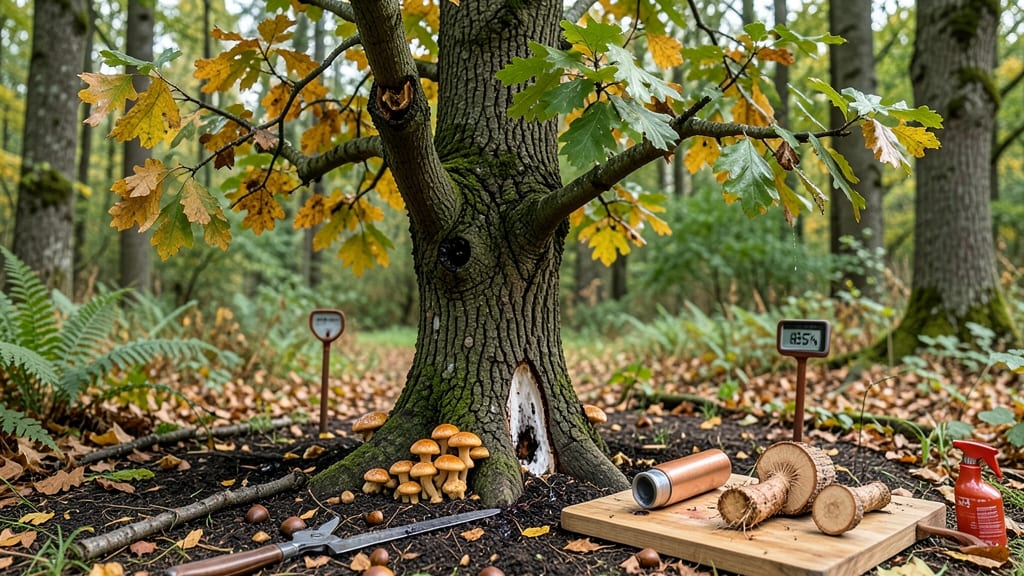
Tree rot fungus turns your backyard oak into a ticking time bomb—unless you catch it early. 🌳 I’ve watched healthy trees go from sturdy giants to hollow shells in just a few years, and the first sign is often mushrooms sprouting at the base or bark that peels like old wallpaper.
The good news? You can still save your tree with the right steps, and I’ll walk you through exactly what to look for, how to act, and how to keep it from happening again.
The fungus thrives on two things: wounds (like broken branches or improper pruning) and too much moisture (think soggy soil or poor drainage). I’ve seen it strike after heavy rains, when mulch piles up against the trunk, or even from a single deep cut that never healed.
The key is acting fast—once the rot spreads past the outer layer, the tree’s days are numbered. But with sharp tools, a little elbow grease, and some smart prevention, you can keep your tree standing strong for decades.
By the end of this, you’ll know how to prune out infected wood, whether to use fungicide (and when it’s a waste of money), and the one drainage fix that cuts rot risk by half.
My own maple’s been thriving for five years after I fixed its soggy roots—now it’s got a canopy so dense the neighbors ask how I did it. The secret? Spotting the warning signs before they become a crisis.
We’ll also cover when to call in a pro (spoiler: it’s sooner than you think) and how to protect other trees in your yard from catching the same fate.
No arborist degree required—just a willingness to get your hands dirty and an eye for detail. Let’s get your tree back to healthy.
Root Causes Of Wood Decay
Tree rot fungus thrives when conditions align—like a perfect storm of moisture, stress, and opportunity. Understanding why it happens helps you spot vulnerabilities before fungi take hold. Below are the key triggers, broken down by their biological and environmental mechanisms.
Fungi need water to spread—think of them as aquatic invaders. When soil stays soggy for prolonged periods, spores germinate and infect wounded or decay-prone wood. Here’s how it plays out:
- Compacted or clay-heavy soil: Prevents water from draining, creating a permanently damp environment. Actionable fix: Test soil drainage by digging a 12-inch hole, filling it with water, and timing how long it takes to drain. If it’s slower than 6 hours, amend with compost or sand.
- Overwatering or irrigation mistakes: Drip systems or sprinklers that splash bark (like a fungal firehose) encourage rot. Actionable fix: Use soaker hoses at the base, not the trunk, and water early in the day for evaporation.
- Flooding or poor grading: Water pools around the trunk if the ground slopes toward the tree. Actionable fix: Create a 6-inch-wide berm of gravel or mulch 2–3 feet from the trunk to redirect runoff.
⚠️ Pro Tip: Mulch too thickly (over 4 inches)? It traps moisture like a sponge. Keep it 3–4 inches deep and 6 inches away from the trunk.
Healthy trees resist fungal attacks, but stress opens the door. Common culprits:
- Physical damage: Broken branches, girdling roots (roots circling the trunk), or poor pruning cuts (too close to the trunk) create entry points. Actionable fix: Prune in dormant season (late winter/early spring) and use clean, sharp tools to make cuts just outside the branch collar.
- Pests or disease: Bark beetles, borers, or canker diseases weaken defenses. Actionable fix: Inspect for sawdust-like frass (beetle droppings) or oozing sap—signs of infestation.
- Nutrient deficiencies: Yellowing leaves (chlorosis) or stunted growth signal poor health. Actionable fix: Test soil pH (ideal: 6.0–7.0) and amend with organic matter (compost, worm castings).
💡 Fun Fact: Some trees (like oak or maple) are naturally susceptible to rot due to dense, water-resistant wood. If your tree is heritage, monitor closely.
Fungi don’t just appear—they hitchhike. Spores spread via:
- Infected wood chips or mulch: Contaminated materials from rotten logs or diseased trees can introduce pathogens. Actionable fix: Buy certified disease-free mulch and avoid wood chips from unknown sources.
- Wind or water splash: Spores travel miles in storms. Actionable fix: Prune dead branches (which harbor spores) in dry weather and sterilize tools with 70% isopropyl alcohol.
- Root grafts: Trees with shared root systems (common in landscapes) can cross-infect each other. Actionable fix: Space compatible species 15–20 feet apart.
✨ Key Insight: Armillaria root rot (a aggressive fungus) spreads via rhizomorphs—black, string-like cords that act like fungal "highways." If you see them, remove the tree ASAP.
Temperature and humidity create the perfect petri dish for rot:
- Warm, humid summers: Ideal for spore germination (60–80°F with high humidity). Actionable fix: Improve air circulation with proper spacing (avoid planting trees too close to buildings or other trees).
- Cold winters: Some fungi (like Heterobasidion annosum) survive in decaying stumps and reactivate when temps rise. Actionable fix: Remove stumps and roots after cutting—don’t leave them as fungal reservoirs.
- Urban heat islands: Pavement and buildings trap heat, increasing trunk moisture even in dry climates. Actionable fix: Plant shade trees to cool the area and water deeply but infrequently.
🔥 Warning: Firewood stacks near trees? Bad idea. Infected wood can spread spores via wind or animals.
Fixing and Preventing Wood Decay Issues
Tree rot fungus may seem like a death sentence for your trees, but with the right approach, you can stop the spread, restore health, and protect your landscape—without cutting down healthy trees.
Below, we’ll break down targeted solutions based on the most common causes of rot, along with preventive measures to keep your trees thriving for years.
Cause: Waterlogged soil, poor drainage, or overwatering leads to root rot fungus (e.g., Phytophthora or Armillaria). Fix:
- 🔥 Improve Drainage Immediately
- Dig a soil trench (6–12 inches deep) around the tree’s drip line to redirect excess water.
- Add gravel or sand to clay-heavy soil to aerate roots.
- Install a French drain if the area floods frequently.
- 👨🍳 Prune Damaged Roots (Carefully!)
- Only a certified arborist should remove rotted roots—use sterilized tools to avoid spreading spores.
- Focus on large, mushy roots (they’ll ooze when cut).
- 🌡️ Adjust Watering Habits
- Water deeply but infrequently (1–2 times per week, depending on climate).
- Avoid overhead sprinklers—drip irrigation keeps soil moist without saturation.
💡 Pro Tip: Apply mycorrhizal fungi (beneficial soil microbes) to help roots recover. Look for products like MycoApply or RootGrow.
Cause: Fungal infections (e.g., Fomes or Polyporus) weaken the tree’s central wood, often from wounds or stress. Fix:
- ⏰ Remove Infected Wood Promptly
- Cut out rotted sections with a sterilized chainsaw (bleach or 70% alcohol).
- Do not compost infected wood—burn or dispose of it in sealed bags.
- 🔪 Seal Wounds Properly
- Apply tree wound dressing (like Tanglefoot Tree Wound Pruning Seal) to large cuts to block spores.
- For small wounds, let the tree heal naturally—sealing can trap moisture.
- 🌿 Boost Tree Immunity
- Fertilize with slow-release, balanced nutrients (e.g., 10-10-10 NPK) to strengthen growth.
- Mulch 3–4 inches deep (keep it 6 inches away from the trunk) to regulate soil temperature.
✨ Prevention Hack: Thin the canopy to improve airflow—fungus thrives in dense, damp foliage.
Cause: Splitting bark, storm damage, or sap-sucking insects create entry points for bark rot fungus (e.g., Nectria or Hypoxylon). Fix:
- 🔪 Remove Dead Bark and Debris
- Scrape off loose, darkened bark with a sterilized knife—don’t pull healthy bark!
- Dispose of debris in a sealed trash bag (not compost).
- 🍳 Apply Fungicide (When Needed)
- Use a copper-based fungicide (like Copper Soap) or propiconazole (e.g., Alamo) only if rot is active.
- Spray during dry weather to avoid spreading spores.
- 🛡️ Prevent Future Damage
- Inspect trees after storms—remove broken branches within 48 hours to prevent infection.
- Avoid wounding trees when pruning—cut at a 45° angle just outside the branch collar.
🎯 Long-Term Strategy: Prune in late winter/early spring (when trees are dormant) to minimize stress.
Even if rot isn’t present yet, proactive care can stop it before it starts:
- 🌡️ Monitor Soil Moisture – Use a moisture meter to avoid overwatering.
- 🔄 Aerate Compacted Soil – Rent a core aerator every 2–3 years for heavy clay soil.
- 🐛 Control Pests Early – Neem oil or insecticidal soap can prevent borers and beetles that weaken trees.
- 🌿 Choose Resistant Species – If rot is common in your area, plant oak, maple, or black walnut (more resistant than willow or pine).
Final Reminder: 🚨 When in doubt, call an arborist. Some rot is irreversible, but many cases can be managed with early action. Don’t wait until your tree is 50% compromised—act at the first signs!
Frequently asked questions about tree rot fungus
What are the first signs of tree rot fungus I should look for?
Start by checking for mushrooms or conks growing at the tree base—these are classic signs of active fungal decay. Also watch for peeling, cracked, or discolored bark, oozing sap, and thinning canopy (leaves dying from the inside out). Tap the trunk—if it sounds hollow, rot has likely spread deep.
Can I save a tree with advanced rot, or is removal the only option?
It depends on the severity. If rot is confined to small branches or outer bark, pruning and fungicide may work. But if the trunk is hollow or roots are mushy, removal is safer to prevent spread. For borderline cases, consult an arborist—they can assess structural stability and recommend targeted treatments.
How do I know if my tree’s rot is caused by fungus vs. other issues?
Fungal rot typically shows white, brown, or black fungal growth on bark or soil, plus mushrooms or shelf-like structures. Other causes (like borer insects) create exit holes or sawdust-like frass, while drought stress causes brown, crispy leaves without fungal signs. Use a magnifying glass to spot fungal threads or spores.
Are there natural fungicides that work better than chemical ones?
Yes! Neem oil (1% solution) or baking soda spray (1 tbsp baking soda + 1 tsp soap per gallon of water) can prevent mild infections. For existing rot, copper fungicide is more effective, but hydrogen peroxide (3%) applied to wounds can also help. Always test on a small area first and reapply after rain.
How long does it take to see results from treating tree rot?
Early-stage rot may show improvement in 4–8 weeks with proper care (pruning + fungicide), but severe cases can take 1–2 years to stabilize. Monitor for new growth and fewer mushrooms—if symptoms worsen, the tree may be beyond saving. Patience is key, but act fast if you see rapid decline.