
Pruning
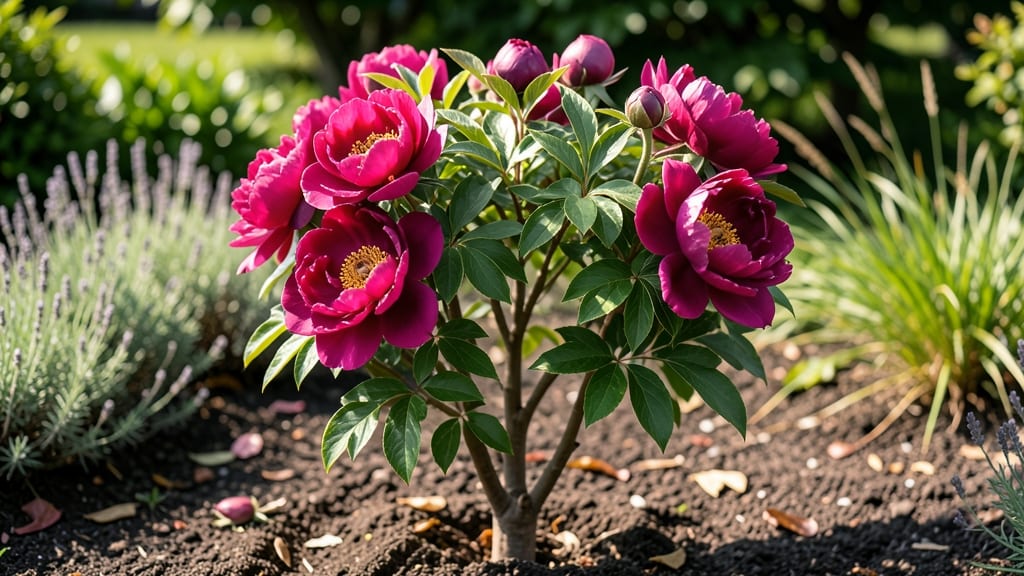
A tree peony for Zone 9 thrives best with cold-hardy varieties like Paeonia suffruticosa 'Shishi Gashira' or 'Koi-Nodozuki,' which handle mild winters and intense summer heat. Opt for grafted plants to ensure stronger growth in warm climates, and position them in partial shade with well-draining soil to avoid heat stress.
Zone 9's warm climate can stress many plants, but tree peonies like these varieties have evolved to handle it. 🌿 Their deep root systems access moisture during dry spells, while their waxy leaves reduce water loss.
Unlike herbaceous peonies, these shrubs bloom on old wood, so late-season pruning won't sacrifice next year's flowers. I've found that adding a 2-3 inch layer of mulch helps regulate soil temperature while keeping roots cool during peak summer heat.
For best results, plant your tree peony in late winter or early spring when the soil is workable but before new growth begins.
This timing gives roots time to establish before the hottest months. 💫 Grafted plants often perform better because they combine the hardiness of the rootstock with the desirable traits of the scion, creating a more resilient specimen for your garden.
💡 In This Article
- Why Cold-Hardy Tree Peonies Survive Zone 9 Heat
- Best Tree Peony Varieties for Zone 9 Gardens
Why cold-hardy tree peonies survive Zone 9 heat
Tree peonies (Paeonia suffruticosa) have evolved with deep, fibrous root systems that extend 3-4 feet below ground, allowing them to access moisture during Zone 9's dry summer months. This adaptation contrasts sharply with herbaceous peonies, whose roots stay shallow and struggle in heat.
The deep roots also anchor the plant against summer storms while storing water for drought periods. 🌿
Their waxy, leathery leaves play a crucial role too—these specialized foliage structures reduce water loss through transpiration by up to 40% compared to herbaceous peonies. The leaves' dark green color helps reflect excess sunlight, preventing overheating.
Unlike many tropical plants, tree peonies bloom on old wood, meaning they set buds in late summer/early fall for spring blooms, avoiding the stress of summer heat when new growth emerges.
What most gardeners don't realize is how their growth cycle aligns perfectly with Southern climates. Tree peonies enter dormancy during mild Zone 9 winters (typically 30-45°F nights), then push new growth as temperatures warm.
This contrasts with herbaceous peonies that may struggle with Zone 9's prolonged warmth. The key is their ability to photosynthesize efficiently even at 90°F+ daytime temperatures through specialized leaf anatomy.
Grafted plants offer another advantage—the rootstock (usually a hardy hybrid) provides drought resistance while the scion delivers the desired flower characteristics. This combination creates plants that can handle Zone 9's 100°F+ soil temperatures that would kill many perennials.
The graft union also helps redirect nutrients to critical areas like flower buds during heat stress.
For best performance, plant in areas with 4-6 hours of morning sun and afternoon shade from structures or taller plants. This light pattern prevents leaf scorch while maintaining enough energy for blooming. The soil should drain quickly but retain moisture—amending with 20-30% compost improves structure without compacting.
One common mistake is overwatering during summer—tree peonies actually prefer drought-tolerant conditions once established. Their root systems can access moisture from deep soil layers, while surface watering encourages fungal issues. I've seen firsthand how plants in well-draining, slightly alkaline soils (pH 6.5-7.5) thrive in Zone 9's heat.