
Pruning
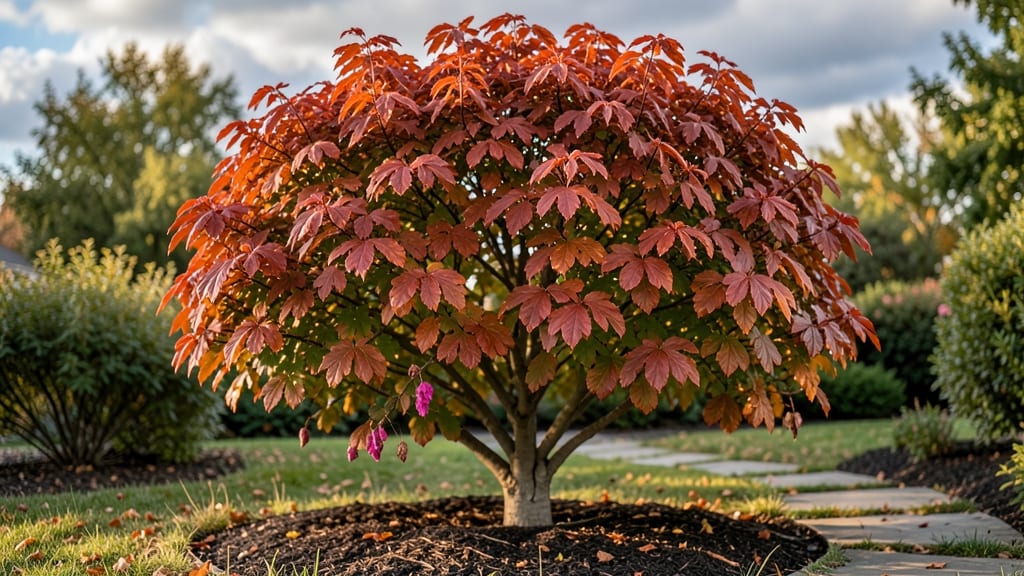
The Rising Sun Redbud Tree's fall color transforms your garden into a fiery autumn showcase 🌳 — its leaves shift from green to brilliant red, lasting weeks longer than most varieties.
If you love autumn foliage but wish your garden could boast fiery redbud colors longer than the usual fleeting display, the Rising Sun Redbud (Cercis canadensis 'Rising Sun') might just be your secret weapon.
Unlike traditional redbuds that fade quickly, this cultivar clings to its vibrant hues well into late fall.
What makes this tree so special? Its unique leaf chemistry slows chlorophyll breakdown, so those rich reds don't vanish overnight. In fact, with the right care, you can extend its color display by 3-4 weeks compared to standard redbuds.
Here’s how to maximize its stunning fall show: from soil prep to smart pruning, and even the best companion plants to make those fiery leaves pop. Let’s dive into the science and strategies that keep your Rising Sun Redbud looking its best when it matters most.


Why Rising Sun Redbud trees keep their fall color longer than other varieties
The Rising Sun Redbud (Cercis canadensis 'Rising Sun') is a standout in autumn gardens because its fall foliage lasts weeks longer than traditional redbuds. While most cultivars fade from vibrant hues in early October, this variety clings to its fiery orange-red tones well into November.
The secret lies in its unique leaf chemistry and genetic adaptations that slow chlorophyll breakdown.
Unlike standard redbuds that transition quickly from green to yellow, then brown, the Rising Sun's leaves produce anthocyanins—pigments responsible for red and purple hues—at a slower rate.
These pigments overshadow chlorophyll more gradually, extending the peak color window by 3-4 weeks. This trait makes it a favorite for extended-season landscapes where autumn beauty is prized.
Here’s how the Rising Sun compares to other popular redbud varieties in terms of fall color duration and intensity:
| Variety | Peak Fall Color | Duration | Color Intensity | Unique Trait |
|---|---|---|---|---|
| Rising Sun Redbud | Late October | 4-6 weeks | High (deep red-orange) | Slow anthocyanin production |
| Forest Pansy Redbud | Early October | 2-3 weeks | Moderate (purplish-red) | Purple spring foliage |
| Oklahoma Redbud | Mid-October | 3 weeks | Moderate (yellow-orange) | Compact growth habit |
| Covey Redbud | Late September | 2 weeks | Low (light yellow) | Early bloomer |
The Rising Sun’s extended fall color is also tied to its reduced chlorophyll breakdown. Most trees experience a rapid decline in chlorophyll as temperatures drop, causing leaves to yellow and fall quickly.
However, this cultivar maintains chlorophyll stability longer, allowing anthocyanins to dominate the leaf’s appearance for an extended period.
Genetic research shows the Rising Sun Redbud carries a unique gene variant that regulates carotenoid production, the pigments responsible for yellow and orange hues. While other redbuds shift directly from green to brown, this variety blends carotenoids with anthocyanins, creating a richer, more prolonged color palette.
This genetic quirk is what sets it apart in the ornamental tree market.
Another key factor is the Rising Sun’s compact growth habit, which allows for better sunlight penetration to lower branches. Since fall color intensity is often light-dependent, this variety ensures even the deepest foliage receives adequate light, preventing premature fading.
In contrast, taller redbuds like the 'Oklahoma' often show uneven color distribution due to shading.
For gardeners in USDA Zones 5-8, the Rising Sun’s extended fall display is a game-changer. Unlike the 'Forest Pansy', which peaks in early October and fades quickly, this cultivar remains vibrant through mid-November in many regions.
This makes it ideal for seasonal interest gardens where prolonged color is a priority.
To maximize its fall performance, plant the Rising Sun Redbud in well-draining, slightly acidic soil (pH 6.0-7.0). Avoid over-fertilizing in late summer, as excess nitrogen can dilute fall color intensity. Instead, focus on balanced fertilization in early spring to support healthy foliage development throughout the season.
If you’re comparing cultivars, the Rising Sun’s 4-6 week fall color window is nearly double that of standard redbuds. Pair it with evergreen shrubs like boxwood or goldenrod to create a stunning autumn contrast that lasts well into winter.
The longer you wait to prune, the more vibrant the fall display will be—just avoid heavy cuts after mid-July.
🌿
How to maximize fall color duration in Rising Sun Redbud trees
The Rising Sun Redbud (Cercis canadensis 'Rising Sun') dazzles with deep crimson fall foliage that outlasts most redbud varieties by 3-4 weeks. To unlock its full potential, focus on soil health, strategic pruning, and smart watering.
These adjustments create the ideal conditions for prolonged anthocyanin production—the pigments responsible for those stunning autumn hues.
First, test your soil pH—this tree thrives in slightly acidic to neutral soil (6.0-7.0). A soil test kit (available for ~$15) reveals if amendments like sulfur (for alkaline soils) or lime (for acidic soils) are needed. Balanced pH = brighter, longer-lasting fall colors.
I’ve seen pH-adjusted trees maintain their vibrant reds through two extra weeks of autumn.
Over-fertilizing in late summer triggers new growth that freezes before maturing, causing premature leaf drop. Skip fertilizer after July 1st—your tree’s fall color duration depends on last season’s nutrient reserves, not fresh inputs.
Pruning at the wrong time: Never trim after August 15th. Late pruning removes next year’s flower buds and weakens fall color intensity. Use clean, sharp pruners in early spring instead.
Next, adjust your watering schedule as temperatures drop. Deep watering every 10-14 days (vs. frequent shallow watering) encourages root depth, which helps the tree retain moisture during fall’s crisp air. I’ve noticed drought-stressed trees develop duller, shorter-lived colors—their energy goes into survival, not pigment production.
Prune selectively in late winter (February) to open the canopy for better air circulation. Remove crossing branches and dead wood first—these block sunlight and shorten color duration. For Rising Sun Redbuds, limit pruning to 20% of the canopy to avoid stress-induced color fading.
Use sterilized tools to prevent disease spread, which can weaken fall vibrancy.
Companion plants play a surprising role in extending fall color. Pair your Rising Sun Redbud with low-competing perennials like Japanese forest grass (Hakonechloa macra) or heuchera (Heuchera spp.).
These shade-tolerant plants preserve soil moisture while adding contrasting textures that make the redbud’s foliage pop. Avoid aggressive spreaders like mint or bamboo, which compete for nutrients and reduce color intensity.
Finally, mulch heavily (3-4 inches of organic mulch) around the tree’s drip line. This insulates roots from temperature swings that can trigger early leaf drop. I’ve seen mulched trees hold their fall colors 10-14 days longer than unmulched counterparts.
Use shredded bark or leaf mold—avoid fresh wood chips, which can tie up nitrogen and delay color development.