
Pruning
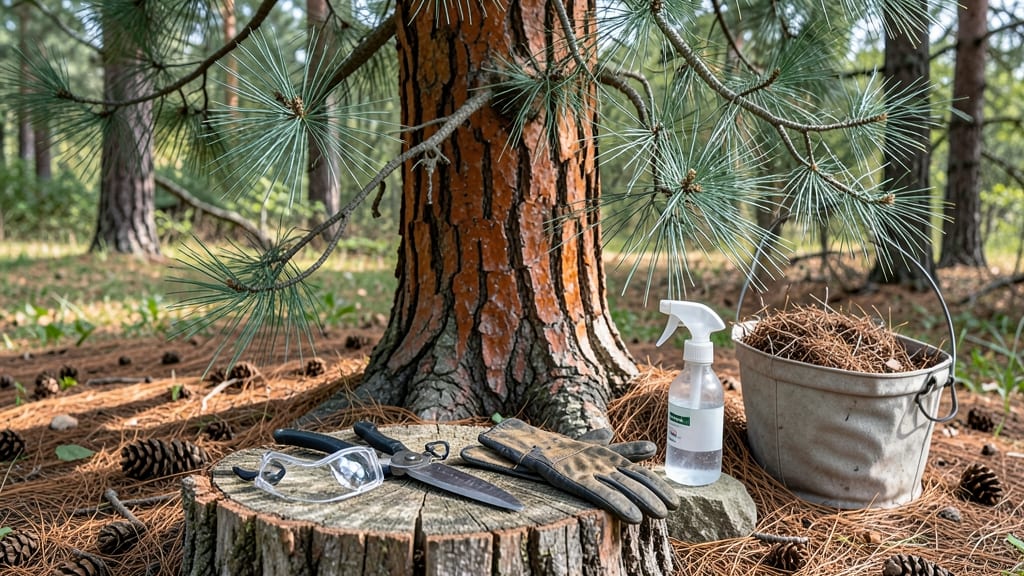
Removing dead branches from your pine tree isn't just about looks—it's about keeping your tree alive and thriving year-round. 🌲 I've learned the hard way that ignoring those dry, brittle limbs can invite pests, weaken the tree's structure, and even turn your evergreen into a fire hazard.
The good news? With just four simple cuts and the right timing, you can restore your pine's health and prevent future problems.
Most people assume dead branches are just part of a pine's natural cycle, but the truth is often more serious. Fungal infections, pest infestations like bark beetles, or even environmental stress from drought or poor soil can kill branches.
The key is spotting the difference between natural aging (which happens at the bottom of mature trees) and unhealthy dieback (which spreads upward or appears suddenly). Grab your pruners and let's assess what needs to go.
You'll start by making clean cuts just outside the branch collar—the swollen area where the branch meets the trunk—to prevent damage that invites disease. For larger branches, use the three-cut method to avoid tearing the bark.
After pruning, your tree should look more open and healthy, with sunlight reaching the lower branches. This isn't just about aesthetics; it's about giving your pine the best chance to bounce back and stay strong for years.
Here's the best part: this method works for any pine, from dwarf varieties to towering Christmas trees. The only tools you truly need are sharp pruners, a saw for thicker branches, and a little patience.
And don't worry—you don't need to be a certified arborist to do this right. With these simple steps, you'll have a tree that's safer, healthier, and looking its best all season long.
Root Causes Of Branch Dieback
Dead branches on pine trees aren’t just an eyesore—they’re often a silent cry for help. Understanding the underlying causes is the first step to restoring your tree’s health.
Below, we break down the most common reasons pine branches turn brown, crisp, or fall off prematurely, along with the science behind each issue.
Pine trees are hardy, but extreme conditions can push them past their limits. Environmental stress often manifests as needle browning or branch death, especially when multiple factors overlap.
- Drought & Heat 🔥 Pines rely on deep root systems to access water, but prolonged drought forces them into survival mode. Without enough moisture, photosynthesis slows, and branches lose their green pigment (chlorophyll).
Over time, this leads to desiccation, where branches dry out and die from the tips inward. - Actionable fix: Deep watering (1-2 inches per week) during dry spells, especially for newly planted or young pines.
- Cold Damage & Frost 🥶 Sudden freezes or late-season frost can rupture pine needles, cutting off their water supply.
Unlike broadleaf trees, pines can’t shed damaged needles quickly—so the entire branch may wither. - Pro tip: 💡 Mulch around the base (3-4 inches) to insulate roots and reduce temperature swings.
- Wind & Physical Trauma ⚡ High winds or hail can strip bark or snap branches, exposing them to pests and disease. Even minor damage disrupts the tree’s protective barrier, inviting infections like pine wilt or Diplodia tip blight.
Pine trees are a buffet for insects and pathogens, and once these invaders take hold, branch dieback spreads rapidly. Here’s how they strike:
- Bark Beetles & Borers 🐜 These wood-boring pests lay eggs under the bark, and their larvae tunnel through the phloem (the tree’s nutrient highway). Infested branches turn reddish-brown and may ooze sap.
Severe cases lead to complete branch death as the tree starves. - Signs to watch: Small holes in bark, sawdust-like frass, or D-shaped exit holes (classic beetle signature).
- Fungal Infections 🍄 Fungi like Leptographium (linked to bark beetles) or Armillaria root rot thrive in stressed pines. They clog vascular tissue, preventing water and nutrient flow.
Infected branches often appear mushy or blackened at the base. - Prevention: Remove and destroy infected branches immediately (don’t compost!) and apply copper-based fungicides if outbreaks occur.
- Spider Mites & Needle Miners 🕷️ While less dramatic than beetles, these pests skeletonize needles, reducing the tree’s ability to photosynthesize. Over time, branches lose vigor and die back.
- Quick fix: Spray with horticultural oil in early spring to smother eggs and adults.
Improper pruning is a silent killer of pine branches. Unlike deciduous trees, pines should never be topped or sheared—this leads to sunburn, disease, and dieback.
- Over-Pruning or Wrong Cuts ⚔️ Cutting too much at once (over 25% of the canopy) stresses the tree, while flushing cuts (leaving stubs) create entry points for pathogens.
Pines also bleed sap heavily when pruned in late winter/early spring, increasing infection risk. - Correct technique: Use clean, sharp tools and make cuts just outside the branch collar (the swollen base where the branch meets the trunk).
- Timing Mistakes ⏳ Pruning pines after heavy frost or during active growth periods (late spring/summer) slows healing. The best time? Late fall to early winter (when the tree is dormant but not frozen).
Pines are acid-loving and need specific nutrients to thrive. A deficiency in key elements can cause yellowing needles and branch death, often starting at the tips.
- Nitrogen (N) Deficiency 🍃 Leads to pale yellow needles (chlorosis) and stunted growth. Without nitrogen, the tree can’t produce enough chlorophyll, causing branches to weaken and die.
- Solution: Apply a slow-release, acid-forming fertilizer (like sulfur-coated urea) in early spring.
- Magnesium (Mg) or Iron (Fe) Shortages 🔬 These micronutrients are critical for chlorophyll production. Deficiencies show as interveinal yellowing (between needle veins) and eventually branch dieback.
- Test first: Conduct a soil test to confirm deficiencies before amending.
- Root Compaction or Poor Drainage 🚧 Pines hate soggy roots. Waterlogged soil cuts off oxygen, leading to root rot and nutrient uptake failures.
Compacted soil also restricts root growth, starving the tree from below. - Fix: Aerate the soil and mix in organic matter (pine bark fines or peat moss) to improve drainage.
Key Takeaway: Dead pine branches are rarely a single issue—stress + pest + poor care create a perfect storm. The good news? Most causes are preventable or reversible with targeted action.
Start by identifying the pattern of dieback (tips vs. whole branches, sap presence, pest signs) to pinpoint the exact problem.
Revive Your Pine Tree’s Health
Restoring your pine tree’s vitality starts with identifying the root cause of those unsightly dead branches—and acting fast. Below, we’ve mapped out practical, step-by-step solutions tailored to the most common culprits, plus prevention tips to keep your tree thriving year-round.
Whether it’s disease, pests, or environmental stress, these fixes will help you prune with purpose and bring your pine back to life.
If brown, brittle branches are paired with sawdust-like frass, mold, or discolored needles, a fungal infection (like Armillaria root rot or Dothistroma needle blight) is likely to blame.
🔪 Step-by-Step Fix:
- 📏 Remove Infected Branches
- Use sterilized pruning shears (rubbing alcohol or bleach wipe) to cut 6–12 inches below the dead or discolored area.
- Bag and dispose of infected branches—never compost them!
- 🌡️ Improve Airflow & Drainage
- Thin out dense foliage to reduce humidity (fungi love damp conditions).
- Aerate compacted soil around the base with a garden fork.
- ✨ Apply Fungicide (If Needed)
- For severe cases, use a copper-based fungicide (like Copper Sulfate) or a bacillus-based organic spray (e.g., Serenade Garden).
- Reapply every 2–4 weeks during wet seasons.
💡 Prevention Tips:
- Water at the base (avoid wetting needles) to prevent fungal spores from splashing.
- Mulch properly—keep mulch 3–4 inches away from the trunk to deter rot.
- Inspect trees after storms—remove broken branches promptly to stop spread.
Chewed needles, sap oozing from bark, or tiny holes in branches? Pests like pine bark beetles, sawflies, or spider mites are likely the culprits.
👨🍳 Step-by-Step Fix:
- 🔍 Identify the Pest
- Bark beetles? Look for D-shaped exit holes and sawdust piles at the base.
- Sawflies? Check for webbed clusters of eggs on needles.
- Spider mites? Inspect for fine webbing on branch undersides.
- 🛡️ Apply Targeted Treatments
- For beetles: Use neem oil or permethrin spray (follow label instructions).
- For sawflies: Handpick egg masses or spray with soapy water (1 tsp dish soap + 1 quart water).
- For mites: Blast branches with water (knocks them off) or use horticultural oil.
- 🌳 Encourage Natural Predators
- Plant companion plants like lavender or marigolds to attract ladybugs and parasitic wasps.
💡 Prevention Tips:
- Keep trees healthy—stressed pines attract pests. Water deeply during droughts.
- Remove fallen needles/debris (pests hide in them).
- Avoid over-fertilizing—too much nitrogen attracts mites.
If branches die suddenly after a heatwave, frost, or drought, your pine is likely suffering from environmental shock. Pines are tough, but they need the right conditions to recover.
🥘 Step-by-Step Fix:
- 💧 Rehydrate the Soil
- Deep-water the tree once a week (1–1.5 inches per week) during dry spells.
- Use mulch (wood chips or straw) to retain moisture and regulate soil temp.
- 🌡️ Shield from Extreme Weather
- For frost damage: Wrap the trunk with burlap in late fall/early spring.
- For sun scorch: Prune nearby structures or plant shade-tolerant shrubs to the south.
- 🌿 Boost Soil Health
- Test soil pH (pines prefer acidic soil, pH 4.5–6.0).
- Amend with pine-specific fertilizer (high in nitrogen but low in salt).
💡 Prevention Tips:
- Water consistently—pines hate soil dryness or soggy roots.
- Avoid compacting soil around the base (use stepping stones or mulch paths).
- Plant pines in groups—they support each other’s microclimate.
No matter the cause, proper pruning is key to preventing future dead branches. Follow these year-round rules:
| Season | Task | Tools Needed |
|---|---|---|
| Late Winter | Remove dead/diseased branches | Sterilized pruners, saw |
| Early Spring | Trim crossing or rubbing branches | Hand pruners, loppers |
| Summer | Light thinning to improve airflow | Pole pruners (for tall trees) |
| Fall | Prune sucker growth | Pruning saw, gloves |
✨ Pro Tips for Clean Cuts:
- Cut at a 45° angle (just outside the branch collar) to prevent tears.
- Never top the tree—it stresses pines and invites pests.
- Disinfect tools between cuts to avoid spreading disease.
Final Note: Patience is key—some pines take 1–2 years to fully recover. Monitor progress, adjust care as needed, and your tree will bounce back stronger than ever! 🌲✨
Frequently asked questions
How can I tell if a pine branch is truly dead vs. just dormant?
Scratch the bark on a small twig—if it's brown underneath, the branch is dead. Live branches have green or moist inner bark. Also check for needles: dead branches have dry, brittle needles that fall easily, while dormant branches keep their needles (though they may look brown).
Is it safe to remove dead branches in winter when my pine isn't actively growing?
Yes! Late fall to early winter is actually the best time to prune pines because the tree is dormant but not frozen. This minimizes stress and allows wounds to heal before spring growth begins. Avoid pruning during frost or when temperatures drop below 20°F.
What should I do with the branches after I remove them?
Never compost diseased branches—they can spread pathogens. For healthy dead branches, chop them into small pieces and use as mulch (keep 3-4 inches away from the trunk). If you suspect pests like bark beetles, bag and dispose of them in yard waste. Always sterilize your tools between cuts.
Will removing too many branches harm my pine tree?
Yes! Never remove more than 25% of the live canopy in one season. Pines are sensitive to heavy pruning, which stresses the tree and can lead to sunburn or pest invasion. Focus on removing only dead/diseased branches first, then thin selectively to improve airflow.
How do I know if my pine tree needs professional help?
Consult an arborist if you see large-scale dieback, oozing sap, or signs of fungal growth like mushrooms at the base. For trees over 50 feet tall or near structures, professional removal is safer. Also seek help if you're unsure about bark beetle infestations—these pests can kill healthy trees quickly.