
Pruning
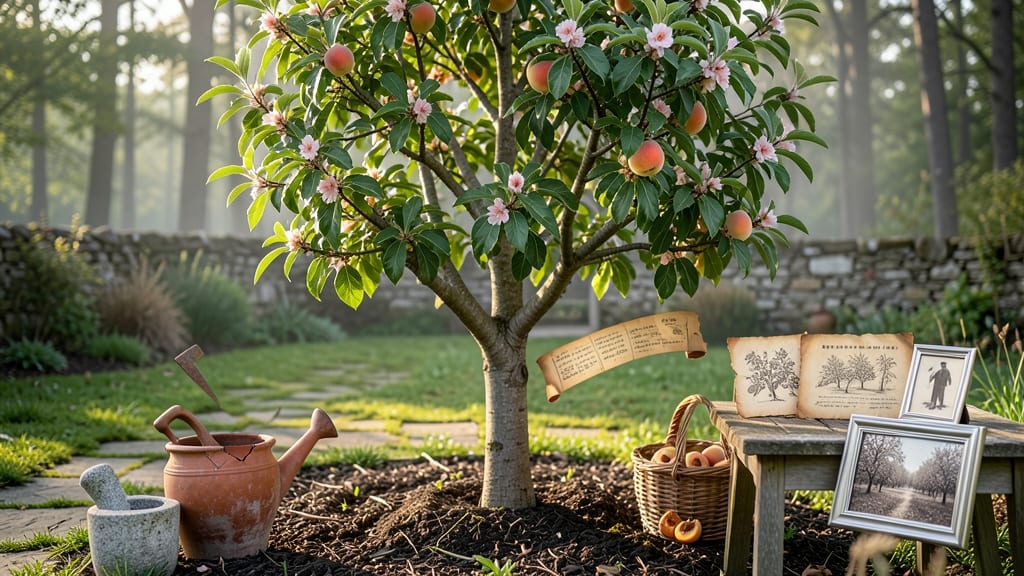
The history of peach trees begins over 4,000 years ago in China's Yangtze River Valley, where wild Prunus persica transformed into cultivated varieties. These trees then traveled through Persia and Rome via ancient trade routes, eventually reaching Europe by 100 BCE and the Americas with Spanish explorers in the 1500s.
The peach tree's journey from wild orchard to global staple began in ancient China, where early farmers first domesticated the species around 3000 BCE. 🌱 Archaeological evidence shows these early peaches were prized not just for their fruit but also for their medicinal properties and cultural significance—Confucian texts even reference peaches as symbols of immortality.
The trees' adaptability to different climates made them ideal candidates for trade, which explains their rapid spread across continents through both the Silk Road and Roman expansion efforts.
What makes this history fascinating is how peach trees evolved into the diverse varieties we know today. 🌍 The Elberta and Redhaven cultivars, for example, were developed in the U.S. to thrive in temperate climates, while Chinese cling peaches retained their ancient growing characteristics.
Each variety tells a story of how human ingenuity and natural adaptation shaped one of the world's most beloved fruits.
💡 In This Article
- Ancient Origins: From Wild Peach to Chinese Cultivation
- Global Spread: Peach Trees Across Continents and Modern Varieties
Ancient origins: from wild peach to Chinese cultivation
The wild ancestor of today's peach, Prunus persica, first appeared in China's Yangtze River Valley around 4,000 years ago. Archaeologists have uncovered stone tools and pits dating back to 3000 BCE that show early farmers were already cultivating these trees.
The transition from wild to domesticated peaches involved selective breeding for sweeter fruit and larger size—key traits that made them more appealing for both consumption and trade.
Chinese cultivation wasn't just about food; peaches held deep cultural significance.
In Confucian traditions, they symbolized immortality and were often planted near temples. 🌿 The fruit's bright orange hue and velvety texture made it a prized offering in festivals, while its medicinal properties—particularly for digestive health—were documented in ancient texts like the Shennong Bencaojing.
Peach wood was also valued for its durability, used in everything from furniture to musical instruments.
The botanical evolution of Prunus persica involved a fascinating genetic shift. Wild peaches had small, tart fruit with hard pits, but through centuries of cultivation, farmers developed varieties with 20% more sugar content and thinner pits that split more easily.
This domestication process mirrors how other fruits like apples and grapes were refined, but peaches stood out for their rapid adaptation to different growing conditions across China's diverse climates.
What's particularly interesting is how peach cultivation spread within China itself. By 1000 BCE, peach trees had reached northern regions, where they thrived in cooler climates—proof of their remarkable adaptability. The Chinese also developed early grafting techniques to propagate specific varieties, a method still used today.
These innovations laid the foundation for peaches to become one of the first fruits to travel beyond Asia's borders.
One of the most compelling pieces of evidence comes from ancient Chinese art. Tomb paintings from the Han Dynasty (206 BCE-220 CE) depict peach orchards, showing how deeply integrated these trees were into daily life.
The fruit's association with longevity even influenced Chinese New Year celebrations, where peaches became symbolic decorations. 🌸 This cultural embedding explains why peaches remained a staple long after they reached other continents.