
Pruning
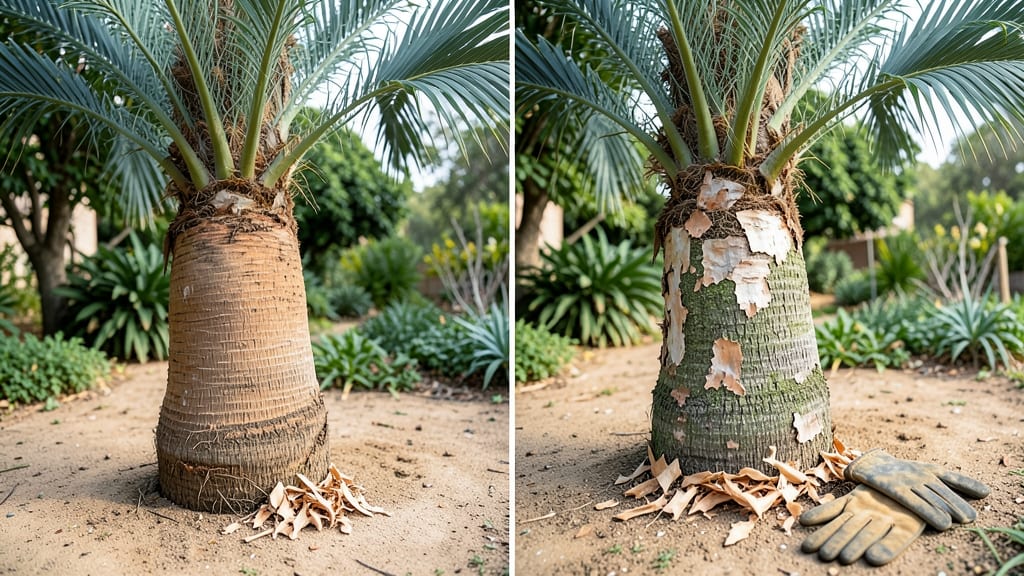
Palm tree bark falling off reveals serious trouble—this isn't normal aging. 🌴 I've seen healthy palms lose their protective layer overnight, and it's almost always a sign of rot, pests, or stress. The good news? You can often stop the damage before it kills your tree.
Fungal infections like Ganoderma butt rot or invasive pests such as palm weevils are the top culprits. Environmental stress—think extreme heat, poor drainage, or overwatering—can also trigger this peeling. The key is acting fast: inspect the trunk for soft spots, sawdust-like frass, or oozing sap before it's too late.
You'll need to prune dead fronds, apply fungicide to exposed areas, and adjust watering habits. For severe cases, a professional arborist can inject systemic treatments deep into the trunk. The goal is to save the tree's core—once that's exposed, recovery becomes nearly impossible.
Prevention is easier than repair: mulch properly, avoid overwatering, and monitor for early signs of pests. If you catch it early, you can often nurse your palm back to health. Let's get to the diagnosis before it's too late.
Root Causes Behind Bark Loss
When your palm tree’s bark starts peeling away like a sunburned arm, it’s rarely a random act of nature—it’s a cry for help. Understanding the why behind this issue is the first step to saving your tree from irreversible damage.
Below, we break down the most common culprits, from environmental stressors to hidden pests, with clear explanations and actionable insights.
Palm trees are tropical or subtropical plants at heart, and they hate sudden swings in temperature.
Whether it’s scorching heat during the day followed by a freezing night or rapid shifts between hot and cold fronts, these fluctuations can cause the outer bark to crack and slough off like a poorly applied sunburn peel.
- How it happens: The inner layers of the trunk expand and contract at different rates than the outer bark, creating stress points. Over time, this leads to longitudinal splits (vertical cracks) or delamination (layers separating).
- Common triggers:
- Desert climates with daytime temps over 100°F and nighttime drops below 50°F.
- Urban heat islands where pavement radiates heat, baking the trunk.
- Cold snaps in USDA Zones 9-10 (e.g., Florida freezes, California’s Santa Ana winds).
- Actionable fix:
- 🌿 Mulch heavily at the base (3–4 inches of organic mulch) to regulate soil temp and reduce trunk stress.
- 💦 Water deeply during heatwaves to keep the root zone cool (1–2 inches per week).
- 🏡 Use shade cloth (30–50% coverage) on young palms to protect from intense afternoon sun.
Not all bark loss is weather-related—some of it is dinner for pests. Insects like palm weevils, sap-sucking scale insects, and even termites can burrow into the trunk, weakening the structural integrity of the bark. Their presence often goes unnoticed until large sections start peeling away.
- How to spot them:
- Palm weevils: Look for frass (sawdust-like droppings) at the base of the trunk or oozing sap from small holes.
- Scale insects: Sticky honeydew residue on leaves/bark and sooty mold (black fungal growth).
- Termites: Hollow-sounding taps on the trunk and mud tubes near the base.
- Why it causes peeling: Pests create entry wounds that disrupt the tree’s vascular system. As the tree “seals off” the damage, the outer bark puckers and detaches in patches.
- Actionable fix:
- 🔍 Inspect the trunk and crown monthly for holes, sawdust, or sap. Use a flashlight to check crevices.
- 💉 Apply systemic insecticides (e.g., imidacloprid or bifenthrin) early in pest season (spring/summer).
- 🌟 Introduce natural predators: Ladybugs (for scale) or nematodes (for weevil larvae) can help.
Palm trees thrive in well-draining soil, and when their roots sit in soggy conditions, the trunk swells unevenly. This internal pressure forces the bark to split and peel, often starting at the base where moisture damage is worst.
- Red flags:
- Bark peeling in horizontal strips (vs. vertical cracks from temperature stress).
- Mushy, foul-smelling soil at the base.
- Leaning or mushroom-like growths at the trunk’s base (fungal rot).
- Why it happens: Excess water drowns root cells, causing anaerobic conditions that produce toxic byproducts. The tree’s defense mechanism? Shedding damaged bark to isolate the problem.
- Actionable fix:
- 🚰 Check drainage: Dig a hole 12 inches deep near the trunk—if water pools after 30 mins, amend soil with perlite or sand.
- ⏳ Adjust watering: Water only when the top 2–3 inches of soil are dry (stick your finger in to test!).
- 🌱 Raise the planting bed slightly (6–12 inches) to improve airflow and drainage.
Palms may look sturdy, but their thin, fibrous bark is vulnerable to abrasion. High winds can sandblast the trunk with debris, while hail or falling branches create clean tears that expose the tree to disease and pests.
- Visual clues:
- Bark peeling in irregular, jagged patches (vs. smooth layers from other causes).
- Scorch marks or dents on the trunk.
- Leaves showing wind damage (tattered fronds) even if the bark is peeling.
- Why it matters: Exposed inner bark lacks the protective cuticle and is prone to sun scald (discoloration) or fungal infections (e.g., Phytophthora).
- Actionable fix:
- 🌳 Prune nearby trees to reduce wind exposure, especially if your palm is in an open area.
- 🛡️ Wrap young trunks with tree guard (burlap or plastic) during storm season.
- 🔨 Smooth rough edges with a pruning knife (sterilized with rubbing alcohol) to prevent further tearing.
Pro Tip: 💡 If your palm’s bark is peeling in large sheets or revealing dark, mushy tissue underneath, it may be too late to save the tree—consult an arborist immediately. Early intervention (like addressing pests or drainage) can make all the difference!
Quick Fixes for Peeling Palm Bark
When your palm tree’s bark starts peeling like a sunburnt sunflower, don’t panic—there’s a solution for every cause. Below, we break down the most common reasons and the practical steps to stop the damage, restore health, and keep your tree thriving.
Prevention tips are included so you can avoid future flakes!
Signs: Dark, oozy patches under peeling bark; soft, mushy trunk; rapid spread. Why it happens: Fungi (like Phytophthora or Ganoderma) or bacteria thrive in wet, damaged bark, causing rot and peeling.
How to Fix It: 🔥 🚨 Step 1: Isolate & Inspect
- Remove any fallen debris or mulch touching the trunk (fungi love damp soil).
- Wear gloves—some infections (like Ganoderma) are contagious to other palms.
🍳 🧪 Step 2: Sterilize Tools & Trunk
- Scrub the trunk with a 10% bleach solution (1 part bleach to 9 parts water) or copper fungicide (follow label instructions).
- Use a sterilized pruner to trim away all infected, peeling bark—even if it looks “mostly fine.” Healthy tissue is just beneath the blackened layers.
👨🍳 🌱 Step 3: Apply Fungicide
- Spray a copper-based fungicide (like Copper Sulfate) or a palm-safe fungicide (e.g., Serenade Garden or Neem Oil for mild cases).
- Reapply every 2–4 weeks until new, clean bark forms (usually 3–6 months).
⏰ 📅 Step 4: Monitor & Repeat
- Check the trunk weekly for new peeling. If it worsens, consult a palm arborist—some infections (like Ganoderma) may require trunk injections of systemic fungicides.
💡 🌡️ Pro Tip:
- Prevent recurrence by improving drainage (raise soil level slightly) and avoiding overhead watering. Fungi love soggy roots!
Signs: Slow, patchy peeling; bark looks dry or cracked; tree is drooping slightly. Why it happens: Extreme heat, cold snaps, wind, or salt spray (near coasts) weaken the bark, causing it to flake prematurely.
How to Fix It: 🔥 🌞 Step 1: Protect from Elements
- Shade cloth (30–50% coverage) can reduce heat stress in summer.
- Windbreaks (like bamboo screens) help if your tree is exposed to gusts.
- Salt spray? Rinse the trunk monthly with fresh water (especially in coastal areas).
🍳 💦 Step 2: Adjust Watering
- Overwatering? Let soil dry 3–4 inches deep between waterings.
- Underwatering? Deep-water once a week (soak the root zone, not just the surface).
- Mulch properly: Use 3–4 inches of organic mulch (like wood chips) away from the trunk to retain moisture without suffocating roots.
👨🍳 🌱 Step 3: Fertilize Smartly
- Use a slow-release palm fertilizer (high in potassium and magnesium) to strengthen bark resilience.
- Avoid high-nitrogen fertilizers—they promote leaf growth at the expense of trunk health.
✨ 🎯 Pro Tip:
- Acclimate young palms gradually to harsh conditions. If you moved a palm from a nursery to a sunny/windy spot, transition it slowly over weeks.
Signs: Peeling in straight lines (like a cut); exposed fibrous tissue; bark looks scraped or torn. Why it happens: Lawnmowers, trimming tools, or even animals (like possums!) can strip bark, leaving it vulnerable to rot.
How to Fix It: 🔥 🔪 Step 1: Clean the Wound
- Use sterilized pruners to trim away jagged edges—make clean cuts to prevent further tearing.
- Scrub the area with rubbing alcohol or bleach solution to kill bacteria.
🍳 🧴 Step 2: Seal Minor Damage
- For small cuts (under 1 inch wide), apply palm-safe wound sealant (like Tanglefoot Tree Wound Pruning Sealer).
- For larger wounds, pack with sterilized coconut fiber or hydrogel to promote healing.
👨🍳 🛡️ Step 3: Prevent Future Scratches
- Mark the trunk with flagging tape or paint to warn landscapers/lawn crews.
- Install a tree guard (like a metal collar) if animals are the culprit.
💡 🌡️ Pro Tip:
- Never paint healthy bark—it traps moisture and encourages rot. Only seal active wounds.
Signs: Peeling starts at the top or tips; leaves show yellowing (chlorosis) or brown edges. Why it happens: Lack of magnesium, potassium, or zinc weakens the trunk’s structural integrity.
How to Fix It: 🔥 📊 Step 1: Test the Soil
- Get a soil test kit (or send a sample to a lab) to check for deficiencies.
- Common culprits: Low magnesium (Epsom salt deficiency) or high soil pH (locks out nutrients).
🍳 💪 Step 2: Supplement Smartly
- Magnesium deficiency? Mix 1 tbsp Epsom salt per gallon of water and drench the root zone monthly.
- Potassium boost? Use a banana peel tea (soak peels in water for 2 weeks, then water the tree) or potassium-rich fertilizer.
- Zinc deficiency? Apply zinc sulfate (1 tsp per gallon of water) every 3 months.
👨🍳 🌱 Step 3: Improve Soil Health
- Aerate compacted soil with a garden fork to help roots absorb nutrients.
- Add compost (but keep it 6+ inches away from the trunk to avoid rot).
✨ 🎯 Pro Tip:
- Foliar spray with seaweed extract can give a quick nutrient boost if roots aren’t absorbing well.
To avoid future peeling, follow these long-term strategies:
- ✅ Water deeply but infrequently (palms hate soggy feet!).
- ✅ Mulch correctly—3–4 inches deep, 6+ inches from the trunk.
- ✅ Prune only when necessary—never remove healthy fronds (they protect the trunk).
- ✅ Inspect annually for early signs of rot, cracks, or pests.
- ✅ Avoid heavy pruning in winter—palms are less resilient to stress in cooler months.
Final Thought: Most peeling bark issues are fixable with the right care—just act fast! If your palm’s trunk is soft, hollow-sounding, or oozing, it’s a code red—call an arborist before the tree collapses. 🚨🌴
Frequently asked questions
Is it normal for palm tree bark to peel occasionally?
Some natural shedding happens as palms grow, but large sheets or rapid peeling is never normal. Healthy bark should peel in small, irregular patches—think dandruff, not a sunburn! If you're seeing horizontal strips or exposed soft tissue, that's a red flag for rot or pests.
How can I tell if my palm has a fungal infection like Ganoderma?
Look for dark, shelf-like mushrooms at the base of the trunk and wet, oozing bark that smells foul. Ganoderma rot starts with blackened, water-soaked patches that spread upward. Tap the trunk—if it sounds hollow, the infection has likely reached the core.
What's the fastest way to stop bark from peeling due to pests?
For palm weevils, inject imidacloprid directly into the trunk (follow label instructions). For scale insects, spray with neem oil every 7 days until infestation clears. Always check for frass (sawdust-like droppings) or honeydew residue first—these confirm the pest type.
Can I save a palm if the bark peeling has exposed the trunk completely?
Once the vascular tissue (green inner layer) is exposed, recovery is unlikely. The tree can't heal major wounds like this. If you see dark, mushy wood underneath, it's already too late—consult an arborist for removal options. Prevention is key: act at the first signs of peeling!
How often should I inspect my palm tree for early signs of bark problems?
Check your palm monthly during growing seasons (spring-fall) and bi-weekly in extreme weather. Focus on the trunk base, crown shaft, and any recent wounds. Early detection of cracks, oozing sap, or unusual discoloration gives you the best chance to intervene.