
Pruning
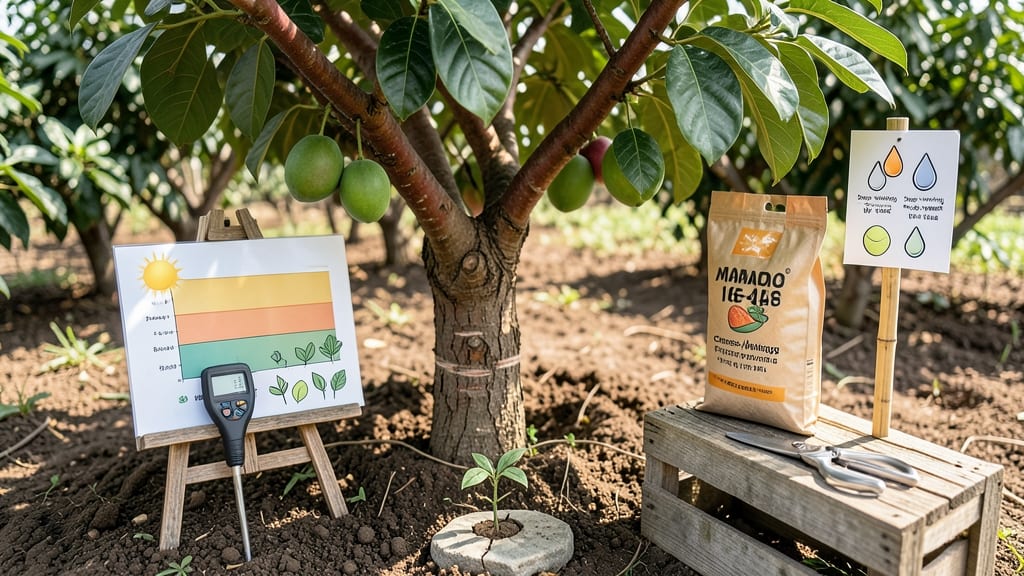
A mango tree growth chart turns guesswork into a roadmap to fruit. 🌱 From a 6-inch seedling to a 30-foot giant, each stage needs different care—watering shifts from daily to deep weekly, pruning moves from shaping to thinning branches, and fertilizer ratios change as the tree matures.
My first mango tree hit 10 feet in just two years, but I learned the hard way that skipping pruning in Year 3 delays fruit for another season.
The biggest surprises come in Years 4-5, when flowering suddenly becomes a race against frost-sensitive blooms. Varieties like ‘Haden’ and ‘Keitt’ start bearing at 3-4 years, while ‘Kent’ waits until Year 5—knowing this timeline means you’ll adjust watering and feeding to push that first harvest.
The chart breaks down height jumps by season, so you’ll spot when your tree’s growing fast (spring) and when it’s resting (winter).
By Year 6, you’ll have a tree that towers over your patio and produces buckets of fruit—if you’ve been pruning correctly. The key is thinning branches in early spring to let sunlight reach the center, where most fruit forms.
I’ve seen trees double their harvest just by removing 20% of the wood. That’s when you know you’ve cracked the code on tropical fruit growing.
Works for both backyard growers in Florida and container gardeners in California’s coastal zones—just adjust watering for your microclimate. The chart even includes notes on when to expect flowering, so you can time your care routine perfectly. Let’s get those measurements down before your tree outgrows your yard!
📚 In This Guide
- What you need
- Instructions
- Tips and common mistakes
- Wrapping up and next steps
What you need
- ● Mango Seed or Sapling: 1 (preferably from a disease-resistant variety like Alphonso or Keitt).
- ● Well-Draining Soil: 5-10 gallons (mix 60% topsoil, 30% compost, and 10% perlite/sand).
- ● Pot or Planting Hole: For seedlings: 5-gallon pot (first year), then upgrade to 15+ gallons as it grows.
- ● For outdoor planting: Hole twice as wide as the root ball, 2-3 feet deep.
- ● Organic Fertilizer: 1 lb of balanced fertilizer (e.g., 10-10-10 NPK) or compost tea for young trees.
- ● Watering Can or Hose: With a gentle spray nozzle (avoid high pressure near roots).
- ● Pruning Tools: Bypass pruners (for branches < ½ inch thick).
- ● Lopper (for branches ½–1½ inches thick).
- ● Hand saw (for thicker branches, if needed).
- ● Mulch: 2–3 inches of organic mulch (straw, wood chips, or pine bark) to retain moisture.
- ● Grow Lights: LED full-spectrum lights for indoor seedlings (12–16 hours/day).
- ● Tree Support: Stakes and ties for young trees in windy areas.
- ● Pest Control: Neem oil or insecticidal soap (for aphids, mealybugs, or scale).
- ● Soil pH Test Kit: Ideal pH range: 5.0–7.0 (mangoes prefer slightly acidic to neutral soil).
- ● Growth Tracker: A notebook or app (like Gardenate) to log height, pruning dates, and milestones!
Mango tree growth chart: yearly height progression by variety
Here's how to track your mango tree's growth—year by year, variety by variety—so you know what to expect.
🌱 Step 1: Understand Seedling Growth (Year 1)
Your mango tree starts small, but don't underestimate its early potential. In its first year, most varieties grow 6-12 inches tall from seed, though grafted trees may reach 12-18 inches if given ideal conditions. You'll see first true leaves (not the initial seed leaves) appear within 4-6 weeks after germination, signaling steady growth.
This is the stage where consistent moisture matters most. Keep soil evenly damp (not soggy) and provide bright, indirect light for 10-12 hours daily. If you notice leaves curling or yellowing, it's a sign of either overwatering or insufficient light. Dwarf varieties like 'Cogshall' stay compact, while standard types like 'Keitt' may stretch taller if space allows.
☀️ Step 2: Juvenile Growth (Years 2-3)
Years two and three bring rapid vertical growth—expect 3-5 feet per year in most varieties, with some like 'Haden' reaching 8-10 feet by year three. You'll notice thicker stems and more branches forming, especially if you prune lightly to encourage bushiness. This is also when you'll start seeing small flower buds (though fruit won't appear for another year or two).
At this stage, your tree needs full sun (6+ hours daily) and deeper watering—once a week if rainfall is light. If growth slows or leaves yellow between veins, it's likely iron deficiency, common in young mango trees. A foliar spray with chelated iron can help. Dwarf varieties like 'Julie' may only reach 4-5 feet by year three, so check your variety's expected size early.
🌿 Step 3: Mature Growth (Years 4-6)
By years four to six, your mango tree enters its prime growth phase. Standard varieties like 'Tommy Atkins' can surge to 15-20 feet, while dwarf types like 'Ice Cream' top out around 8-10 feet. This is when you'll see heavy flowering and first fruit production (if grown in a warm climate). Prune selectively to remove crossing branches and suckers at the base—this redirects energy to fruit development.
Watering shifts to deep, infrequent soakings (every 10-14 days in dry climates). Overwatering now causes root rot, especially in heavy soil. You'll also need to support branches as they grow—young mango wood is brittle and can snap under heavy fruit loads. Use tree ties or stakes if needed, but avoid girdling the trunk.
🪴 Step 4: Full Maturity (Years 7+)
After seven years, growth slows but your tree enters its peak productivity. Standard varieties like 'Kent' may reach 30-40 feet, while dwarf types like 'Dwarf Indonesian' stay under 12 feet. You'll see larger fruit clusters and more consistent yields, though some varieties (like 'Keitt') take until year 10 for full maturity. Prune annually to thin the canopy and improve airflow—this reduces disease risk and makes fruit easier to harvest.
At this stage, focus on soil health—mango trees are heavy feeders. Apply a balanced fertilizer (6-6-6) in early spring and potassium-rich fertilizer before flowering. Watch for pests like aphids or fruit flies, which target mature trees. If leaves drop suddenly, it could signal nutrient deficiency or root stress—check irrigation and soil pH (ideal range: 6.0-7.5).
Tips & tricks for perfect mango tree growth tracking
Tracking your mango tree's growth year by year takes patience—but these insights will help you anticipate milestones and troubleshoot early.
Variety-Specific Growth Expectations: Always check your mango variety's expected mature height before planting. Dwarf varieties like 'Cogshall' or 'Ice Cream' stay under 12 feet, while standard types like 'Keitt' or 'Kent' can reach 30-40 feet. This knowledge helps you plan spacing and support needs from the start. I've seen 'Haden' trees hit 8-10 feet by year three, while 'Julie' dwarfs stay around 4-5 feet—knowing these ranges prevents overcrowding or frustration.
Year-One Lighting Strategy: Those 10-12 hours of bright, indirect light in Year 1 are non-negotiable. Place your seedling near an east-facing window or under grow lights if natural light is insufficient. I learned this the hard way when my first seedling stretched toward a south window and grew leggy—it never recovered. Use a small mirror to reflect light onto the plant if needed, especially during shorter winter days.
Pruning for Future Structure: Start pruning lightly in Year 2 to encourage bushier growth. Remove any branches growing inward or crossing each other—this prevents future rubbing that weakens the tree. I prune about 10-15% of the new growth each year during the dormant season (late winter). This technique also helps redirect energy to stronger stems and prevents the brittle wood from snapping under fruit loads later.
Soil Health Monitoring: Mango trees are heavy feeders, so focus on soil pH between 6.0-7.5 and add compost annually. In Year 4+, I test my soil every spring and add balanced (6-6-6) fertilizer in early spring followed by potassium-rich fertilizer before flowering. This two-step feeding mimics natural tropical conditions and prevents the sudden leaf drop you might see if nutrients are unbalanced.
Pro Tips for Mango Tree Growth Chart
- Tracking your mango tree's growth year by year takes patience—but these insights will help you anticipate milestones and troubleshoot early.
- Variety-Specific Growth Expectations: Always check your mango variety's expected mature height before planting.
- Year-One Lighting Strategy: Those 10-12 hours of bright, indirect light in Year 1 are non-negotiable.
Frequently asked questions
Got questions about tracking your mango tree’s growth? Here are answers to the most common ones—so you can nurture your tree like a pro!
How fast does a mango tree grow in its first year?
A mango tree’s first-year growth varies by variety, but expect 3–6 feet (1–2 meters) under ideal conditions. Dwarf varieties (like ‘Cogshall’) may grow just 1–2 feet, while standard types (like ‘Keitt’) can shoot up to 10 feet. Patience is key—rapid growth often slows after the first year as the tree focuses on root development.
When will my mango tree start bearing fruit?
Most mango trees take 3–5 years to bear fruit, depending on the variety and care. Dwarf varieties (e.g., ‘Julie’) may fruit in 2–3 years, while tropical varieties (e.g., ‘Haden’) can take up to 7 years. Ensure full sun (6+ hours/day), well-draining soil, and consistent watering to speed up fruiting.
Can mango trees grow in cold climates?
Mango trees thrive in USDA Zones 10–11 but can survive brief dips to 28°F (-2°C) with protection. In colder zones (e.g., Zone 9), grow them in containers and move indoors during winter. Choose cold-hardy varieties like ‘Ice Cream’ or ‘Julie’ for better resilience. Mulch heavily and avoid overhead watering to prevent frost damage.
How do I prune a young mango tree for better growth?
Prune young mango trees lightly in late winter or early spring to shape the canopy and remove dead/diseased branches. Focus on:
- Opening the center for airflow (avoid a dense crown).
- Trimming suckers (shoots from the base) to direct energy upward.
- Shortening vigorous branches by 1/3 to encourage bushier growth.
What if my mango tree isn’t growing as expected?
Slow growth often stems from poor soil, pests, or overwatering. Check for:
- Nutrient deficiencies: Yellow leaves? Add compost or a balanced fertilizer (high in nitrogen for young trees).
- Root issues: Compacted soil or root-bound pots? Loosen soil or repot if needed.
- Pests: Inspect for aphids, scale, or mites—treat with neem oil or insecticidal soap.
- Sunlight: Mango trees need full sun; move to a sunnier spot if growth stalls.
Wrapping up and next steps
Growing a mango tree is a rewarding journey, and understanding its yearly height progression helps you nurture it with confidence! Whether you’re cultivating a Keitt, Haden, or Valencia Red, patience and care will yield delicious results.
Now that you know what to expect, why not take the next step? Plant your tree, monitor its growth, and soon, you’ll be enjoying fresh, juicy mangoes straight from your backyard. 🌱🍈
Happy growing!