
Pruning
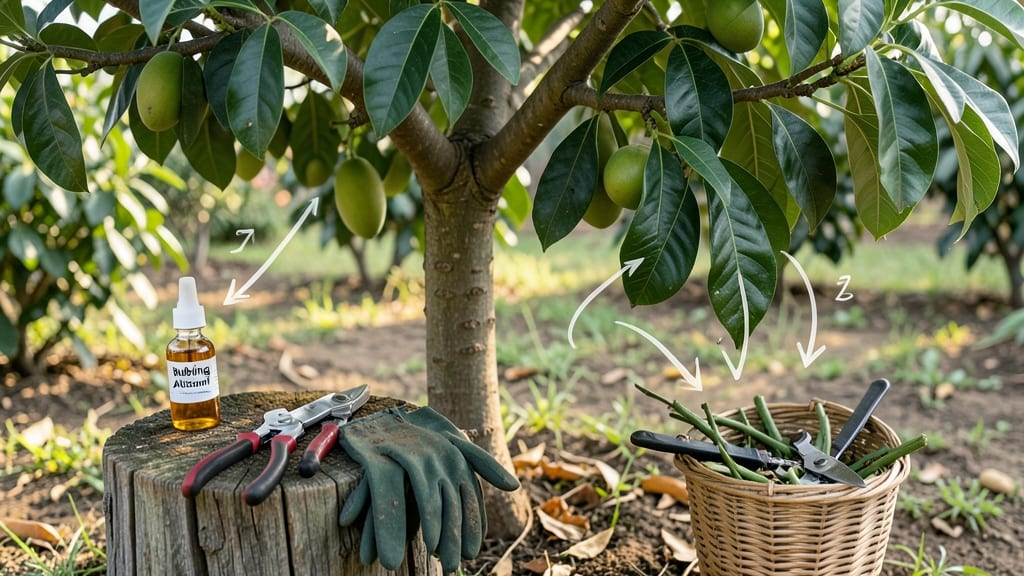
Pruning a mango tree for fruit isn't about hacking branches—it's about redirecting energy to where it matters most. 🌱 I learned the hard way that aggressive cuts in the wrong season can leave you with a leafy tree and zero fruit.
The secret lies in timing, technique, and understanding how mango trees naturally grow.
You'll need sharp bypass pruners, a saw for thicker branches, and a clear day to work. The best time to prune is right after harvest, when the tree is still active but before new growth surges.
This 3-4 week window in late spring or early summer gives you the perfect opportunity to shape the tree without stressing it.
Start by removing dead, crossing, or diseased branches first—these are the easy wins. Then, focus on thinning out crowded areas to improve airflow and sunlight penetration. Aim to keep the tree's natural vase shape, with a strong central leader and well-spaced scaffold branches.
Each cut should be clean and made just outside a bud or branch collar.
After pruning, your tree will need consistent watering and a balanced fertilizer to recover. Within 6-8 weeks, you'll see new growth where you made your cuts—and if you've done it right, those branches will be loaded with flower buds next season.
Patience is key; mango trees reward careful pruning with fruit for years to come.
📚 In This Guide
- What you need
- Instructions
- Tips and common mistakes
- Wrapping up and next steps
What you need
- ● Pruning shears (bypass pruners) – Sharp, bypass-style shears (not anvil-type) for clean cuts. Choose 7-10 inch blades for medium-sized branches.
- ● Loppers – For thicker branches (½" to 2" in diameter). Opt for bypass loppers with 8-12 inch handles for leverage.
- ● Pruning saw – A curved-tooth pruning saw for branches thicker than 2 inches. Never use a handsaw!
- ● Gloves – Heavy-duty, cut-resistant gloves (e.g., mechanics or pruning-specific) to protect against thorns and sharp tools.
- ● Disinfectant (70% isopropyl alcohol or bleach solution) – Clean tools between cuts to prevent disease spread. Mix 1 part bleach to 9 parts water for a DIY solution.
- ● Rubbing alcohol or hand sanitizer – For sanitizing hands before and after pruning.
- ○ Pruning sealant (optional but recommended) – A tree wound sealant (like Tanglefoot Tree Wound Pruning Seal) to coat cuts larger than ½ inch.
- ● Ladder or extension pole – A stable, 20-24 ft telescoping ladder (for mature trees) or a pruning pole with a saw attachment for high branches.
- ● Heavy-duty trash bags or bucket – For collecting pruned branches and debris.
- ● Sharpie or permanent marker – To label branches if you’re training the tree (e.g., marking future fruit-bearing spots).
- ● Safety glasses – Protect your eyes from debris, especially when using a pruning saw.
- ● Ear protection – If your pruning saw is loud (some models exceed 90 dB).
- ● Long sleeves and pants – Mango trees have thorns—cover up to avoid scratches!
- ● Tree growth regulator (e.g., Paclobutrazol) – Helps control excessive growth if your tree is overly vigorous.
- ● Camera or phone – Snap photos of your tree before pruning to reference later.
Step-by-Step instructions for pruning a mango tree for fruit
Here’s the method I’ve used to turn wild mango growth into heavy, juicy fruit production.
🌿 Step 1: Identify the Right Time to Prune
Prune your mango tree during its dormant season, which varies by climate. In warm regions, late winter to early spring (just before buds swell) is ideal. If you’re in a tropical zone, prune after the main harvest when new growth slows. Avoid pruning during flowering or fruiting—this stresses the tree and can drop blossoms or fruit.
Watch for new leaf flushes—these signal the tree’s natural growth cycle. Pruning right before this flush encourages strong, fruit-bearing branches. If your tree is young (under 5 years), focus on shaping rather than heavy cuts. Mature trees can handle more aggressive pruning to open the canopy for sunlight.
✂️ Step 2: Remove Dead, Diseased, or Crossing Branches
Start by inspecting the tree for dead or diseased branches—these are easy to spot as they’re brown, brittle, or oozing sap. Use sterilized pruning shears to cut these back to healthy wood, making your cut just outside the branch collar (the swollen area where the branch meets the trunk). This prevents infection from spreading.
Next, look for crossing or rubbing branches—these compete for sunlight and nutrients while creating wounds where pests can enter. Remove one of the two branches if they cross, always cutting back to a healthy bud or lateral branch. I like to step back every few cuts to visualize the tree’s shape—this helps me spot hidden problems.
☀️ Step 3: Thin the Canopy for Sunlight and Airflow
Mango trees need full sunlight to produce fruit, so your goal is to open the canopy. Focus on removing inward-growing branches and those growing straight up (called "water sprouts"). These compete with fruit-bearing branches for energy. Cut back to a lateral branch or bud that grows outward to encourage a more open structure.
Leave 3-5 main scaffold branches evenly spaced around the trunk. These should be sturdy and angled outward at about 45 degrees. If your tree has too many small branches, thin them out to prioritize the strongest ones. You’ll know you’re on the right track when you can see sunlight reaching the inner branches.
🌱 Step 4: Encourage Fruit Production with Strategic Cuts
To boost fruiting, prune back last year’s fruit-bearing branches by about one-third of their length. This stimulates new growth and increases flower production. Look for branches with fruit scars (the small bumps where last year’s fruit grew)—these are your clues for where to focus. Avoid cutting into old wood; always prune just above a bud or lateral branch.
If your tree has excessive vegetative growth (long, leafy stems with no fruit), prune these back harder to redirect energy toward flowering. You’ll see new shoots emerge from the cuts—these will eventually bear fruit if given enough sunlight. Real talk: Over-pruning can reduce fruit, so err on the side of caution if your tree is young or struggling.
⏰ Step 5: Clean Up and Monitor Growth
After pruning, sterilize your tools with rubbing alcohol to prevent spreading disease. Remove all fallen branches and debris from the base of the tree—this keeps pests and fungi at bay. Apply a balanced fertilizer (like 10-10-10) around the drip line (the outer edge of the tree’s canopy) to support new growth.
Watch for new shoots in the next few weeks—these are your tree’s response to the pruning. If you see water sprouts (fast-growing, vertical shoots), remove them early to avoid draining energy from fruit production. Within a year, you should notice a more open canopy, better airflow, and—if you’ve done it right—a heavier fruit load next season.
Tips & tricks for pruning a mango tree for fruit
These little details make all the difference when shaping your mango tree for maximum fruit production. Trust me, I've watched trees go from scraggly to loaded with fruit just by adjusting these simple steps.
Timing is Everything: Pay attention to those new leaf flushes mentioned in Step 1—they're your tree's natural growth signal. If you prune too early, you might cut off potential fruit-bearing branches before they even form. I've learned this the hard way after seeing buds drop because I pruned when the tree was still dormant but not quite ready. Wait until you see those fresh green leaves starting to push through.
Visualize the Tree's Future: Before making any cuts in Step 3, step back and visualize your tree's ideal shape. Imagine sunlight streaming through the center—this is your goal. I like to sketch a rough outline on paper first, marking where I want each scaffold branch to be. This prevents me from over-thinning one side while leaving another too dense. Think of it like designing a bonsai, but with more fruit potential.
Pruning Shears Matter: Don't just grab any pair of shears for Step 2. Use sharp, sterilized pruning shears—dull blades can crush branches, causing more damage than good. I keep a bottle of rubbing alcohol handy to wipe down my tools between cuts, especially when dealing with diseased branches. A clean cut heals faster and reduces the risk of infection spreading to healthy parts of the tree.
Fruit Scar Detective Work: When you're looking for those fruit scars in Step 4, get up close. These little bumps are your roadmap to next year's fruit production. I use a magnifying glass to examine branches, especially on mature trees. If you can't find scars, look for branches that grew fruit last season—they'll have a slightly thicker appearance where the fruit attached.
Pro Tips for Prune A Mango Tree For Fruit
- These little details make all the difference when shaping your mango tree for maximum fruit production.
- Timing is Everything: Pay attention to those new leaf flushes mentioned in Step 1—they're your tree's natural growth signal.
- Visualize the Tree's Future: Before making any cuts in Step 3, step back and visualize your tree's ideal shape.
Frequently asked questions
Got questions about pruning your mango tree for that sweet, juicy harvest? Here are some common concerns—and their answers—to help you prune like a pro!
When is the best time to prune a mango tree for fruit?
The ideal time is late winter or early spring (just before new growth starts) in temperate climates. In tropical regions, prune after the rainy season or during the dry season. Avoid heavy pruning during flowering or fruiting—focus on shaping and thinning branches instead.
How much of my mango tree should I cut back?
For young trees, remove 15-20% of the canopy to encourage airflow and sunlight penetration. Mature trees can handle 25-30% pruning, but never cut more than 30% at once—this can stress the tree. Prioritize dead, diseased, or crossing branches first!
Will pruning my mango tree reduce fruit production?
Not if done correctly! Pruning increases fruit quality by improving airflow and sunlight exposure. However, over-pruning (especially during flowering) can reduce yields. Thin out crowded branches and focus on shaping rather than aggressive cuts during fruiting seasons.
What should I do if my mango tree isn’t flowering after pruning?
If your tree isn’t flowering, check these fixes:
- Light & Heat: Mango trees need full sun (6+ hours/day) and warm temperatures (60°F+).
- Nutrients: Apply a balanced fertilizer (10-10-10) or one high in phosphorus (for blooms) in early spring.
- Watering: Avoid overwatering—mangoes prefer well-draining soil and consistent moisture.
- Patience: Young trees (under 5 years) may take time to mature and flower.
Can I prune a mango tree with dull or dirty tools?
No!
Always use clean, sharp pruners to prevent disease spread and jagged cuts. Disinfect tools with rubbing alcohol or bleach solution between cuts. Dull tools crush branches, slowing healing—opt for bypass pruners for clean cuts!
Wrapping up and next steps
Pruning your mango tree isn’t just about shaping—it’s about unlocking its full fruiting potential! 🌱 By following these steps—timing cuts, removing dead wood, and opening the canopy—you’ll encourage healthier growth, better airflow, and a bountiful harvest. Start small, stay consistent, and watch your tree thrive!
Ready to take the next step? Monitor your tree’s progress after pruning, adjust as needed, and soon, you’ll be enjoying sweet, juicy mangoes straight from your own backyard. 🍈 Happy pruning!