
Size
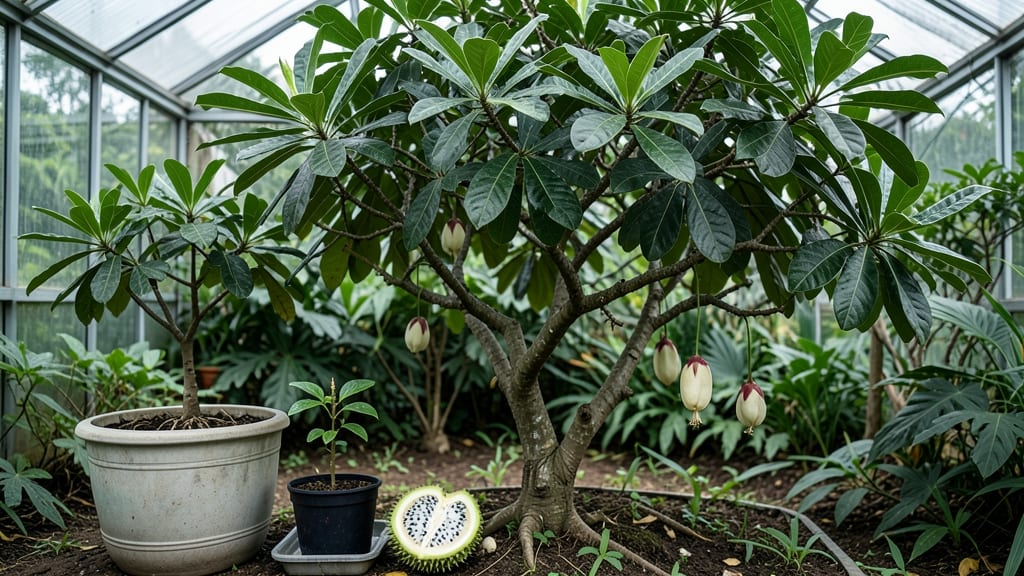
Growing a soursop guanabana tree to harvest this unique tropical fruit at home unlocks the creamy, pineapple-citrus flavor of the tropics—even in non-tropical zones. 🌿 The key is mimicking its native conditions: warm temperatures, high humidity, and bright but indirect light.
I’ve nurtured mine from a seedling to fruiting in just three years by treating it like a high-maintenance houseplant when outdoors isn’t an option.
Start with well-draining, slightly acidic soil (pH 5.5–6.5) and a large container (at least 18 inches wide) if growing indoors or in cooler climates. Soursop trees thrive in USDA zones 10–11, but with winter protection (like moving pots indoors), you can grow them as far north as zone 9.
The secret to lush growth? Morning sun and afternoon shade—too much direct light scorches the delicate leaves.
By year 3 or 4, your tree could produce its first fruit—green, spiky, and the size of a football when ripe. The real magic happens when you slice into it: sweet, tangy, and custard-like, perfect for smoothies or desserts.
Just be patient—harvesting takes time, but the payoff is worth it for tropical fruit lovers.
Watch for scale insects or fungal spots (common in humid conditions) and prune to encourage airflow. With the right care, your soursop tree will reward you with exotic fruit and year-round tropical vibes, whether on a patio or windowsill.
Root Causes Of Soursop Struggles
Growing a soursop (Annona muricata) tree can be incredibly rewarding, but even experienced gardeners sometimes face challenges like poor fruit set, stunted growth, or leaf issues. Understanding the why behind these problems is the first step to fixing them.
Below, we break down the most common culprits—backed by science—and explain how they disrupt your guanabana tree’s health.
Soursop trees thrive in tropical or subtropical climates with consistent warmth (68–86°F / 20–30°C). When exposed to extreme heat, cold snaps, or sudden temperature swings, their growth slows, flowers drop, or leaves yellow.
- Too Cold: Below 50°F (10°C), metabolic processes stall. Enzymes responsible for photosynthesis and nutrient uptake become inactive, leading to chilling injury—brown leaf edges or blackened stems.
- Heat Stress: Above 95°F (35°C), protein denaturation occurs, damaging cellular structures. This causes sun scorch (white/yellow patches on leaves) and reduced pollination success.
- Windburn: Strong winds dry out leaves faster than roots can replace moisture, triggering transpirational stress and premature leaf drop.
Actionable Fix: Use shade cloth (30–50%) in peak sun, mulch heavily to regulate soil temp, and avoid planting in frost-prone zones unless using a greenhouse.
Soursop trees are drought-tolerant but hate soggy roots. Overwatering or poor drainage leads to anaerobic soil conditions, where roots suffocate and fungal pathogens like Phytophthora thrive. Conversely, underwatering causes wilting and abscission (leaf drop) as the tree conserves water.
| Symptom | Cause | Solution |
|---|---|---|
| Yellowing leaves (bottom-up) | Overwatering or compacted soil | Improve drainage with perlite/sand; water only when top 2" of soil is dry |
| Crispy, brown leaf edges | Underwatering or high salinity | Flush soil with rainwater; reduce fertilizer |
| Root rot (black, mushy roots) | Waterlogged soil + poor aeration | Repot in well-draining mix; trim affected roots |
Pro Tip: 🌡️ Use a moisture meter or the "finger test" to avoid guesswork. Soursop trees prefer consistent moisture—never let them dry out completely.
Soursop trees need bright, indirect light (6+ hours daily) to produce fruit. Too little light weakens the tree, while direct midday sun can scorch leaves, reducing photosynthesis efficiency.
- Leggy Growth: Stems stretch toward light (etiolation) due to photoperiodism disruption. Leaves become pale and thin.
- Sunburn Spots: Chloroplasts break down under intense UV, creating white or necrotic patches.
- No Flowers/Fruit: Low light delays flowering hormones (florigen production), halting reproductive cycles.
Actionable Fix:
- 🌿 Indoors: Place near east/west-facing windows or use grow lights (12–14 hours/day).
- 🌳 Outdoors: Provide afternoon shade in hot climates; avoid full sun until established.
Soursop trees demand well-draining, slightly acidic soil (pH 5.5–7.0). Poor soil quality leads to nutrient deficiencies, pest susceptibility, and weak structural growth.
| Deficiency | Visual Clues | Solution |
|---|---|---|
| Nitrogen (N) | Yellow leaves (oldest first), stunted growth | Apply composted manure or balanced fertilizer (10-10-10) |
| Potassium (K) | Brown leaf edges, weak stems | Use banana peel tea or greensand |
| Magnesium (Mg) | Interveinal yellowing (chlorosis) | Add Epsom salt (1 tbsp/gallon water) every 2 months |
| Iron (Fe) | Yellow leaves with green veins (alkaline soil) | Lower pH with sulfur; use chelated iron supplements |
✨ Soil Test Tip: Before planting, test your soil’s pH and nutrient levels. Soursop trees hate alkaline soil—amend with pine bark fines or peat moss if needed.
Soursop trees attract pests like mealybugs, scale insects, and thrips, which weaken the tree by sucking sap and transmitting viruses. Fungal diseases (e.g., anthracnose) thrive in humid conditions, causing leaf spots and fruit rot.
- Pests: Sticky honeydew residue, curled leaves, or sooty mold (black fungus on leaves).
- Diseases: Dark, sunken lesions on fruit/leaves; premature dropping.
Prevention & Treatment:
- 🔥 Cultural Controls: Prune for airflow; remove infected debris.
- 🌿 Organic Sprays: Neem oil (1 tsp/gallon water) or insecticidal soap for pests.
- 💡 Fungicides: Copper-based sprays for anthracnose; apply at first sign.
How to solve it
Growing a soursop (guanabana) tree can be incredibly rewarding, but like any tropical plant, it comes with its own set of challenges. Whether you're dealing with pests, slow growth, or environmental stress, these practical, step-by-step solutions will help you troubleshoot and revive your tree—no green thumb required!
Below, we’ve mapped common issues to easy fixes, along with prevention tips to keep your guanabana thriving.
If you’ve spotted holes in leaves, sticky residue, or tiny bugs crawling on your guanabana, pests like mealybugs, aphids, or scale insects are likely the culprits. Here’s how to kick them out for good:
🔥 Step 1: Isolate and Inspect
- Remove heavily infested leaves or fruit (bag them and toss in the trash—do not compost).
- Use a magnifying glass to identify the pest type (mealybugs look like cottony clusters; aphids are tiny green/black dots).
🍳 Step 2: Natural Sprays (Safe & Effective)
Mix one of these in a spray bottle and apply early morning or late evening (avoid direct sun): - Neem oil solution: 1 tbsp neem oil + 1 tsp mild soap + 1 quart water.
Shake well and spray every 5–7 days until pests vanish. - Horticultural oil: Follow package instructions (works like neem but may require more frequent applications). - Soap spray: 1 tsp castile soap + 1 quart water. Test on a small leaf first—some trees are sensitive!
👨🍳 Step 3: Manual Removal (For Stubborn Cases)
- Mealybugs: Dampen a cotton swab with 70% isopropyl alcohol and dab directly on clusters.
- Scale insects: Gently scrape them off with a plastic spoon or toothbrush dipped in soapy water.
🌿 Prevention Tips ✅ Encourage beneficial insects
Ladybugs and lacewings love eating pests.
Plant marigolds or dill nearby to attract them. ✅ Prune for airflow: Thin out dense foliage to reduce hiding spots for pests. ✅ Inspect new plants: Quarantine any new guanabana seedlings for 2 weeks before introducing them to your tree.
If your guanabana tree is sputtering along instead of shooting up tall with lush leaves, it’s usually due to nutrient deficiencies, poor soil, or light issues. Let’s get it back on track!
🌡️ Step 1: Check the Soil
- Test your soil: Use a DIY pH kit (guanabana thrives in slightly acidic soil, pH 5.5–6.5).
If it’s too alkaline (high pH), amend with sulfur or peat moss. - Drainage test: Stick a trowel in the soil—if water pools after 10 minutes, your tree is sitting in soggy roots. Fix this with organic matter (compost or coconut coir).
🍽️ Step 2: Feed It Right
- Balanced fertilizer: Use a slow-release tropical fertilizer (look for NPK ratio like 6-6-6 or 8-3-9). Apply every 2–3 months during growing season (spring–fall).
- Micronutrient boost: If leaves are yellowing between veins, it’s likely iron or magnesium deficiency.
Sprinkle Epsom salt (magnesium sulfate) around the base or use a chelated iron spray. - Organic option: Mix composted manure (cow or chicken) into the top 6 inches of soil for a nutrient-rich treat.
☀️ Step 3: Optimize Light & Space
- Indoor trees: Move to a south- or west-facing window or supplement with a grow light (12–14 hours/day).
- Outdoor trees: Ensure 6+ hours of direct sunlight daily.
If shaded, prune nearby trees or relocate. - Root-bound check: If roots circle the pot, repot into a container 2–3 inches larger with fresh, well-draining soil.
💡 Prevention Tips 🔹 Water wisely: Guanabana trees hate wet feet.
Water when the top 1–2 inches of soil are dry (stick your finger in to check!). 🔹 Mulch like a pro: Add 2–3 inches of organic mulch (wood chips or straw) to retain moisture and regulate soil temp. 🔹 Prune strategically: Trim dead or crossing branches in late winter to redirect energy to new growth.
Seeing flowers but no fruit? Or fruit dropping prematurely? This is often due to pollination issues, overwatering, or stress. Here’s how to save your harvest:
🐝 Step 1: Hand-Pollinate (If Needed)
- Guanabana trees rely on bees or wind for pollination.
If you’re indoors or have few pollinators: - Use a soft paintbrush to transfer pollen from flower to flower early in the morning. - For outdoor trees, plant bee-friendly flowers (like lavender or sunflowers) nearby.
💧 Step 2: Adjust Watering Habits
- Overwatering = fruit drop: Let soil dry out slightly between waterings. Yellow leaves + mushy fruit = root rot risk.
- Underwatering = stress: If soil is bone-dry, soak the root zone deeply and mulch to retain moisture.
🌡️ Step 3: Stress Relief for the Tree
- Temperature shocks: Guanabana trees hate cold drafts (below 50°F/10°C).
Keep indoors or in a frost-free zone. - Fertilizer shock: If you’ve recently fertilized and fruit is dropping, flush the soil with water to dilute excess salts. - Pest stress: Even minor infestations can cause fruit to abort. Treat pests ASAP (see 🐛 section above).
🍎 Prevention Tips
✨ Thin fruit early: If your tree sets too many fruits, remove half when they’re golf-ball sized to let remaining fruit grow larger. ✨ Support heavy branches: Use soft ties or stakes to prevent fruit-laden branches from snapping. ✨ Harvest at peak ripeness: Pick when the fruit is fully yellow/green and slightly soft (it won’t ripen further off the tree!).
If your guanabana tree is dropping leaves suddenly or looking wilted after a chill, it’s likely temperature-related stress. Here’s how to revive it:
🔥 Step 1: Move It to a Warmer Spot
- Indoor trees: Shift to a sunny, warm room (ideally 65–85°F / 18–29°C).
- Outdoor trees: If frost is coming, cover with a frost cloth or move pots to a garage/shed (but keep them in light).
🌡️ Step 2: Recovery Care
- Trim damaged leaves: Use sterilized scissors to cut off blackened or crispy leaves (don’t pull—they can tear).
- Deep watering: Soak the soil to help the tree replenish lost moisture.
- Avoid fertilizer: Wait 4–6 weeks before fertilizing—stressed trees need to focus on recovery, not growth.
🏡 Prevention Tips 🔹 Know your zone: Guanabana trees cannot tolerate frost.
If you’re in a cold climate, grow them only in containers and bring them indoors in winter. 🔹 Acclimate gradually: If moving from indoors to outdoors, harden off the tree over 7–10 days to avoid shock. 🔹 Use a heat mat: For container-grown trees in cool climates, place a heat mat under pots to keep roots warm.
Frequently asked questions about growing soursop trees
How long does it take for a soursop tree to produce fruit?
With ideal conditions, your soursop tree may start flowering in 3-4 years and produce fruit by year 5 or 6. Young trees focus on leaf and root growth first, so patience is key. Dwarf varieties may fruit slightly sooner (2-3 years) but yield smaller fruits.
Can I grow a soursop tree indoors?
Yes! Use a large container (18"+ diameter) with well-draining soil and place near a south/west-facing window for 6+ hours of bright, indirect light daily. Supplement with a grow light (12-14 hours/day) if natural light is insufficient. Keep humidity high (use a pebble tray) and maintain 70-85°F temperatures.
What’s the best way to propagate a soursop tree?
The easiest method is from seeds: Extract seeds from ripe fruit, wash them, and plant 1/4 inch deep in moist, well-draining soil. Keep warm (75-85°F) and humid. Germination takes 2-4 weeks. For faster results, use air layering on mature branches (takes 4-6 weeks to root).
How do I know when soursop fruit is ripe?
Ripe soursop fruit turns from green to yellow-green and feels slightly soft when gently squeezed (like a ripe avocado). The skin may develop a slightly wrinkled texture. If picked too early, fruit won’t soften further—it must ripen on the tree. Unripe fruit is hard and green inside.
Why isn’t my soursop tree flowering?
Common reasons include: insufficient light (needs 6+ hours daily), temperature stress (below 65°F halts flowering), or nutrient deficiencies (especially phosphorus). Try moving to brighter light, using a balanced fertilizer (10-10-10), and maintaining 70-85°F consistently. Young trees (3 years old) may also need more time to mature.