
Pests and Diseases
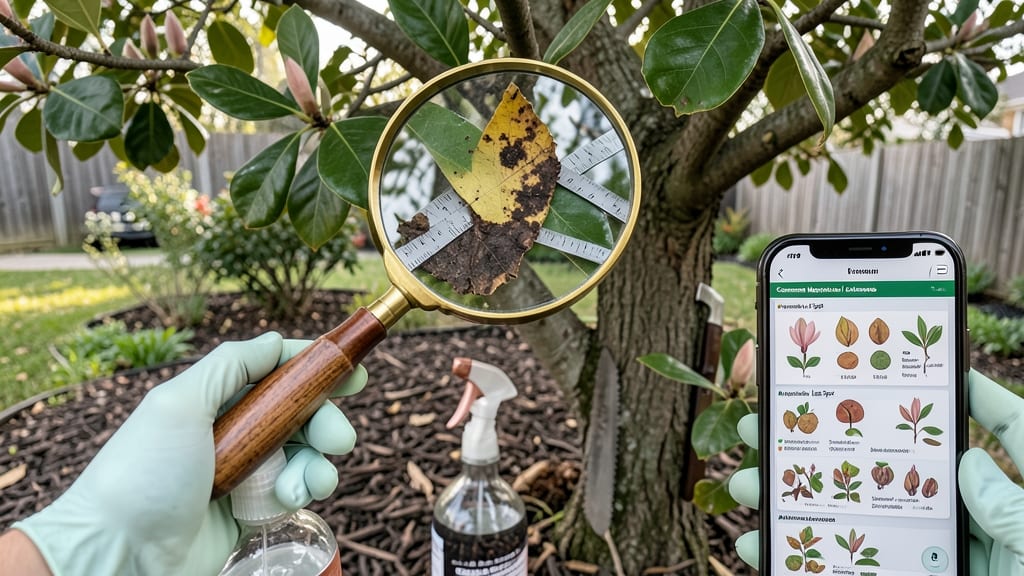
Magnolia tree leaf disease can ruin the beauty of these stunning trees—but catching it early means you can save your foliage. 🌿 I’ve battled powdery mildew, anthracnose, and leaf spot on my own magnolias—and learned the early signs that save your tree. The good news? Most of these issues respond to simple fixes once you know what to look for.
Powdery mildew leaves a white, powdery coating on leaves, while anthracnose causes dark, sunken spots that eventually kill foliage. Leaf spot shows up as brown or black marks with yellow halos.
All three thrive in humid, shady conditions, so proper airflow and light are your first line of defense. Pruning for airflow and avoiding overhead watering cuts the risk dramatically.
Once you spot the problem, organic sprays like neem oil or baking soda mixtures can stop the spread. For severe cases, fungicides labeled for ornamental trees work fast. The key is acting early—wait too long, and you’ll lose leaves (or worse, branches) before summer’s over.
Prevention is easier than cleanup: water at the base, not the leaves; prune for sunlight; and choose disease-resistant varieties like ‘Little Gem’ or ‘Ann’ if your area is prone to fungal outbreaks. With these steps, your magnolia stays lush and healthy all season.
Root Causes Behind Leaf Troubles
Magnolia trees are stunning additions to any landscape, but their leaves can fall prey to a variety of diseases—often due to environmental stressors, pathogens, or cultural mismanagement. Understanding the why behind leaf issues is the first step to restoring your tree’s health.
Below, we break down the most common culprits, backed by science and actionable insights.
Fungi are the #1 culprit behind magnolia leaf diseases, thriving in warm, moist conditions. These pathogens invade leaf tissue, causing spots, blights, or premature leaf drop. The two most notorious offenders:
1. Anthracnose (Colletotrichum spp.)- How it spreads: Fungal spores splash onto leaves during rain or overhead watering, germinating when humidity stays above 75% for prolonged periods.
- Leaf symptoms: Dark, sunken spots with yellow halos (often on younger leaves). Severe cases lead to shot-hole effects or defoliation.
- Why it’s worse now: Climate change extends the "fungal window"—warmer winters and wetter springs create ideal conditions for Colletotrichum to survive and multiply.
- How it spreads: Unlike anthracnose, this fungus prefers dry heat (70–90°F) with low humidity. It spreads via windborne spores, landing on the upper leaf surface.
- Leaf symptoms: White, powdery patches (like flour dust) that can turn brown and crispy. Leaves may curl or drop early.
- Why it’s stubborn: Powdery mildew thrives on poor air circulation—common in dense plantings or shaded magnolias with tight canopies.
💡 Pro Tip: Fungal spores are always present in the environment. Disease only erupts when three factors align: a susceptible host (your magnolia), a favorable climate, and an entry point (wounds, wet foliage). Break the chain by improving airflow or adjusting watering habits.
While less common than fungi, bacteria can turn magnolia leaves into a melting mess. These pathogens enter through:
- Rainsplash or overhead irrigation.
- Pruning wounds or insect damage (e.g., scale or borers).
- Tools contaminated with infected sap.
- Symptoms: Water-soaked, greasy spots that expand into dark brown lesions with yellow margins. Leaves may develop holes or drop prematurely.
- Why it’s aggressive: Bacteria multiply rapidly in warm, wet conditions (60–85°F) and can survive in plant debris for years.
- Tell-tale sign: Cut open a leaf—if the veins are darkened or ooze, bacteria are likely the culprit.
🔥 Warning: Unlike fungi, bacterial diseases often have no cure. Prevention (sterilized tools, proper spacing) is critical—once established, the tree may need removal in severe cases.
Not all leaf issues stem from pathogens. Magnolias are sensitive to environmental imbalances, which weaken defenses and invite secondary infections.
1. Overwatering or Poor Drainage 💦- Problem: Soggy soil suffocates roots, starving leaves of nutrients. Fungal spores thrive in wet leaf litter.
- Symptoms: Yellowing between veins (chlorosis), wilting, or blackened stems.
- Fix: Test soil pH (5.0–6.5 is ideal for magnolias). Amend clay soil with compost or sand to improve drainage.
- Iron/Manganese Deficiency: Causes interveinal chlorosis (yellow leaves with green veins). Common in alkaline soil (pH >7.0).
- Nitrogen Deficiency: Leads to pale green or yellow leaves with stunted growth. Often seen in young trees or over-pruned specimens.
- Solution: Use chelated iron for chlorosis or a balanced fertilizer (10-10-10) in early spring.
- Cold Damage: Sudden freezes (below 20°F) cause brown, crispy leaf edges or blackened buds.
- Heat Stress: Prolonged 90°F+ temperatures lead to scorched leaf tips or premature drop.
- Mitigation: Mulch heavily in winter (3–4 inches) and provide afternoon shade in hot climates.
Insects don’t cause diseases directly, but they create entry points for pathogens. Common pests that weaken magnolia leaves:
1. Scale Insects 🛡️- How they help diseases: Their sticky honeydew fosters sooty mold (a black fungal growth), blocking sunlight.
- Signs: White/crusty bumps on stems or blackened leaves.
- How they help diseases: Their skeletonizing (chewing leaf tissue) leaves wounds for fungi/bacteria to invade.
- Signs: Irregular holes in leaves, often near the edges.
🎯 Action Step: Treat pest outbreaks before fungal symptoms appear. Use neem oil for soft-bodied insects or horticultural oil in dormant season.
Fixing Fungal Foes on Magnolia Leaves
Now that you’ve identified the culprit behind your magnolia’s leaf woes, it’s time to roll up your sleeves and restore that lush, disease-free glory. 🌿 The good news? Most fungal issues are treatable with the right approach—whether it’s pruning, fungicides, or tweaking your tree’s environment.
Below, we’ll map out practical solutions for the most common magnolia leaf diseases, from quick fixes to long-term prevention. Let’s get your tree back to its healthy, vibrant self!
Cause: Erysiphe or Sphaerotheca fungi thrive in humid, shaded conditions. Fix:
- Prune for airflow 🌬️
- Remove heavily infected leaves and branches (sterilize pruners with rubbing alcohol).
- Thin out dense foliage to improve sunlight penetration—aim for at least 6 hours of direct light daily.
- Neem oil or sulfur spray 🍯
- Mix 1–2 tbsp neem oil or sulfur-based fungicide (like Bonide Copper Fungicide) with water and spray both sides of leaves at dusk (avoid direct sun to prevent leaf burn).
- Reapply every 7–10 days until new growth appears mildew-free.
- Baking soda remedy (organic option) 🧂
- Combine 1 tsp baking soda + 1 tbsp horticultural oil + 1 quart water. Spray leaves weekly for prevention.
Prevention tips: ✅ Water at the base (never overhead) to keep leaves dry. ✅ Space trees 6–10 feet apart to reduce humidity bucks. ✅ Plant in full sun—powdery mildew hates UV rays!
Cause: Colletotrichum fungus spreads via rain splashes and infected debris. Fix:
- Rake and remove debris 🧹
- Clear fallen leaves and pruned branches from the base of the tree—burn or compost them (don’t mulch infected material).
- Fungicidal spray schedule 💊
- Apply a chlorothalonil-based fungicide (e.g., Daconil) every 2–3 weeks during rainy seasons (spring/fall).
- For organic control, use copper fungicide (follow label rates).
- Boost tree resilience 💪
- Fertilize lightly with a balanced 10-10-10 formula in early spring to support growth.
- Mulch 3 inches deep (keep it 6 inches away from the trunk) to moderate soil moisture.
Prevention tips: 💡 Avoid overhead irrigation—use drip systems instead. 🌡️ Water early in the day so leaves dry before evening humidity peaks.
Cause: Fungi like Phyllosticta create dark, irregular spots that enlarge and drop leaves. Fix:
- Prune aggressively ⏰
- Cut out all spotted leaves (even if just a few) and dispose of them in the trash (not compost).
- Sterilize pruners between cuts with bleach solution (1:10 ratio) or rubbing alcohol.
- Copper fungicide treatment 🛡️
- Spray copper hydroxide (e.g., TriBasic Copper Fungicide) every 2 weeks during wet periods.
- For severe cases, add a second application of chlorothalonil 1 week later.
- Isolate the tree 🏝️
- If possible, move the magnolia to a sunnier, drier location (leaf spots love shade and moisture).
- Avoid planting near other magnolias—fungi spread easily via spores.
Prevention tips: ✨ Space trees widely (10+ feet apart) to reduce spore transmission. 🌿 Avoid wounding the tree—prune only when necessary and use sharp tools.
Quick fixes for immediate relief:
- Hydrogen peroxide spray (3% solution): Mix 1 tbsp per quart of water, spray leaves to kill surface fungi (test on a small area first).
- Companion planting: Surround the magnolia with marigolds or garlic (natural fungicides) to deter spores.
Long-term health boosters: 🍽️ Feed with compost tea (rich in beneficial microbes) every 4–6 weeks. 🌧️ Improve drainage—amend heavy clay soil with sand or perlite to prevent waterlogging. 🌱 Plant disease-resistant varieties like Magnolia ‘Little Gem’ or Magnolia ‘Ann’ if replanting.
Pro Tip: 💡 Always test fungicides on a small leaf first—some magnolias (especially Southern varieties) can be sensitive to copper or sulfur!
By tackling the root causes—whether it’s humidity, poor airflow, or neglected debris—you’ll give your magnolia the fighting chance it needs. Patience is key: Some treatments take 4–6 weeks to show results, but consistent care will keep your tree thriving for decades! 🌳💚
Frequently asked questions
What’s the difference between powdery mildew and leaf spot on magnolias?
Powdery mildew appears as a white, powdery coating on leaf surfaces, while leaf spot shows up as dark brown or black marks with yellow halos. Mildew thrives in dry, warm conditions with poor airflow, whereas leaf spot loves shade and moisture. Both weaken leaves but spread differently—mildew via wind, spots via water splash.
Can I use the same fungicide for all magnolia leaf diseases?
No—fungicides vary by pathogen. Copper-based sprays work for leaf spot and anthracnose, while sulfur or neem oil targets powdery mildew. Always check the label for specific pathogens and test on a small leaf first—some magnolias (like Southern varieties) can be sensitive to copper. Rotate treatments to prevent resistance.
How do I know if my magnolia’s leaves are diseased or just stressed?
Diseased leaves show distinct patterns: powdery coatings, dark spots with halos, or curling. Stressed leaves may yellow evenly (nutrient deficiency) or brown at edges (drought or salt buildup). Check for fungal growth under leaves or pest damage—if you see either, it’s likely a disease. Healthy stress often improves with adjusted watering or mulching.
Will pruning help prevent magnolia leaf diseases?
Prune to improve airflow by removing dense, crossing branches and thinning the canopy. Always sterilize tools with rubbing alcohol to avoid spreading spores. Prune in late winter/early spring (before new growth) and never overhead water afterward—wet leaves invite fungal infections.
Is it too late to treat my magnolia if the leaves are already dropping?
Not necessarily! While severe defoliation may require next season’s prevention, you can still act. Apply copper fungicide or neem oil to remaining leaves and focus on soil health (add compost, improve drainage). For bacterial infections, treatment is limited—remove infected branches and sterilize the area. Next year, prioritize airflow and disease-resistant varieties.