
Pruning
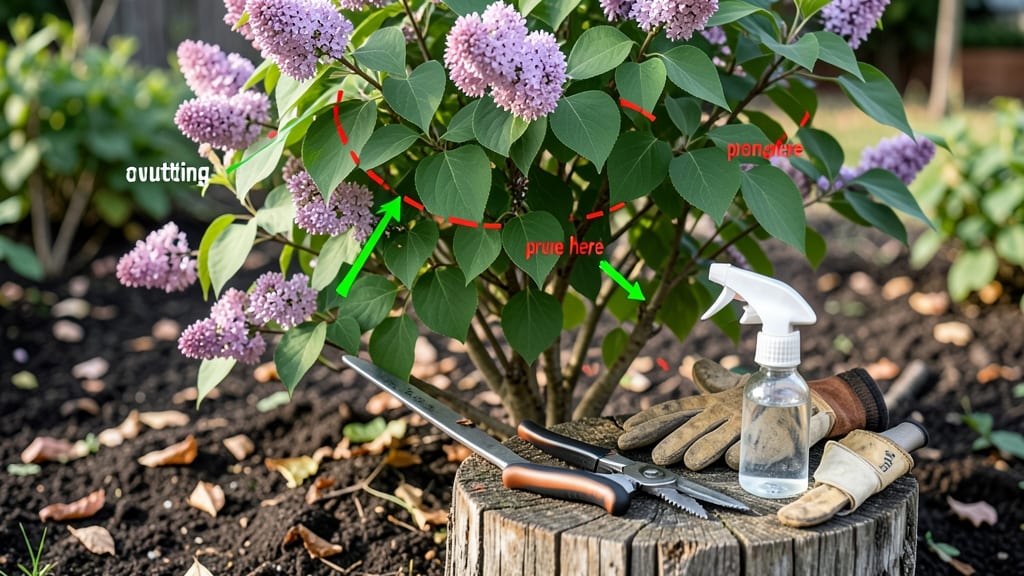
Seeing a lilac tree pruning diagram makes all the difference—it unlocks vibrant blooms next season—but timing and technique matter more than you think. 🌸 I’ve pruned mine for years, and the difference between a bushy, flowering powerhouse and a leggy mess comes down to a few key cuts made at the right time.
Most gardeners wait too long, missing the perfect window after blooms fade but before new growth hardens. The secret is simple: cut right after flowering, when buds form for next year’s blooms.
Grab your pruners, a ladder (for taller trees), and a bucket for clippings—then focus on removing dead wood, crossing branches, and shaping to encourage airflow. I avoid heavy pruning in fall or winter, as lilacs bloom on old wood, and those cuts can mean fewer flowers.
Just 10-20% of the plant’s growth needs trimming to keep it healthy without stressing it. After pruning, your lilac will reward you with denser foliage and bigger blooms in spring. The key is patience—new shoots will sprout within weeks, and by next year, your tree will look fuller than ever.
Just avoid the urge to prune too late in summer, or you’ll risk cutting off next year’s flowers before they form. This method works for common lilac varieties like ‘Dwarf Korean’ or ‘Miss Kim,’ and even older, established trees respond well.
For a visual guide, imagine cutting just above a bud or leaf node at a 45-degree angle—this encourages healthy regrowth. Now grab your tools and let’s get pruning!
📚 In This Guide
- What you need
- Instructions
- Tips and common mistakes
- Wrapping up and next steps
What you need
- ● Pruning shears (bypass or anvil type) – Choose sharp, clean shears with a 1.5"–2.5" blade length for medium-sized branches.
- ● Loppers – For thicker branches (up to 2" in diameter), opt for bypass loppers for cleaner cuts.
- ● Pruning saw – A curved-tooth saw for branches thicker than 2.5" (avoid tearing the bark!).
- ● Rubbing alcohol (70% isopropyl) – A small bottle to sterilize tools between cuts and prevent disease spread.
- ● Garden gloves – Heavy-duty, cut-resistant gloves (e.g., mechanics' or pruning gloves) to protect hands from thorns and sharp branches.
- ● Ladder or step stool – A stable, extendable ladder (or a 4-6 ft. step stool) if your lilac is over 6 ft. tall.
- ○ Disposable pruning bags or bucket – To collect clippings (optional but helpful for cleanup!).
- ● Permanent marker or tape measure – For marking cutting points on branches (if needed).
- ● Hand pruners with a built-in bottle opener – Because every gardener deserves a break! 🍺
- ● Sealing wax or pruning paint – For large cuts (over 1" in diameter) to prevent disease entry.
- ● Safety glasses – Protects eyes from debris or sap splashes.
- ● Knee pads or gardening stool – For comfort during ground-level pruning.
- ● Printed lilac pruning diagram – A visual guide (like the one in this article!) to reference while you work.
Step-by-step lilac tree pruning guide
Here’s the exact method I use to keep my lilacs blooming abundantly while maintaining their natural shape.
✂️ Step 1: Prune Immediately After Flowering
Lilacs bloom on last year’s wood, so timing is everything. Wait until after all blooms have faded—usually late May to early June—before making your first cut. This ensures you don’t accidentally remove next year’s flower buds hidden in the stems.
Start by removing dead, crossing, or diseased branches first. Cut these back to the main trunk or a healthy lateral branch. Use sharp bypass pruners for clean cuts—dull blades crush stems, inviting disease. I always disinfect my tools with rubbing alcohol between cuts to prevent spreading any hidden pathogens.
✂️ Step 2: Thin Out Overcrowded Branches
Lilacs naturally grow thick clusters of stems. To improve airflow and sunlight penetration, select 2-3 of the strongest, most vigorous branches per cluster and prune the rest back to the main stem. This prevents a dense, shaded center where blooms struggle to form.
Look for branches that are thinner than a pencil or growing inward—these are candidates for removal. Never cut more than one-third of the plant’s total growth in a single season. You’ll see new growth emerging from the base within 4-6 weeks as the tree responds to the opening up of its canopy.
✂️ Step 3: Shape and Maintain the Tree’s Form
After thinning, step back and assess the tree’s overall shape. Lilacs naturally grow in a rounded, multi-stemmed form, so avoid turning them into single-trunk specimens. Lightly trim any branches that spoil the natural silhouette—cut just above an outward-facing bud to encourage growth in the right direction.
For older trees, you can rejuvenate them by cutting back one-third of the oldest stems to the ground. This stimulates fresh growth from the base. Do this gradually over 2-3 years to avoid shocking the tree. Water deeply after pruning to help the cuts heal faster.
⏰ Step 4: Light Pruning in Late Summer
In August, give your lilac a quick check for any suckers (shoots growing from the base) or water sprouts (vertical shoots growing straight up). Remove these immediately—they drain energy from the main branches. This light maintenance keeps the tree focused on next year’s blooms.
I also watch for any branches that grew too long or leggy during the season. Trim these back by one-third to encourage bushier growth. Avoid heavy pruning now—you don’t want to stimulate new growth that won’t harden off before winter.
❄️ Step 5: Winter Protection (If Needed)
If you live in a Zone 4 or colder, wrap the base of young lilacs with burlap or tree guards to protect against rodent damage and winter burn. Older, established trees usually handle cold just fine. Never prune in winter—dormant trees are more susceptible to disease when cut.
Here’s the thing—lilacs are tough. If you’ve missed a season or two, don’t panic. Focus on removing dead wood and thinning the center first. Over time, your tree will rebound. I’ve seen neglected lilacs bounce back beautifully with just a little patience and the right cuts.
Tips & tricks for perfect lilac tree pruning
These simple strategies will help you prune like a pro and keep your lilac thriving for years to come.
Timing is Everything: I can't stress this enough—wait until after all blooms have completely faded (usually late May to early June) before pruning. Those flower buds form on last year's wood, so cutting too early removes next year's blooms. If you're unsure, check for dried-up flowers and seed pods before making a cut. Trust me, this one mistake will leave you with sparse blooms next spring.
The One-Third Rule: Never remove more than one-third of the plant's total growth in a single season. This applies to both the initial pruning and any rejuvenation cuts for older trees. I've learned this the hard way—when I cut back too aggressively, my lilac struggled to recover and produced fewer blooms. Think of it as giving your tree a haircut that's gentle but effective, not a buzz cut.
Bud Direction Matters: When shaping your lilac, always cut just above an outward-facing bud. This simple technique encourages new growth to develop in the right direction, maintaining that beautiful rounded shape. I mark the bud with a piece of tape if I'm unsure which way it's facing—it's a small step that makes a big difference in your tree's long-term form.
Tool Maintenance: Your pruners are just as important as your timing. Keep them sharp with a file and disinfect them between cuts using rubbing alcohol. Dull blades crush stems, creating wounds that invite disease. I also store my pruners in a dry place and oil them occasionally to prevent rust. A well-maintained tool makes the job easier and keeps your lilac healthier.
Pro Tips for Lilac Tree Pruning Diagram
- These simple strategies will help you prune like a pro and keep your lilac thriving for years to come.
- Timing is Everything: I can't stress this enough—wait until after all blooms have completely faded (usually late May ...
- The One-Third Rule: Never remove more than one-third of the plant's total growth in a single season. This applies to ...
Frequently asked questions
about lilac tree pruning—because even the best gardeners need a little guidance! Here are answers to the most common questions to help you prune like a pro.When is the best time to prune lilacs?
Prune lilacs right after they finish blooming (late spring to early summer). This ensures you don’t cut off next year’s flower buds, which form on old wood. Avoid pruning in fall or winter, as this can stimulate late-season growth vulnerable to frost damage.
How much can I cut back my lilac tree?
For most lilacs, you can safely remove 1/3 of the oldest stems at the base each year. If your tree is overgrown, thin out crowded branches by cutting back to the ground. Never remove more than 20-30% of the tree’s foliage in a single pruning session to avoid stressing it.
What if I prune at the wrong time?
Pruning lilacs before blooming (late winter/early spring) risks cutting off flower buds. If you’ve already pruned too early, don’t panic! Just focus on shaping and thinning in the correct season (post-bloom) to encourage future growth. Over time, your lilac will rebound.
Can I prune lilacs in the fall?
Fall pruning is not recommended for lilacs because it stimulates tender new growth that can’t survive winter frosts. If you must prune in fall (e.g., for safety reasons), limit cuts to dead or diseased wood only. Save major shaping for late spring.
What if my lilac isn’t blooming after pruning?
Lilacs need old wood to bloom, so avoid heavy pruning of mature stems. If blooms are sparse, check for:
- Over-fertilizing with nitrogen (promotes leaves, not flowers)
- Underwatering or poor soil drainage
- Disease or pests (like borers or powdery mildew)
Wrapping up and next steps
Pruning your lilac tree doesn’t have to be intimidating—with the right timing, tools, and lilac tree pruning diagram as your guide, you’ll encourage vibrant blooms and a healthier plant for years to come! 🌸 Remember, patience and precision are key, so take your time to shape your tree with confidence.
Ready to transform your garden? Grab your pruners and start planning your next pruning session—your lilac will thank you with stunning spring flowers!