
Trees
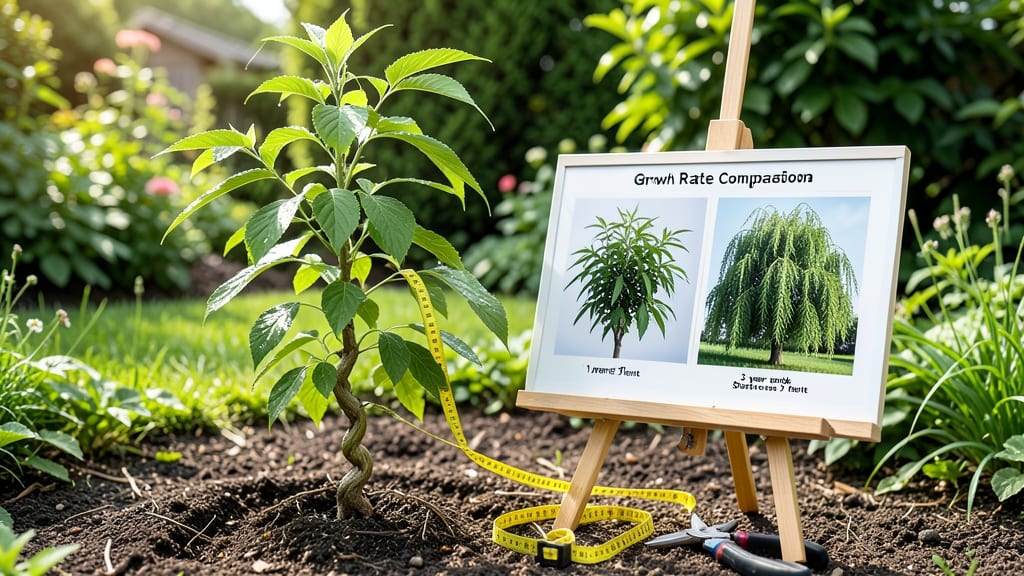
The growth rate of a hybrid willow tree is nothing short of spectacular—some varieties can shoot up 10 feet or more in a single year under ideal conditions, making them one of the fastest-growing trees for privacy screens or dramatic landscape features.
If you're dreaming of a fast-growing privacy screen or a striking landscape feature, hybrid willow trees could be your answer—but how quickly do they really grow?
The growth rate of these trees can vary dramatically based on variety, soil conditions, and care, making the difference between a modest addition and a towering giant in just a few years.
Whether you're working with moist, well-drained soil in USDA Zone 6a or adjusting for your local climate, understanding their growth patterns helps you plan for the right spacing and maintenance from day one.
In this guide, I’ll break down the fastest-growing varieties, how soil and sunlight impact their speed, and pro tips to give your hybrid willow tree the best start possible—so you can enjoy its rapid ascent in no time.


Fastest-growing hybrid willow varieties and their annual growth rates
If you're looking for instant landscape impact, hybrid willow trees deliver—some varieties can grow 6-12 feet per year under ideal conditions. These fast-growing beauties combine the elegance of traditional willows with hybrid vigor, making them perfect for privacy screens, erosion control, or dramatic focal points in your yard.
But not all hybrids grow at the same pace—some reach 30 feet in just 3 years, while others take longer to mature.
The key to unlocking their rapid growth lies in choosing the right variety and providing optimal growing conditions. Weeping willow hybrids like Salix babylonica 'Tristis' and purple willow hybrids such as Salix purpurea 'Nana' lead the pack, while others like Salix matsudana (also called the "Chinese willow") offer a slightly slower but still impressive growth rate.
Let’s break down the fastest-growing options and what you can expect from each in terms of annual height gain and spread.
| Variety | Annual Height Growth (Ideal Conditions) | Spread per Year | Mature Height | Best For |
|---|---|---|---|---|
| Salix babylonica 'Golden Willow' | 8-12 ft | 6-10 ft | 30-40 ft | Privacy screens, pond edges |
| Salix babylonica 'Tristis' (Weeping Willow) | 6-10 ft | 8-12 ft | 30-50 ft | Dramatic landscapes, water features |
| Salix purpurea 'Nana' (Dwarf Purple Willow) | 3-5 ft | 4-6 ft | 10-15 ft | Small gardens, containers |
| Salix matsudana (Chinese Willow) | 5-8 ft | 5-7 ft | 25-35 ft | Urban landscapes, street trees |
| Salix caprea 'Pendula' (Hybrid Weeping Willow) | 7-10 ft | 6-9 ft | 20-30 ft | Small yards, patio trees |
The Golden Willow (Salix babylonica 'Golden Willow') is the fastest grower on this list, shooting up 8-12 feet annually when planted in moist, nutrient-rich soil with full sun exposure. Its golden foliage adds a striking contrast to traditional green willows, making it a favorite for seasonal interest.
However, its rapid growth means you’ll need to prune it regularly to maintain its shape and prevent it from becoming too large for your space.
For those with smaller yards, the Dwarf Purple Willow (Salix purpurea 'Nana') is a compact yet still fast-growing option. While it only reaches 3-5 feet per year, it’s perfect for containers or small garden borders.
Its purple stems and foliage add a pop of color without overwhelming your landscape. Just be prepared for its aggressive spread—this variety can quickly fill available space if not controlled.
If you're planting near a pond or wetland area, the Weeping Willow (Salix babylonica 'Tristis') is a classic choice. Its 6-10 feet of annual growth makes it ideal for creating natural privacy barriers quickly.
However, its wide-spreading roots mean it’s best planted at least 20 feet away from buildings or septic systems to avoid root damage.
For urban landscapes where space is limited, the Chinese Willow (Salix matsudana) strikes a balance with 5-8 feet of growth per year. It’s more drought-tolerant than other hybrids, making it a great choice for areas with limited water access.
Plus, its tolerant nature means it can handle a variety of soil types, from clay to sandy loam.
When selecting a hybrid willow, consider not just its growth rate but also its mature size and spread pattern. A tree that grows 10 feet per year may sound ideal, but if it reaches 50 feet tall, it might not be practical for your backyard.
Always measure your space and plan for future pruning needs to keep your willow tree manageable and healthy.
Pro tip: To maximize growth, plant hybrid willows in early spring when soil temperatures are warming. This gives them a head start before summer heat sets in.
Pair this with regular watering and a balanced fertilizer in early spring and fall, and you’ll see those annual height gains accelerate even further.
🌱
How soil conditions dramatically affect hybrid willow growth speed
Hybrid willow trees are famous for their rapid growth, but their speed depends heavily on soil conditions. In ideal environments, these trees can grow 5-10 feet annually, while poor soil can slow them to just 2-3 feet per year.
The right balance of moisture, nutrients, and drainage makes all the difference for your willow's health and vigor.
Willows thrive in moist, fertile soils with good drainage. They hate soggy conditions but also struggle in dry, compacted soil. Understanding your soil type—clay, sandy, or loamy—helps you create the perfect growing environment. Let’s explore how each factor impacts growth and what you can do to optimize it.
⚠️ Warning: Waterlogged Soil Stunts Growth
Hybrid willows cannot tolerate waterlogged soil—their roots rot quickly, halting growth. Even if your yard seems wet, amend the soil with compost or sand to improve drainage. Test your soil’s moisture retention: if water pools after rain, your willow needs better-draining conditions to thrive.
Loamy soil, a mix of sand, silt, and clay, is ideal for hybrid willows. It retains moisture while allowing excess water to drain away. If your soil is clay-heavy, mix in organic matter like compost or peat moss to loosen it.
Sandy soil, on the other hand, drains too quickly—add peat moss or coconut coir to help it hold moisture for longer.
The pH balance of your soil also plays a critical role. Hybrid willows prefer a slightly acidic to neutral pH (6.0-7.0). Test your soil’s pH with a kit from your local garden center.
If it’s too alkaline, add sulfur or pine needles to lower the pH. For acidic soil, apply lime or wood ash sparingly to raise it gradually.
Nutrient-rich soil accelerates growth by up to 50% annually. Hybrid willows benefit from balanced fertilization in early spring and fall. Use a 10-10-10 NPK fertilizer or compost to provide essential nutrients.
Avoid over-fertilizing, as excess salts can harm roots. Spread a 2-3 inch layer of mulch around the base to retain moisture and suppress weeds.
To maximize growth, monitor your willow’s soil conditions regularly. Check moisture levels by inserting your finger 2 inches deep—if it feels dry, water deeply. Prune dead or weak branches to redirect energy into healthy growth.
With the right soil amendments and care, your hybrid willow could reach mature height in just 5-7 years instead of a decade.
Remember, every yard is different. Experiment with soil amendments and observe how your willow responds. A little patience and attention to soil health will reward you with a fast-growing, stunning landscape feature in no time. 🌳