
How To
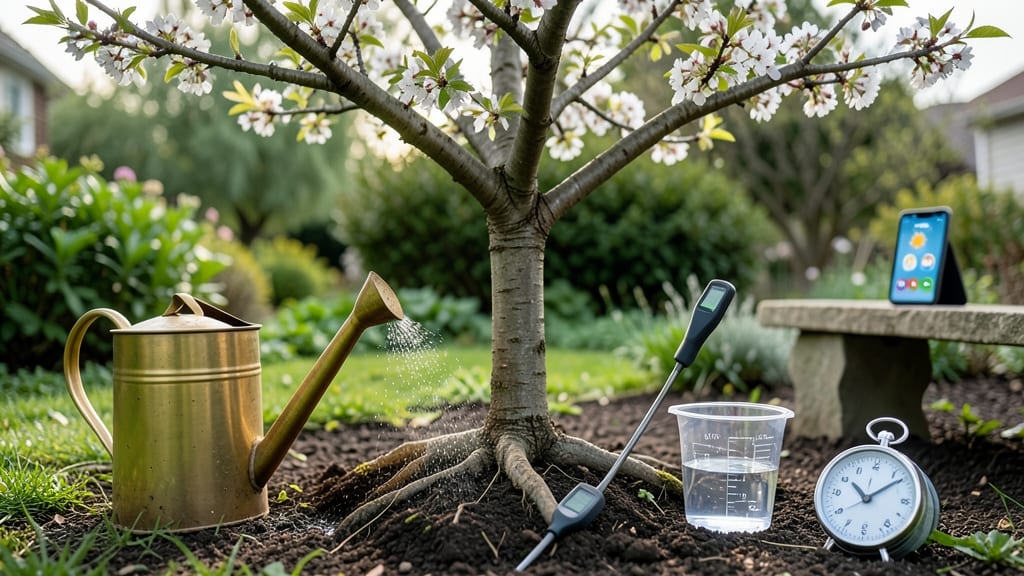
A cherry tree needs deep, infrequent watering—about 15-20 gallons every 3-5 days in its first year, then adjusted for maturity and weather. 🍒
Struggling to keep your cherry tree thriving? Overwatering or underwatering can spell disaster for these delicate fruit trees—yet most gardeners get the balance wrong. Discover the exact watering schedule your cherry tree needs at every growth stage to ensure bountiful harvests and long-term health.
New saplings demand consistent moisture, while mature trees develop deeper roots that access water naturally. Heat waves and drought stress change the game, and winter care is just as critical as summer hydration.
I’ll break down the signs of over- or under-watering, seasonal adjustments, and how to read your tree’s soil moisture like a pro.
By the end, you’ll know exactly when to water, how much to give, and how to spot trouble before it starts—so your cherry tree can grow strong, fruit sweetly, and stand the test of seasons.
Cherry tree watering requirements by growth stage: new plant to mature tree
Getting the watering right for your cherry tree is critical—especially since these trees are sensitive to both drought and overwatering. Unlike drought-tolerant trees, cherries need consistent moisture in their root zone, but soggy soil leads to root rot and fungal diseases.
The key? Understanding how much water your tree needs at each growth stage, from a sapling to a mature fruit-bearing tree. Let’s break it down.
When I planted my first sweet cherry tree, I made the mistake of watering lightly every day. The result? Stunted growth and yellowing leaves—a clear sign of shallow root development.
Cherry trees develop deep taproots over time, so young trees need deep, infrequent watering to encourage strong root growth. Mature trees, on the other hand, have established root systems that stretch 3-5 feet deep, but they still need regular moisture during fruit development.
A summary-table below will help you visualize the exact watering needs for each stage, including frequency, amount, and seasonal adjustments. This ensures you’re neither drowning the roots nor leaving them parched.
For saplings (0-2 years), focus on deep watering every 2-3 days during the growing season. A 5-gallon bucket is a great tool to measure consistency—aim for 5-10 gallons per watering.
The goal is to encourage deep root growth, so avoid light, frequent watering, which keeps roots shallow and prone to drought stress later. In fall and winter, reduce watering to once a week unless the soil is bone-dry.
When your cherry tree reaches the young tree stage (3-5 years), you’ll notice its root system expanding to 18-36 inches deep. At this point, water every 3-5 days in spring and summer, delivering 10-15 gallons per session.
This stage is critical for fruit production, so increase watering slightly during flowering (spring) and fruit development (summer). A drip irrigation system works wonders here—it delivers water slowly and directly to the roots, reducing waste and fungal risks.
Mature cherry trees (6+ years) have deep, established roots that can reach 3-5 feet underground, but they still need regular deep watering—especially during fruit-bearing seasons. Water every 5-7 days in summer, using 15-20 gallons per session.
The key is to water deeply to reach those lower roots, not just surface watering. In late summer and fall, reduce watering to prepare the tree for dormancy. Overwatering in winter can drown roots and invite fungal diseases like canker.
One of the biggest mistakes I’ve seen is overwatering in winter. Cherry trees are dormant during cold months, and excess moisture can rot roots or weaken the tree. Instead, water lightly once a month if the ground is completely frozen. Always check the so
Seasonal watering schedule for cherry trees: spring through winter
Your cherry tree's watering needs change dramatically with the seasons, from spring blooms to winter dormancy. Understanding these shifts prevents root rot in wet months and fruit drop during drought. Let’s break down the perfect month-by-month watering plan to keep your tree thriving year-round.
Rainfall plays a huge role—too much can drown roots, while too little stresses the tree during critical fruit development. I’ll show you how to adjust your watering based on local precipitation and tree maturity, ensuring you never over- or under-water.
- 1 Spring (March-May): 15-20 gallons every 5-7 days (deep soak). Focus on new root growth and flowering. Reduce if rain exceeds 1 inch/week.
- 2 Summer (June-August): 20-25 gallons every 3-5 days (morning watering). Critical for fruit development. Increase to daily in heatwaves (>90°F).
- 3 Early Fall (Sept-Oct): 10-15 gallons every 10-14 days. Taper off as leaves change color. Avoid late-season watering to prevent fungal diseases.
- 4 Winter (Nov-Feb): 5 gallons monthly if no snow. Focus on mulch protection (3-4 inches) to retain moisture and insulate roots.
💧 Pro Tip: Always water at the base, not leaves, to prevent disease.
In spring, your cherry tree wakes up from dormancy and needs consistent moisture to support new leaves and flower buds. I recommend using a soaker hose to deliver water slowly to the root zone, avoiding runoff.
If your area gets frequent spring rains, check soil moisture with your finger—water only if the top 6 inches are dry.
During summer, cherry trees enter their high-water phase as they develop fruit. This is when most gardeners overcompensate, leading to root suffocation. Instead, focus on deep, infrequent watering—aim for 1-2 inches of water per week, split into 2-3 sessions.
Mulch with wood chips to lock in moisture and keep roots cool.
As fall arrives, reduce watering to prepare your tree for dormancy. Overwatering now can weaken roots and invite bacterial canker. By October, most regions should only need water if the soil feels bone-dry 4 inches deep.
Remove mulch from the trunk base to prevent rot over winter.
Winter care is often overlooked, but light winter watering prevents desiccation in dry climates. If your area gets snow, let it melt naturally—it provides slow-release moisture. For snow-free winters, a monthly light watering (5 gallons) keeps roots from drying out completely.
Monitor your cherry tree’s leaves for signs of stress—wilting or yellowing means adjust your watering. With this seasonal plan, you’ll avoid the most common mistakes and enjoy healthy growth and abundant fruit year after year. 🌿