
Pruning
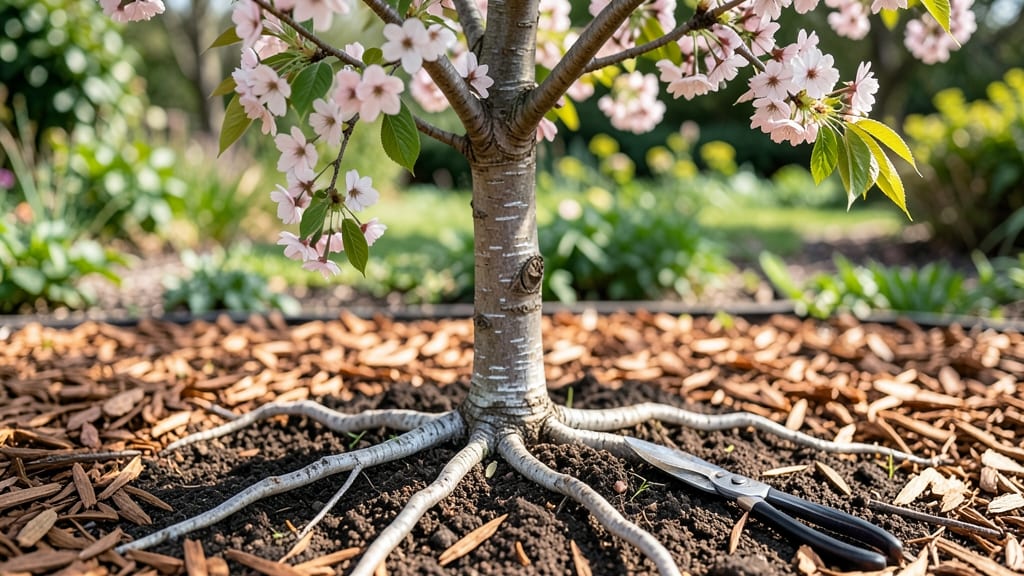
Flowering cherry tree roots spread aggressively, reaching 5–10 feet wide and 3–6 feet deep, with shallow lateral roots that can disrupt sidewalks and nearby plants. Their expansive growth demands careful planning during planting and regular maintenance to prevent property damage.
Understanding how flowering cherry tree roots expand helps you avoid costly landscaping repairs.
These trees develop a wide network of roots just beneath the surface, often within the top 12 inches of soil. 🌳 The lateral roots spread horizontally first, creating a dense web that competes with grass and other plants for nutrients.
Unlike some trees with deep taproots, cherry trees prioritize shallow, aggressive lateral growth—this is why they can lift driveways or crack foundations if planted too close to structures.
What makes this particularly challenging is their growth pattern: flowering cherries grow rapidly in spring and early summer, when roots expand most aggressively. This seasonal surge means damage often appears suddenly, especially in the first few years after planting.
I’ve seen cases where homeowners planted a cherry tree 10 feet from their patio only to find cracks in the concrete within two years—always check local guidelines for minimum planting distances from structures.
💡 In This Article
- How Flowering Cherry Tree Roots Grow: Depth, Spread, and Aggressiveness
- Managing Flowering Cherry Tree Roots: Planting, Pruning, and Barrier Methods
How flowering cherry tree roots grow: depth, spread, and aggressiveness
Flowering cherry trees develop a root system dominated by lateral roots that spread horizontally just beneath the surface. Unlike trees with deep taproots (like oaks), cherry trees prioritize shallow, wide-reaching roots—typically within the top 12 inches of soil.
These lateral roots can extend 5–10 feet outward from the trunk, creating a dense network that competes aggressively for water and nutrients. 🌱 The primary taproot, while present, remains relatively shallow compared to other species, making the tree more vulnerable to drought stress if surrounding roots are damaged.
Seasonal growth patterns amplify this aggressiveness. Root expansion peaks in spring and early summer, coinciding with the tree's active flowering and leafing phases. During this time, lateral roots can grow at rates of 1–2 feet per year, especially in loose, well-drained soils.
This rapid spread explains why damage to sidewalks or foundations often appears suddenly—sometimes within just 2–3 years of planting. In contrast, trees like Japanese maples have slower lateral growth (6–12 inches per year) and deeper taproots, making them less invasive.
The aggressive nature of these roots stems from their symbiotic relationship with nearby vegetation. Cherry trees release allelopathic chemicals that suppress competing plants, further dominating the soil space.
This is why you’ll often see a bare circle (called a "root zone") around the tree where grass or ground cover fails to grow.
The competition isn’t just physical—it’s chemical, creating a no-man’s-land where only the cherry’s roots thrive. 🌿 Understanding this helps explain why mulching or planting ground covers near cherry trees often fails without proper barriers.
Soil composition plays a critical role in how far these roots spread. In sandy soils, lateral roots may extend even wider (up to 12 feet) due to easier penetration, while clay soils can restrict spread but increase upward pressure on surfaces.
This is why homeowners in urban areas with compacted soils often face heaving sidewalks—the roots lift the surface as they grow. The key takeaway? Planting distance matters: maintain at least 15–20 feet from structures to minimize damage risks.
Comparing cherry trees to other ornamentals reveals their unique challenges. While trees like crape myrtles also have lateral roots, they typically spread 3–6 feet wide and don’t compete as aggressively for space.
The cherry’s combination of shallow depth, wide spread, and chemical suppression makes it a high-maintenance choice for small yards or areas with existing landscaping. For example, a 10-year-old cherry tree might occupy a 30-foot diameter root zone—far beyond its canopy’s reach.
One often-overlooked factor is the tree’s age. Young cherry trees (5 years old) focus root growth outward, while mature trees (> 15 years) may develop slightly deeper lateral roots (18–24 inches deep) as they compete for stability.
This shift explains why damage often worsens over time—what starts as minor sidewalk cracks can become structural threats if unchecked. 🚧 The solution? Monitor root growth annually, especially during the tree’s first decade.