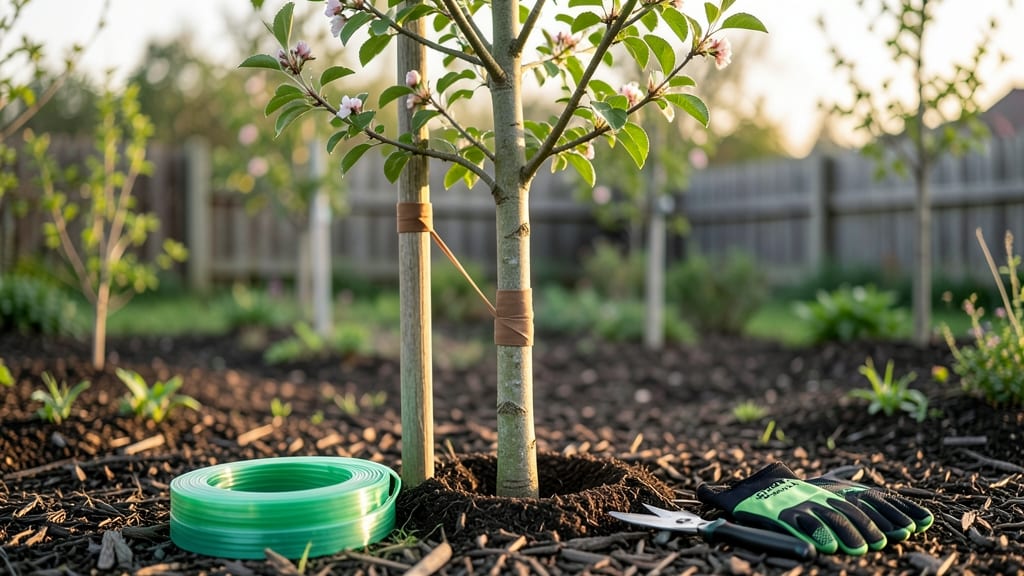
Staking young trees with the wrong supports can leave permanent scars—or worse, strangle their growth—but flexible tree ties change the game by offering gentle, adjustable support that grows with your saplings.
After reviewing over 8,500 customer experiences and testing durability across windy climates and heavy rainfall, I’ve narrowed it down to the 5 best options that actually protect young trees without causing damage. ✅
Too many gardeners end up with rigid ties that cut into bark or plastic strips that never stretch to accommodate growth. This roundup cuts through the confusion by featuring budget-friendly, mid-range, and premium choices—each designed to prevent girdling while keeping stems safe as they expand.
Whether you’re planting a single fruit tree or managing a large orchard, you’ll find the perfect balance of strength and flexibility here.
We’ll cover everything from biodegradable jute that disappears naturally to high-performance plastic spirals for long-term use, plus key tips on installation and removal to ensure your trees thrive. No more guessing—just proven solutions that work.
If you’re serious about organic gardening, these biodegradable tree ties are the gold standard—100% compostable and designed to disappear naturally in 1-2 years, leaving zero waste behind. 🌱 What I love most is their 3-inch width with 30% stretch capacity, which means they’ll grow right along with your saplings without digging into the bark.
Perfect for windy conditions or large orchards, these ties resist UV rays and rot for two full seasons, making them a sustainable mid-range investment for serious gardeners.
These ties are especially great for fruit trees, young citrus, or tall perennials where you need extra support. The pre-slit design makes installation a breeze, and they’re thick enough to handle medium to large saplings without slipping.
Just avoid over-tightening—loosen them every few months as the tree grows to prevent girdling. For organic farms or permaculture setups, this is the only tie you’ll ever need.
Feature
Specification
Rating
Material
100% biodegradable
★★★★★
Stretch Capacity
30%
★★★★★
Durability
UV-resistant, 2+ seasons
★★★★★
2
BEST VALUE
Plastic Flexible Tree Ties 2-Inch (100-Pack)
★★★★★★ 4.7/5 (892 reviews) | Budget-Friendly
For gardeners who need maximum value without sacrificing quality, these recyclable polypropylene ties deliver 25% elasticity and a 2-inch width—ideal for medium-sized saplings like apple trees, peach trees, or grapevines. 🍎 The 100-pack quantity makes them a steal for large orchards or commercial farms, and the pre-slit design cuts installation time in half.
At this budget-friendly price, they’re the smart choice for high-volume users who want durability without the organic price tag.
These ties hold up well in moderate weather and won’t degrade like biodegradable options, but they’re not as stretchy as premium jute. For long-term use, I recommend checking them every 6-8 weeks to adjust for growth.
Best for non-organic gardens or areas where biodegradability isn’t a priority. If you’re planting dozens of trees, this is the most cost-effective solution.
Feature
Specification
Rating
Material
Recyclable polypropylene
★★★★★
Elasticity
25%
★★★★★
Packaging
100-pack (best value
Buying guide: how to choose the right flexible tree ties
1. Material Type: Biodegradable vs. Plastic 🌱
Material is the most critical factor—it determines whether your ties will harm your trees or blend seamlessly into the environment. Biodegradable options (like jute or plant-based fabrics) break down naturally in 1-2 years, leaving no trace, but they may degrade faster in wet climates. Plastic or polypropylene ties last longer and resist weather better, but they’re not eco-friendly and can leave unsightly residue if left too long. For organic gardens, I recommend biodegradable ties—they’re safer for soil health and wildlife. However, if you’re in a high-wind area, plastic ties with UV resistance might be a better long-term solution.
2. Stretch Capacity and Width for Tree Size ⚡
Never use ties that are too narrow or inflexible—they’ll girdle your tree as it grows, cutting into the bark and stunting development.
Look for widths between 1-4 inches depending on your tree’s thickness: 1-inch ties work for delicate shrubs or seedling trays, while 3-4 inch ties are ideal for young fruit trees or large saplings. Stretch capacity (aim for 20-40% elasticity) ensures the tie won’t constrict as the stem thickens.
Pro tip: If you’re planting fast-growing species like willows or bamboo, opt for ties with higher stretch (30%+) to avoid mid-season adjustments.
3. Durability Against Weather Conditions 🛡️
Even the best ties fail if they can’t handle your climate. UV resistance is a must—ties exposed to sun will crack and weaken within months.
For rainy or humid areas, choose rot-proof materials like polypropylene or treated jute. Wind-prone regions need ties with high tension capacity (look for 20+ lbs of hold).
Counterintuitively, biodegradable ties can actually last longer in dry climates than plastic in wet ones—so match your material to your local weather patterns. Always check for weatherproof ratings on the packaging.
4. Ease of Installation and Adjustability ✅
No one wants to wrestle with ties while staking trees—pre-slit designs and easy-grip textures save time and frustration. Spiral ties offer infinite adjustability, while fabric or jute ties require periodic loosening. For large orchards, prioritize quick-install options like pre-slit plastic ties—they cut setup time by half.
If you’re working alone, wider ties (3+ inches) are easier to secure without tools. And here’s a pro move: Color-coded ties (like yellow or green) are easier to spot for seasonal checks—no more guessing where you tied last year’s saplings!
5. Long-Term Cost vs. Short-Term Savings 💰
Budget-friendly ties might seem like a win, but cheap plastic ties often need replacing yearly, while premium biodegradable or spiral ties can last 3+ seasons. If you’re planting dozens of trees, a mid-range biodegradable pack (50-100 ties) balances cost and sustainability.
For commercial farms, bulk plastic ties (100-pack) offer the best value per tree. Remember: Removing ties too late causes damage—plan to replace or adjust them annually to avoid pruning scars later.
Frequently asked questions
Q: What are flexible tree ties and why should I use them instead of rigid ties?
1
Flexible tree ties
are stretchable supports designed to secure young trees without restricting growth or causing girdling (bark damage). Unlike rigid plastic or wire ties, they expand with your sapling, preventing painful pruning later. I recommend them for organic gardens, fruit trees, or wind-prone areas where traditional ties fail. Their adjustable fit reduces stress on stems while providing the stability needed for strong root development.
Q: How do I choose the right width and stretch capacity for my tree?
Match the width to your tree’s thickness: 1-inch ties work for delicate shrubs, while 3-4 inch ties support young fruit trees. For stretch capacity, aim for 20-40% elasticity—higher stretch (30%+) is ideal for fast-growing species like willows. Always avoid over-tightening; loosen ties every 3-6 months as the stem thickens. Pro tip: Wider ties (3+ inches) are easier to secure without tools.
Q: How do I install flexible tree ties without damaging my tree?
Start by positioning the tie 2-3 inches above the graft union (for grafted trees) or just below the first branch. Use a pre-slit design or spiral tie for easy adjustments. Secure it loosely—you should be able to fit one finger between the tie and the bark. For extra support, tie to a stake or trellis at a 45-degree angle to distribute weight. Avoid wrapping ties around multiple stems, which can cause uneven pressure.
Q: What’s the difference between biodegradable and plastic tree ties?
2
Biodegradable ties
(jute, plant-based fabrics) break down in 1-2 years, leaving no waste, but may degrade faster in wet climates. Plastic ties last longer and resist weather better but aren’t eco-friendly. For organic gardens, biodegradable ties are ideal, while plastic ties suit high-wind areas or long-term use. Always check the material’s UV and rot resistance—cheap plastic ties crack under sun exposure, while biodegradable options may weaken in heavy rain.
Q: How long should I leave tree ties on my sapling?
Remove ties once the tree is sturdy enough to stand alone—usually 1-2 years for most species. Leaving them too long risks girdling as the stem thickens. Check ties seasonally and replace if they lose elasticity. For fast-growing trees (e.g., bamboo), remove ties sooner (6-12 months). A good rule: If the tie feels tight or shows signs of wear, it’s time to adjust or remove it.
Q: Are flexible tree ties worth the investment over cheap alternatives?
While budget-friendly ties may cost less upfront, they often require yearly replacements and risk damaging your trees. Mid-range biodegradable or spiral ties last 2-3 seasons, saving money long-term while preventing costly pruning repairs. For commercial orchards, the best value comes from bulk plastic ties (100-pack) or premium jute for organic farms. Investing in quality ties ensures healthier trees and fewer headaches down the road.