
Light Requirements
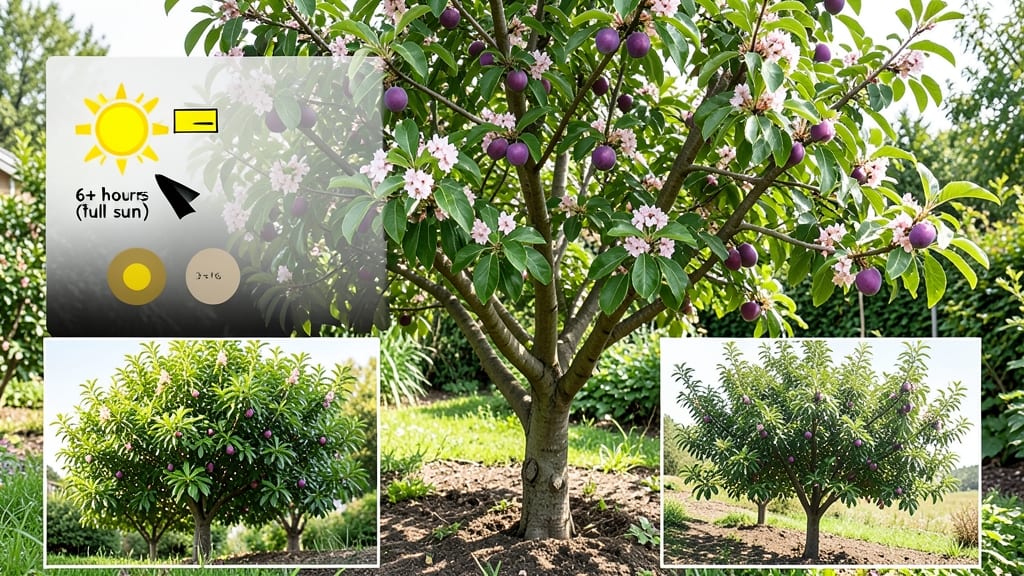
A plum tree doesn’t strictly need full sun—though it thrives with at least 6 hours of direct light daily 🍑. That’s the sweet spot for fruit production, but too much blazing sun can stress the tree, leading to scorched leaves or poor yields.
Here’s the catch: many gardeners assume "full sun" means all-day baking, but plums actually handle partial shade better than you’d think—especially in hot climates. The key is balance: enough light for photosynthesis, but not so much that the tree wilts under midday heat.
Your location matters too. In cooler zones like 6a, a plum tree can stretch toward full sun, while in sweltering regions, afternoon shade becomes a lifesaver. I’ll show you how to tweak placement, spot sunlight stress, and even pick shade-friendly varieties that still bear fruit.
Ready to optimize your plum tree’s light? You’ll learn the exact sunlight rules for your climate, how to adjust pruning for better airflow, and which companion plants keep roots cool. Let’s fix that sun puzzle once and for all.

How much sun does a plum tree really need?
Plum trees thrive with 6 to 8 hours of sunlight daily, but they’re more flexible than many fruit trees. While they prefer full sun exposure, they can tolerate partial shade—especially in hot climates where afternoon sun might cause stress.
The key is balancing photosynthesis efficiency with fruit development, as too much direct sun can lead to leaf scorch or poor fruit quality.
In cooler climates like USDA Zones 5-7, plum trees often perform best with morning sun and afternoon shade. This protects them from harsh afternoon rays while still allowing enough light for optimal photosynthesis.
Meanwhile, in hotter regions (Zones 8-10), providing afternoon shade can prevent heat stress and improve fruit sweetness.
Here’s how sunlight impacts plum trees:
- 6-8 hours of sun: Ideal for fruit production and tree health.
- Less than 6 hours: May reduce fruit yield and weaken growth.
- More than 8 hours (especially in heat): Can cause leaf burn and stress.
| Climate Zone | Ideal Sunlight | Adjustments for Heat | Fruit Impact |
|---|---|---|---|
| Cooler (Zones 5-7) | 6-8 hours (morning sun) | Minimal; dappled shade okay | High yield, sweet fruit |
| Moderate (Zones 7-8) | 6-7 hours (partial shade) | Afternoon shade cloth | Balanced sweetness/acidity |
| Hot (Zones 9-10) | 5-6 hours (filtered sun) | Dense shade in peak heat | Lower yield but higher sugar |
Scientifically, plum trees need sunlight for chlorophyll production, which drives photosynthesis—the process that converts light into energy for growth and fruit development. However, excessive sunlight in hot climates can overheat leaves, reducing their ability to photosynthesize efficiently.
This is why partial shade often improves fruit quality in warmer regions.
For gardeners in urban areas with limited space, consider planting plum trees near east- or west-facing walls to maximize morning or late-afternoon sun while avoiding harsh midday exposure.
Dwarf varieties like 'Santa Rosa' or 'Methley' are great for containers and can adapt well to partial shade if given enough light.
If you’re planting a plum tree in a new location, observe the sunlight patterns throughout the day. Use a sunlight tracker or app to measure how many hours of direct light your spot receives.
Aim for at least 50% of the recommended sunlight if you’re in a hotter zone, as this can prevent stress and improve survival rates.
Mature plum trees in full sun may produce more fruit, but the quality often suffers in extreme heat. Balanced sunlight (6-7 hours) typically yields sweeter, firmer plums with better flavor. For example, 'Stanley' plums thrive in partial shade, making them ideal for areas with intense afternoon sun.
To adjust sunlight exposure, use shade cloth (30-50%) during peak summer hours or plant nearby trees like maples or oaks to provide natural dappled shade. Avoid dense shade, as this can lead to poor fruiting and weak growth. Regularly prune branches to ensure even light distribution across the canopy.
Remember, plum trees are perennial plants, meaning their sunlight needs may change as they age. Young trees need more protection from intense sun, while established trees can handle slightly more light. Always monitor your tree’s leaf color and fruit development to fine-tune its sunlight exposure over time.
Signs your plum tree has too much or too little sun
Plum trees thrive best with 6-8 hours of sunlight daily, but they’re more flexible than many fruit trees. Too much intense afternoon sun can scorch leaves, while insufficient light weakens growth and reduces fruit quality. Learning to spot these signs early helps you adjust care before problems worsen.
First, check your tree’s leaves for discoloration. Yellowing or crispy edges on leaves exposed to direct midday sun signal sunburn or leaf scorch. On the flip side, pale, sparse leaves with long stems between nodes mean the tree isn’t getting enough light to photosynthesize efficiently.
🌱
⚠️ Warning: Extreme Sunlight Stress
Too Much Sun: Brown, crispy leaf edges, premature leaf drop, and small, bitter fruit. Trees in hot climates (Zones 8-10) need afternoon shade.
Too Little Sun: Stunted growth, fewer flowers, and poor fruit set. Trees in shady spots (under buildings or dense canopies) may never fruit.
Next, observe the fruit production. Plum trees with too much sun often produce small, hard, or bitter fruit due to stress. Conversely, trees with insufficient light may have fewer flowers or no fruit at all.
If your tree flowers but drops blossoms early, it’s likely struggling with light balance.
Weak, thin branches or excessive leaf drop in summer are red flags. These signs suggest the tree is overheating or malnourished from poor light. Prune back overly dense branches to improve airflow and light penetration, especially if the tree is in full afternoon sun.
For corrective action, adjust shade gradually. If your tree is in too much sun, add a lightweight shade cloth (30-50%) during peak hours. For too little light, consider transplanting to a sunnier spot or pruning nearby trees/structures.
Mulch with organic matter to retain moisture and reduce heat stress.
🌿 Regularly monitor your plum tree’s growth patterns and fruit development—these are the best indicators of whether it’s getting the right balance of sun. With the right adjustments, you’ll see healthier leaves, stronger branches, and a bountiful harvest next season.