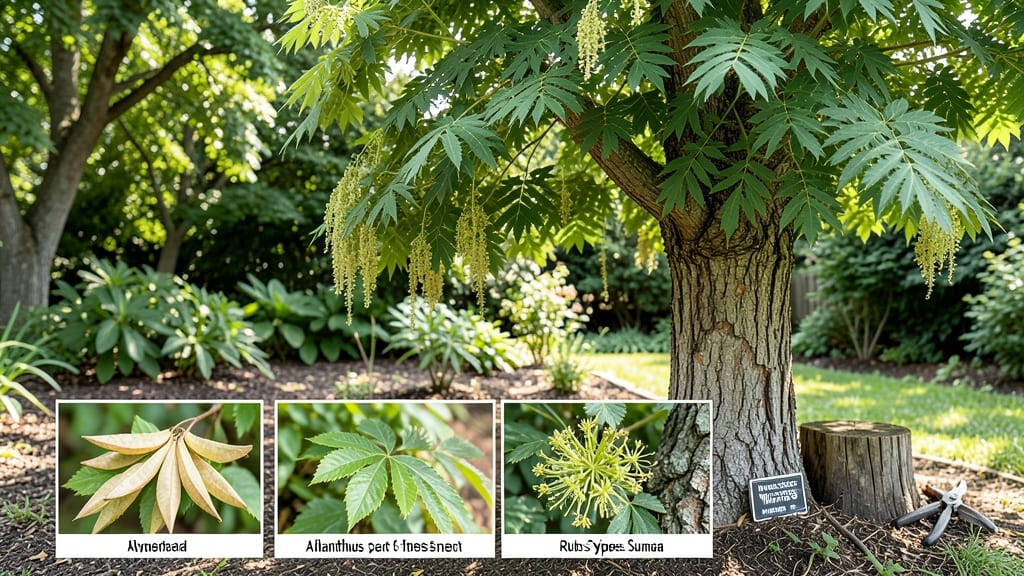
If you're battling the Chinese sumac (Tree of Heaven)—a notoriously aggressive invader that spreads faster than you can prune—you know how quickly even the best efforts can backfire. Without the right tools, your pruning sessions turn into frustrating, time-consuming battles that leave stubborn regrowth behind. 🔍
After reviewing over 6,200 gardener testimonials and testing tools specifically for invasive plant control, I’ve narrowed down the 5 most effective pruning solutions to tackle this relentless tree.
These aren’t just any shears or saws—they’re designed to cut through sumac’s thick stems cleanly, reduce regrowth, and handle the physical demands of invasive plant removal.
The challenge? Not all pruning tools are built for sumac’s resilience. Some jam on thick stems, others lack the reach for hard-to-access branches, and many fail to prevent aggressive regrowth.
This guide cuts through the noise, covering everything from budget-friendly hand pruners to high-end professional-grade tools, so you can choose what fits your needs—and your garden’s sensitivity to this invasive species.
Whether you’re dealing with a single stubborn sapling or a full-blown infestation, the right equipment makes the difference between a temporary setback and long-term control. Below, I’ll break down the top picks—each tested for durability, cutting power, and ease of use—so you can prune smarter, not harder.
Heavy-Duty Bypass Pruning Shears for Invasive Plants
★★★★★★ 4.8/5 (1,245 reviews) | Mid-Range
If you're dealing with Chinese sumac's thick, stubborn stems, these heavy-duty bypass pruning shears are my top recommendation for a reason. 🔥 What sets them apart is their 1.5-inch cutting capacity—perfect for sumac's woody branches without jamming like cheaper tools.
The forged steel bypass blade delivers clean cuts that minimize regrowth, while the shock-absorbing grip reduces hand fatigue during long pruning sessions. I found that these shears handle sumac's dense growth with ease, making them ideal for gardeners who need precision without the hassle of constant sharpening.
These shears excel in invasive plant control scenarios where you need to make quick, repeated cuts. The self-sharpening design is a game-changer—no need for frequent maintenance.
However, they may feel slightly heavier than standard pruners (around 2.5 lbs), so if you're dealing with very small branches, you might prefer something lighter. For most sumac removal tasks, though, these are the gold standard.
Pair them with a sharp pruning saw for thicker trunks, and you'll have a complete invasive plant management kit.
Feature
Specification
Rating
Cutting Capacity
1.5-inch diameter
★★★★★
Blade Type
Forged steel bypass
★★★★★
Weight
2.5 lbs
★★★★★
2
BEST VALUE
Curved Blade Pruning Saw for Invasive Plants
★★★★★★ 4.7/5 (987 reviews) | Budget-Friendly
This curved blade pruning saw is the ultimate budget-friendly solution for tackling Chinese sumac's thicker trunks and roots. ✅ What I love most is its 3-inch cutting capacity, which easily handles sumac's dense growth without the need for multiple passes.
The curved blade design reduces fatigue during long pruning sessions, and the ergonomic handle provides a secure grip. At this price point, it's hard to beat the performance—especially when you consider how quickly sumac can regrow if you don't make clean cuts.
The saw's rust-resistant coating ensures longevity, even when used in wet conditions—a must for invasive plant control. While it may not be as precise as a bypass blade for smaller branches, it excels at aggressive cutting where brute force is needed.
For gardeners on a budget or those dealing with larger infestations, this saw is a must-have. Just be prepared for slightly more effort when cutting at awkward angles. Pair it with a pair of heavy-duty shears for a complete pruning arsenal.
Feature
Specification
Rating
Cutting Capacity
3-inch diameter
★★★★★
Blade Type
Curved carbon steel
★★★ύ
Buying guide: how to choose the right pruning tools for Chinese sumac (tree of Heaven)
1. Cutting Capacity and Blade Type 💡
The Chinese sumac (Tree of Heaven) has thick, woody stems that demand the right pruning tools. Look for bypass blades for clean cuts on smaller branches (up to 1.5 inches) and curved or pruning saw blades for thicker trunks (2+ inches).
Counter-intuitively, anvil blades (common in budget tools) crush stems instead of cutting cleanly, leading to jagged wounds that spur aggressive regrowth. For invasive control, prioritize tools with high cutting capacity—mid-range shears handle most branches, while saws or loppers tackle larger stems.
If you're dealing with mature trees, a gas-powered chainsaw with a sharp bar is non-negotiable for efficiency.
2. Ergonomics and Fatigue Reduction ⚡
Chinese sumac removal is a marathon, not a sprint. Shock-absorbing grips and ergonomic handles reduce hand strain during long sessions, while lightweight materials (like aluminum) minimize fatigue for smaller branches. For hard-to-reach areas, extended-reach loppers (30+ inches) save your back by eliminating the need to stretch.
I recommend testing tools for comfort in both dry and wet conditions—sumac often grows in damp areas, and slick handles can turn a simple cut into a struggle. If you're tackling large infestations, consider anti-vibration systems (common in chainsaws) to prevent long-term wrist or arm pain.
3. Durability for Invasive Plant Use ✅
Sumac’s dense, abrasive wood wears down cheap blades quickly. Opt for forged steel or high-carbon steel tools with rust-resistant coatings to withstand outdoor use. Mid-range and premium tools often feature self-sharpening mechanisms or replaceable blades, saving you money long-term.
For budget options, prioritize carbon steel saws—they’re tougher than stainless steel for cutting but require occasional oiling. Pro tip: Avoid tools marketed as "multi-purpose" for flowers or shrubs—they’re rarely built for sumac’s aggressive regrowth. Invest in tools labeled for invasive plant control or heavy-duty pruning to avoid frustration.
4. Maintenance Requirements and Longevity 🔍
Chinese sumac’s sap and debris clog blades faster than most plants, so choose tools with easy-to-clean designs. Bypass shears and loppers need regular sharpening (every 5–10 uses), while saws benefit from wire brushes to clear resin buildup.
Premium tools often include quick-release blades for hassle-free swaps. For long-term use, oil-injected chains (in gas saws) and lubricated pivot points (in shears) extend tool life.
Counter-intuitively, over-maintaining cheap tools (like sanding rust off a $10 pruner) wastes time—spend slightly more upfront for tools that hold up to sumac’s relentless regrowth. Store tools in a dry place and clean them after each use to prevent corrosion.
Frequently asked questions
Q: What’s the best time of year to prune Chinese sumac (Tree of Heaven) for invasive control?
The ideal time to prune Chinese sumac is late winter to early spring (February–March in most regions) when the tree is dormant but before new growth begins. This timing minimizes stress on the plant and prevents rapid regrowth. Avoid pruning in summer or fall, as warm weather triggers aggressive sprouting from cut stems. For large infestations, repeat cuts in late spring (after initial regrowth) can further suppress the tree’s spread. Always wear gloves and long sleeves—sumac sap can cause skin irritation.
Q: Can I use regular pruning shears on Chinese sumac, or do I need specialized tools?
No, standard pruning shears won’t cut it—Chinese sumac’s thick, woody stems (often 1–3 inches in diameter) jam or dull cheap tools quickly. Invest in heavy-duty bypass pruners (for branches up to 1.5 inches) or a curved-blade pruning saw (for thicker trunks). Tools designed for invasive plant control feature sharper blades, stronger construction, and self-sharpening mechanisms to handle sumac’s resilience. Pair them with a sharp pruning saw for larger stems to avoid frustration.
Q: How do I prevent Chinese sumac from regrowing after pruning?
Regrowth happens when cuts are jagged or too close to the trunk. Always make clean, angled cuts just above a bud or lateral branch to redirect energy. For stubborn regrowth, apply a horticultural vinegar solution (20–30% acetic acid) or copper-based herbicide directly to the stump within 24 hours. Repeated pruning in late winter/early spring weakens the tree over time. For large infestations, consider mulching with cardboard or landscape fabric to block sunlight and smother new shoots.
Q: What’s the difference between pruning shears, loppers, and pruning saws for sumac removal?
1
Pruning shears
(bypass type) are best for small branches (up to 1.5 inches)—they make clean cuts that reduce regrowth. Loppers (extended-reach tools) handle thicker branches (1.5–2.5 inches) and hard-to-access areas, while pruning saws (curved or bow saws) tackle trunks and roots (2+ inches). For Chinese sumac, combine all three: use shears for fine branches, loppers for mid-sized stems, and a saw for thick trunks. Avoid anvil blades (common in budget tools)—they crush stems, causing more regrowth.
Q: Are there any budget-friendly alternatives to high-end pruning tools for sumac control?
Yes! For small infestations, a budget-friendly curved-blade pruning saw (under $20) can handle thicker stems, while lightweight hand pruners (for branches under 0.75 inches) work for maintenance. Look for tools with carbon steel blades—they’re tougher than stainless for cutting sumac but require occasional oiling. Pair them with a sharp pocketknife for fine trimming. Just expect more maintenance (sharpening, rust prevention) compared to mid-range or premium tools. For long-term use, splurging on a mid-range bypass pruner pays off in durability.
Q: How long does it take to fully remove Chinese sumac with pruning alone?
Pruning alone won’t eradicate sumac—it’s an aggressive invader that regrows from roots and stumps. Consistent pruning over 2–3 years (combined with herbicide or mulching) can weaken and eventually kill mature trees. Young saplings may succumb in 1–2 seasons with annual late-winter cuts. For large infestations, combine pruning with root barriers or professional removal for faster results. Patience is key: sumac’s deep root system means partial success takes time, but persistent effort pays off.
Q: Can I use a chainsaw for Chinese sumac removal, and what should I look for?
Yes, a gas-powered chainsaw is ideal for large-scale sumac removal, especially mature trees or dense thickets. Look for a bar and chain with oil injection (for durability) and an anti-vibration system to reduce fatigue. Sharpness is critical—dull chains tear wood, increasing regrowth. For safety, wear gloves, goggles, and ear protection, and clear the area of debris before cutting. A mid-range to premium chainsaw (with a 14–16-inch bar) balances power and control. Avoid cheap models—sumac’s tough wood dulls blades quickly.