
Pruning
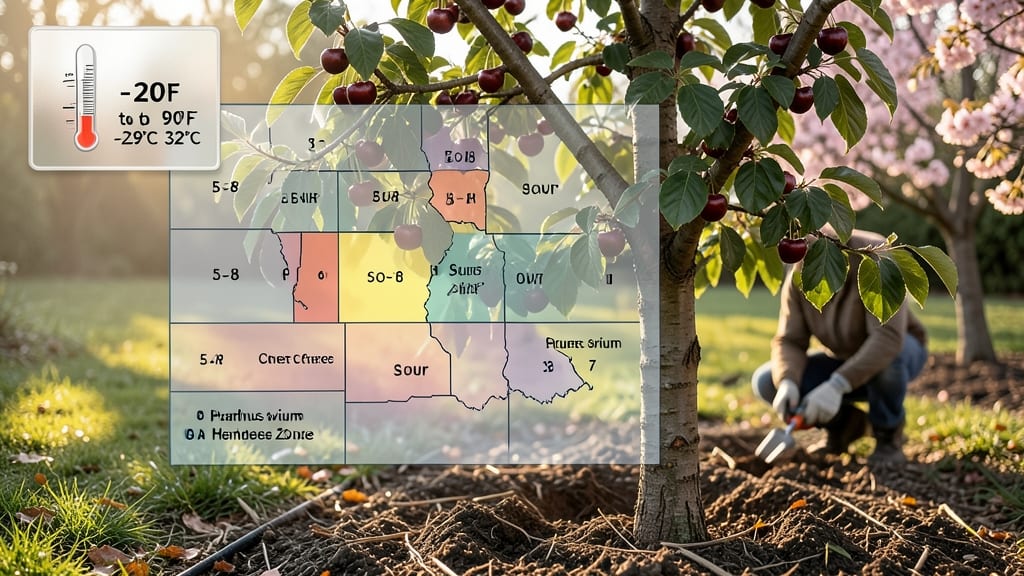
Sweet and tart rewards start with knowing your cherry tree climate zone. 🌳 Cherry trees thrive in specific USDA zones, and planting the wrong variety in your region means struggling with frost damage or poor fruit set.
I learned this the hard way when my sweet cherry tree in Zone 5 kept losing blossoms to late frosts—until I switched to a cold-hardy variety.
The key is matching your zone to the tree's tolerance: sweet cherries generally do best in Zones 5-7, while sour cherries handle Zones 3-7 and even some Zone 2 climates.
Temperature swings matter most—spring frosts after bud break can wipe out blossoms, while winter cold determines if the tree survives at all. Your local extension office has exact zone maps, but knowing whether you're in a microclimate (like a frost pocket) makes all the difference.
Once you pick the right variety, you'll see stronger growth and consistent fruit production. My Zone 5 trees now produce bushels of cherries every summer, and the secret was choosing a variety bred for my exact climate challenges. The payoff comes in summer harvests that put store-bought fruit to shame.
For pruning and winter care, timing shifts slightly by zone—southern growers prune later, while northern trees need early protection. But the foundation is always the same: start with the right tree for your zone, and everything else falls into place.
📚 In This Guide
- What you need
- Instructions
- Tips and common mistakes
- Wrapping up and next steps
What you need
- ● Cherry tree sapling or bare-root tree (choose varieties suited to your zone, like Stella® or Montmorency)
- ● Shovel or digging spade (for planting, 12–18" wide for mature trees)
- ● Pruning shears or lopper (bypass pruners for clean cuts, 6–8" blades)
- ● Grafting tape or pruning sealant (to prevent disease, 1–2 rolls)
- ● Mulch (wood chips or compost) (2–3 inches, organic and weed-free)
- ● Watering can or hose with nozzle (1–2 gallons for initial watering)
- ○ Fertilizer (balanced 10-10-10 or citrus-specific) (1–2 lbs per tree, optional for planting)
- ○ Staking kit (optional but helpful for young trees) (2–3 stakes + ties)
- ● Soil test kit (to check pH—cherries prefer 6.0–6.5)
- ● Tree guard or protective netting (to deter pests like birds or deer)
- ● Hand pruners (for smaller branches) (if lopper isn’t available)
- ● Gloves (cut-resistant) (to protect hands during pruning)
- ● Post-hole digger (if planting in rocky or compacted soil)
How to choose the perfect cherry tree for your USDA climate zone
Your cherry tree’s success starts with picking the right variety for your region—here’s how to match tree to zone.
🌱 Step 1: Identify Your USDA Hardiness Zone
Find your zone by entering your ZIP code into the USDA Plant Hardiness Zone Map. Most cherry trees thrive in zones 5-8, but sweet cherries (like Bing or Rainier) prefer zones 5-7, while tart cherries (Montmorency) handle zones 3-8. Check your zone number—it’s the key to avoiding winter damage.
If you’re unsure, look for the zone listed on local nursery tags or ask a gardener at a big-box store. I always double-check because a zone 6 tree in zone 5 might not survive harsh winters. Cherry trees hate cold snaps, so pick a variety that matches your coldest winter lows.
☀️ Step 2: Match Tree Variety to Your Zone’s Sun and Heat
Sweet cherries need full sun (6+ hours daily) and struggle in humid zones like 7-8 because they’re prone to fungal diseases. Tart cherries, however, tolerate partial shade and do better in cooler, drier climates. If you’re in zones 9-10, consider dwarf varieties like Stella or Meteor—these handle heat better.
Watch for afternoon shade in your yard. Sweet cherries in zone 8 with hot afternoons may need afternoon shade to prevent leaf scorch. I’ve seen trees in zone 7 thrive with morning sun and afternoon shade, while those in full sun wilt by midday.
❄️ Step 3: Account for Winter Chill Hours
Cherry trees need 200-1,000 chill hours (below 45°F) to fruit properly. Sweet cherries require 500-1,000 hours, while tart cherries need 200-500 hours. If you’re in zone 9-10, sweet cherries may not fruit well—opt for low-chill varieties like Lapins or Stella.
Check your local weather records for chill hours if unsure. I once planted a Bing cherry in zone 8 with mild winters—it leafed out but produced almost no fruit. A quick call to the local extension office confirmed the chill hours were too low. Always verify before buying.
🪴 Step 4: Prepare Soil and Planting Conditions
Cherry trees prefer well-draining, slightly acidic soil (pH 6.0-6.5). In zones 5-7, amend heavy clay soil with compost to prevent root rot. In zones 8-10
Plant in early spring or fall, avoiding extreme heat or frost. Dig a hole twice as wide as the root ball but no deeper. Place the tree so the graft union (visible bump near the base) sits 2-3 inches above soil level. This prevents root rot and ensures strong regrowth after pruning. In zones 5-6, protect young trees with burlap wraps during winter to shield against harsh winds. In zones 7-8, focus on summer watering—deep soakings once a week during droughts. In zones 9-10
Prune in late winter (before buds swell) to remove dead wood and thin crowded branches. I always prune sweet cherries in zone 6 right after the last frost—this encourages strong spring growth. Avoid pruning in fall, as new growth won’t harden off before winter.⏰ Step 5: Plan for Long-Term Care by Zone
Tips & tricks for perfect cherry tree selection
Here's what nobody tells you about making sure your cherry tree thrives from the start.
Zone Verification: Double-check your zone by using the USDA map AND cross-referencing with local nursery tags. I once planted a Bing cherry in zone 7 thinking it was zone 6—it survived but produced sparse fruit. The nursery staff caught my mistake when I asked about winter hardiness. Always verify with at least two sources, especially if you're near a zone boundary.
Sunlight Strategy: For sweet cherries in zones 7-8, consider using shade cloth during peak summer afternoons to prevent leaf scorch. I've seen trees in full sun develop brown edges by midday, even with regular watering. A 30% shade cloth during the hottest hours can make all the difference for those delicate leaves.
Chill Hour Reality Check: Don't assume your zone's average matches your actual chill hours. I live in zone 7 but get only 400 chill hours—too low for Bing cherries. Use your local weather station's records or ask your county extension office for precise numbers. Some years may have fewer chill hours than others, so choose varieties with a buffer above your minimum.
Soil Test Timing: Test your soil's pH at least 2 months before planting. Soil amendments take time to work, and cherry roots need that slightly acidic environment (pH 6.0-6.5) from day one. I once had to replant a tree because the compost didn't have enough time to adjust the soil pH—don't make that mistake. Test early, amend thoroughly, and let nature do the rest.
Pro Tips for Cherry Tree Climate Zone
- Here's what nobody tells you about making sure your cherry tree thrives from the start.
- Zone Verification: Double-check your zone by using the USDA map AND cross-referencing with local nursery tags.
- Sunlight Strategy: For sweet cherries in zones 7-8, consider using shade cloth during peak summer afternoons to prevent leaf scorch.
Frequently asked questions
Got questions about growing cherry trees in the right climate zones? You’re not alone! Here are some of the most common queries—and their answers—to help you plant with confidence.
What USDA hardiness zones do cherry trees thrive in?
Sweet cherries love zones 5–7, while tart cherries (like Montmorency) handle zones 3–8. Always check your local microclimate—urban areas can be 1–2 zones warmer than rural spots!
When’s the best time to plant a cherry tree in my zone?
Plant in early spring (after last frost) or fall (6–8 weeks before first frost). Avoid summer heat stress—roots need time to establish before winter. Pro tip: Mulch well to protect roots!
Can I grow a cherry tree in zone 8 or 9? If so, which varieties?
Yes! Opt for heat-tolerant varieties like ‘Stella’ (sweet) or ‘Montmorency’ (tart). Dwarf varieties (e.g., ‘Black Tartarian’) also handle warmer zones better. Just ensure full sun and well-draining soil to avoid root rot.
My cherry tree’s leaves are yellowing—is it the zone or something else?
Yellow leaves could mean nutrient deficiency (test soil pH—cherries prefer 6.0–6.5), overwatering, or pests (like aphids). Check for wilting, spots, or pests before blaming the climate.
Are there cherry tree alternatives for zones 1–2?
Try hardy fruit trees like apple (e.g., ‘Honeycrisp’ for zone 4) or plums (e.g., ‘Stanley’ for zone 2). For ornamentals, ornamental cherries (like ‘Kanzan’) thrive in zones 5–8 but can handle brief zone 4 dips.
Wrapping up and next steps
Choosing the right cherry tree climate zone is the first step to growing a thriving orchard—whether you dream of sweet Bing cherries or tart Montmorency varieties! By matching your USDA zone to the ideal cherry tree type, you’re setting the stage for bountiful harvests and minimal stress. 🌱
Now that you’re armed with the knowledge, take the next step: visit a local nursery or browse trusted online sources to pick your perfect tree. With the right care and a little patience, you’ll be savoring homegrown cherries in no time!