
Trees
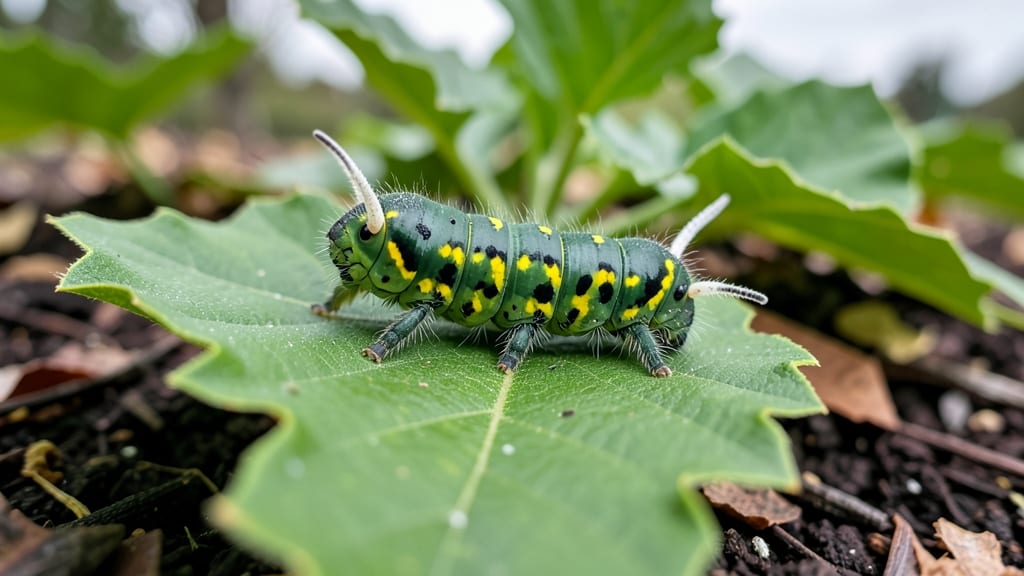
Those fuzzy, inch-long caterpillars stripping your catalpa leaves? 🌿 They’re catalpa sphinx moth larvae—and while they look harmless, they can defoliate your tree in weeks if left unchecked.
I’ve battled these striped invaders twice, and I’m sharing exactly how to spot them, understand their lifecycle, and stop them without harsh chemicals.
The caterpillars start as tiny eggs on leaves in early summer, then hatch into black-and-yellow striped larvae that munch relentlessly. By late summer, they’re ready to pupate, meaning the damage peaks just when your tree should be storing energy for winter.
The good news? They’re not tree-killers—they’re just messy. The bad news? A heavy infestation weakens your tree and makes it vulnerable to other pests.
You’ll learn to identify them by their distinctive black-and-yellow stripes and the skeletonized leaves they leave behind. Organic controls like Bacillus thuringiensis (a natural bacteria) or neem oil work best when applied early, while manual removal (drop them in soapy water) is surprisingly effective for small infestations.
I’ll walk you through the step-by-step process—no chemicals required.
This method works for any catalpa tree, whether it’s a mature shade tree or a young sapling. The key is acting fast, before the caterpillars reach their peak feeding stage. Let’s get your tree back to full, healthy foliage by season’s end.
Natural Triggers Behind Outbreaks
The presence of catalpa tree caterpillars (primarily the Cercropia moth larvae) isn’t random—it’s a response to specific ecological and environmental cues. Understanding these triggers helps gardeners and arborists predict, monitor, and mitigate infestations before they spiral out of control.
Here’s why these fuzzy, voracious caterpillars suddenly appear in your catalpa trees.
Catalpa trees (Catalpa bignonioides) are the caterpillar’s favorite buffet. When these trees thrive—thanks to ideal growing conditions like well-drained soil, full sun, and adequate water—they produce lush foliage that attracts Cercropia moths to lay eggs. Here’s the science:
- Nutrient-rich leaves: Healthy catalpa trees have high nitrogen content, making their leaves irresistible to caterpillars. Think of it like a salad bar for larvae!
- Young, tender growth: New leaves and shoots are especially vulnerable. Caterpillars prefer these because they’re softer and easier to digest.
- Tree density: In neighborhoods or parks with multiple catalpa trees, moths have more opportunities to reproduce, leading to exponential caterpillar populations.
Actionable tip: If your area has a cluster of catalpa trees, monitor them closely in spring and early summer—the peak egg-laying season for Cercropia moths. 🌿
The caterpillar’s life begins as an egg, laid strategically by adult Cercropia moths. Their reproductive habits directly influence outbreak severity:
- Timing is everything: Moths time egg-laying to coincide with new leaf growth (typically May–June in most regions). This ensures caterpillars hatch into a ready-made food source.
- Clutch size matters: A single female can lay 200–400 eggs in clusters on the underside of leaves. If left unchecked, these eggs hatch into a wave of caterpillars in just 10–14 days.
- Multi-generational outbreaks: In warm climates, Cercropia moths may produce two generations per year, doubling the risk of infestation.
Pro tip: Inspect catalpa leaves weekly during peak moth activity. Look for tiny green eggs (about the size of a pinhead) grouped in rows along leaf veins. Early detection = fewer caterpillars later! 🔍
Weather acts as both a catalyst and a control for caterpillar populations. Here’s how:
| Weather Factor | Impact on Caterpillars |
|---|---|
| 🌞 Warm, dry springs | Speeds up egg hatching and caterpillar growth, leading to larger outbreaks. |
| 🌧️ Heavy rainfall | Can wash away eggs or drown young caterpillars, but also promotes lush catalpa growth, attracting more moths. |
| 🍂 Mild winters | Allows moths to survive longer, increasing the likelihood of a second generation. |
| ❄️ Early frosts | Naturally reduces caterpillar populations by killing larvae before they pupate. |
Key insight: Regions with hot, humid summers (like the Southeast U.S.) see more severe infestations. If you’re in such an area, proactive monitoring is your best defense. ⚠️
Caterpillars aren’t the only ones feasting on catalpa trees—they’re also on the menu for birds, parasitic wasps, and other insects. However, when these natural controls are disrupted, caterpillar numbers explode:
- Bird activity drops: Urban areas with fewer songbirds (like robins or blue jays) mean fewer caterpillars are eaten. Even feeders can help!
- Pesticide overuse: Broad-spectrum insecticides kill beneficial predators (e.g., tachinid flies or braconid wasps) along with caterpillars, creating a vacuum effect.
- Habitat loss: Deforestation or lawn-heavy landscapes reduce hiding spots for predator insects, making it harder for them to hunt caterpillars.
Eco-friendly fix: Encourage biodiversity! Plant native shrubs near your catalpa tree to attract predator insects and birds. Even a small birdhouse can make a difference. 🏡🐦
By recognizing these triggers, you can shift the balance in favor of your catalpa tree—before the caterpillars turn it into a skeleton. Stay tuned for organic control methods to keep these fuzzy pests in check! 🌟
Natural Ways to Control Catalpa Worms
Dealing with a catalpa tree caterpillar infestation can feel overwhelming, but there are effective, organic ways to manage the problem without harsh chemicals. Below, we’ve mapped out solutions based on the root cause—whether it’s heavy infestation, damage to leaves, or prevention for future outbreaks.
If your tree is swarming with caterpillars, physical removal is the fastest way to reduce their numbers.
🔥 Step 1: Handpick the Caterpillars
- Wear gloves and inspect the tree, especially the undersides of leaves.
- Drop caterpillars into a bucket of soapy water (1 tbsp dish soap per gallon) to kill them instantly.
- Focus on larvae and pupae—they’re the most destructive stages.
🍳 Step 2: Use Drop Cloths or Traps
- Hang pheromone traps (available at garden centers) to disrupt mating.
- Place a white sheet under the tree and shake branches—caterpillars will fall onto it for easy disposal.
💡 Pro Tip: Do this early in the morning when caterpillars are sluggish and easier to spot.
Caterpillars are food for many beneficial insects. Boost their presence to naturally reduce infestations.
👨🍳 Step 1: Attract Ladybugs & Parasitic Wasps
- Plant dill, fennel, or marigolds near your catalpa tree—they attract ladybugs, which eat caterpillar eggs.
- Install a bee bath (shallow dish with water and pebbles) to support parasitic wasps that lay eggs inside caterpillars.
🥘 Step 2: Apply Bacillus Thuringiensis (Bt)
- Bt kurstaki is a natural bacteria that kills caterpillars when ingested.
- Mix with water and spray evenly on leaves (especially undersides).
- Reapply after rain—it’s safe for humans and pets but only effective if caterpillars eat it.
✨ Pro Tip: Apply Bt in the evening to avoid harming bees and other pollinators.
Stop future outbreaks by keeping your catalpa tree healthy and less appealing to caterpillars.
🔪 Step 1: Prune for Better Airflow
- Remove dead or crowded branches—this reduces hiding spots for eggs and larvae.
- Prune in late winter or early spring before caterpillars emerge.
⏰ Step 2: Monitor & Act Early
- Check your tree weekly during spring and summer for egg masses (small, fuzzy clusters on leaves).
- Remove eggs by hand—they’re easier to spot than caterpillars.
📊 Pro Tip: If your tree is stressed (drought, poor soil), caterpillars are more likely to attack. Water deeply and mulch to keep it strong.
Final Note: Consistency is key—combine manual removal, natural predators, and preventive care for the best results. With patience, your catalpa tree can bounce back without chemical damage! 🌿💚
Frequently asked questions
Are catalpa tree caterpillars harmful to my tree?
While they won't kill a healthy catalpa tree, these caterpillars can cause significant defoliation if left unchecked. Heavy infestations weaken the tree by reducing its ability to photosynthesize, making it more vulnerable to diseases and pests. Young trees are especially at risk since they have fewer resources to recover from repeated feeding.
How do I identify catalpa tree caterpillars?
Look for black-and-yellow striped larvae about 1-2 inches long with a distinctive fuzzy appearance. They leave behind skeletonized leaves (leaves with only veins remaining) and often drop to the ground when disturbed. Eggs appear as tiny green clusters on leaf undersides in spring.
Can I use neem oil on catalpa caterpillars?
Yes, neem oil is an effective organic option. Mix 1-2 tablespoons with 1 quart of water and 1 teaspoon of mild soap as a spreader. Spray thoroughly on leaves (especially undersides) every 5-7 days during active infestations. It disrupts their feeding and growth hormones while being safe for beneficial insects.
When is the best time to treat for catalpa caterpillars?
The ideal time is early summer when eggs first appear. Treat again in late summer if you notice new larvae. Focus on new growth and leaf undersides where eggs are typically laid. Early intervention prevents caterpillars from reaching their most destructive feeding stages.
What should I do with caterpillars I've collected?
Drop them into a bucket of soapy water (1 tbsp dish soap per gallon) to kill them instantly. Never release them elsewhere—they'll just find another catalpa tree! For large infestations, double-bag them in plastic bags and dispose of them in outdoor trash bins to prevent escape.