
Plants
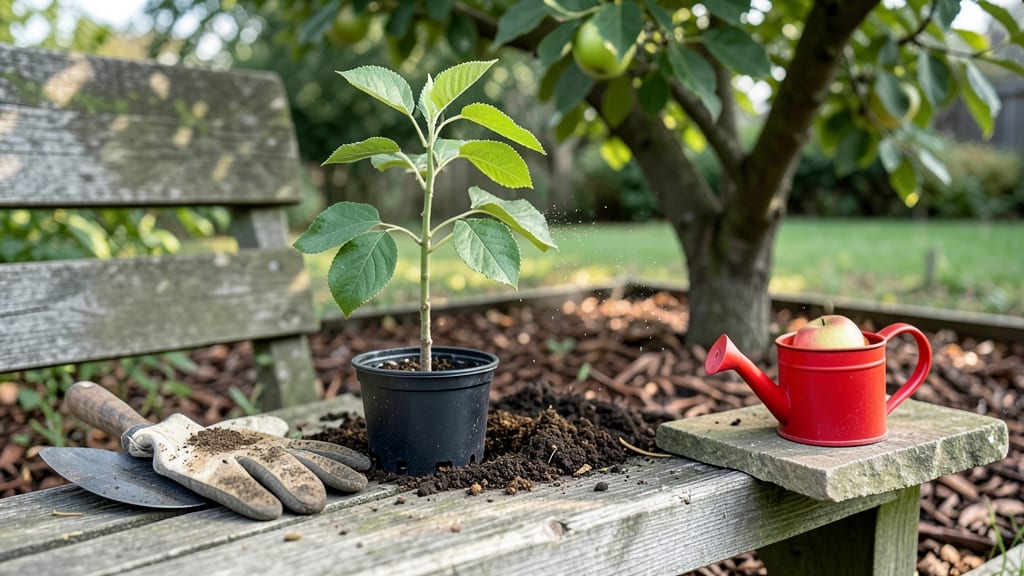
You can plant an apple tree from an apple, but the resulting tree will almost never produce fruit identical to the parent—cross-pollination and genetic unpredictability make this a gamble. For viable fruit, success hinges on seed viability, proper cold stratification, and years of patient growth before any potential blooming.
Growing an apple tree from seed is more about the adventure than the outcome. 🌱 While the process itself is straightforward—extracting seeds, cold-stratifying them, and nurturing young saplings—what you end up with is anyone's guess.
Most seed-grown trees develop different fruit characteristics than the parent apple, often requiring years before they even bloom. That said, if you're curious about horticultural experiments or simply enjoy the process of watching something grow from scratch, this method offers a rewarding challenge.
For those seeking predictable apple varieties, grafting is the gold standard. But for the patient gardener willing to embrace uncertainty, seed-grown apple trees can still yield surprises—perhaps even a unique new cultivar that becomes your garden's prized discovery. The real magic lies in the journey, not just the destination.
💡 In This Article
- Why Apple Seeds Rarely Grow True-to-Type Trees
- Step-by-Step Guide to Growing an Apple Tree from Seed
Why apple seeds rarely grow true-to-type trees
The genetic lottery begins the moment an apple seed forms. Unlike grafting, where a specific variety's scion is attached to a rootstock, seeds carry a mix of traits from both parent trees—often involving wild pollinators that transfer pollen from completely different cultivars.
This means your seed-grown tree might produce fruit that's smaller, tart, or even inedible compared to the sweet, juicy apple you started with.
Apple trees are also highly heterozygous, meaning they carry multiple gene variations. When you plant a seed, you're essentially rolling the dice on which combination of these genes will dominate.
For example, a seed from a Honeycrisp apple might grow into a tree producing fruit with Granny Smith-like acidity or Fuji-like crunch—neither of which resemble the original apple's texture or flavor.
The unpredictability extends to growth habits too: some seedling trees develop weak branches prone to breaking, while others grow spindly and require extensive staking.
Rootstock influence plays a hidden role too. Apple seeds often develop their own root systems rather than being grafted onto disease-resistant rootstocks used in commercial orchards. Without this support, seed-grown trees may struggle with soil-borne diseases or environmental stresses.
Even if they survive, their fruit quality remains unpredictable. 🌱 What you gain in genetic diversity, you lose in consistency—making seed-grown trees more of a scientific curiosity than a reliable food source.
Consider the case of the Antique Rose apple variety: seeds from this heirloom might produce trees bearing fruit that's more like a wild crabapple than the original dessert apple.
The flesh could be fibrous, the skin tough, and the flavor bitter—nothing like the tender, aromatic slices you enjoyed from the parent fruit. This genetic divergence is why professional orchards never rely on seed propagation for commercial varieties.
Even when seed-grown trees do produce edible fruit, it typically takes 8-12 years before they bear any apples at all. During that time, they're vulnerable to pests, weather extremes, and competition from weeds.
The patience required makes seed-growing more of a long-term experiment than a practical gardening strategy for most home growers.
For comparison, grafted apple trees (where a specific variety's branches are attached to a compatible rootstock) produce fruit identical to the parent within 3-5 years. The trade-off?
Grafting requires horticultural skill and access to nursery stock, while seed-growing offers the thrill of genetic discovery—even if that discovery might not be what you expected.