
Pests and Diseases
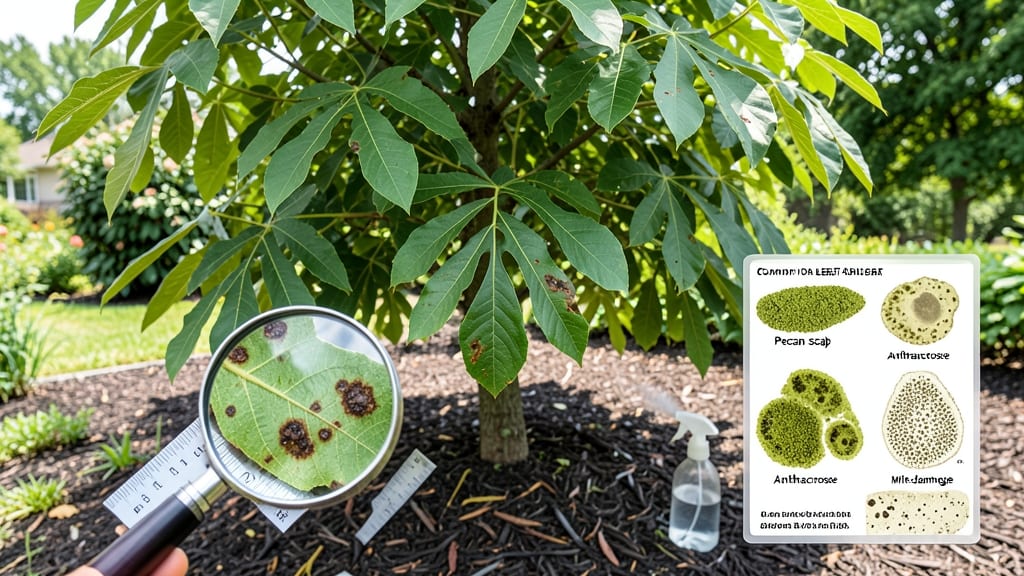
Finding those strange bumps on your pecan tree leaves can feel like a gut punch—especially when you’ve poured time into growing healthy trees. 🌿 I’ve seen everything from tiny raised spots to crusty scale insects, and the good news is most causes have simple, natural fixes that don’t require harsh chemicals.
The key is identifying whether you’re dealing with fungal infections, sap-sucking pests, or environmental stress, because each needs a different approach.
Pecan scab, one of the most common culprits, creates dark, velvety bumps that spread like wildfire if humidity stays high. Meanwhile, mites and scale insects leave behind tiny, waxy bumps that cluster on leaf undersides—often accompanied by sticky residue.
Even environmental factors like drought stress or poor drainage can trigger abnormal leaf growth, though these usually show up as puckered or curled areas rather than distinct bumps.
Once you know what’s causing the problem, solutions become straightforward. For fungal issues, a copper fungicide spray applied at bud break and after rains works wonders, while neem oil or horticultural oil smothers scale and mites when leaves are dry.
Pruning affected branches in late winter also helps break the cycle. The best part? These methods keep your pecans safe for eating while protecting local ecosystems.
Prevention is where the real magic happens—regular monitoring, proper watering, and keeping your tree well-fed with balanced fertilizer (like 10-10-10) in early spring. A few minutes of inspection each week can catch issues before they spiral, and trust me, your future harvest will thank you.
Let’s get those leaves looking healthy again!
What Triggers Leaf Bumps
Pecan tree leaves developing bumps can be alarming, but understanding the root causes helps you take targeted action. These irregularities often stem from biological interactions—whether pests, pathogens, or environmental stressors. Below, we break down the most common culprits and why they leave their mark on your tree’s foliage.
Some of the most noticeable bumps on pecan leaves are caused by insects that either feed directly on the tissue or inject harmful substances. Here’s how they do it:
- Pecan Nut Curculio (Conotrachelus spp.) These small weevils lay eggs in developing nuts, but their larvae can also trigger gall-like bumps on leaves as they feed.
The adult beetles chew into leaf edges, causing irregular, raised lesions that may ooze sap. 🌿🔍 Why it happens: The larvae secrete saliva that disrupts normal cell growth, prompting the tree to form protective bumps around the intrusion.
- Spider Mites (Tetranychus spp.) While mites don’t create bumps directly, their feeding patterns lead to stippling and puckered, thickened leaf areas.
Heavy infestations cause leaves to curl and develop silvery or bronze bumps as the tree’s cells respond to damage. Why it happens: Mites pierce cells to suck out sap, triggering a stress response that alters leaf texture and color.
- Scale Insects (Lepidosaphes spp.) These sap-sucking pests attach to leaves and stems, secreting a waxy coating that forms hard, crusty bumps.
The tree’s immune response often creates raised, corky growths around the infestation sites. Why it happens: The insect’s salivary enzymes disrupt cell division, leading to abnormal tissue proliferation.
Pathogens can hijack a tree’s natural processes, causing leaves to develop wart-like or blister-like bumps. These are often signs of systemic stress or direct infection.
- Pecan Leaf Spot (Cladosporium spp. or Cercospora spp.) Fungal spores land on leaves and trigger dark, raised bumps surrounded by yellow halos.
The fungus invades leaf tissue, causing cells to swell and form galls or pustules. Why it happens: The fungus secretes enzymes that break down cell walls, prompting the tree to overproduce cells as a defensive measure.
- Bacterial Leaf Gall (Pseudomonas spp.) Bacteria enter through wounds or natural openings (like stomata) and multiply, causing water-soaked bumps that harden into leathery, raised lesions.
These galls often ooze a milky sap when cut open. Why it happens: The bacterial toxins disrupt plant hormones, leading to uncontrolled cell division in localized areas.
- Anthracnose (Gloeosporium spp.) This fungal disease creates sunken, blister-like bumps with dark centers.
The pathogen thrives in wet conditions, causing leaves to develop raised, necrotic (dead) spots as it spreads. Why it happens: The fungus blocks nutrient flow to infected cells, forcing the tree to isolate them with thickened, bumpy tissue.
Not all bumps are caused by living organisms—sometimes, your pecan tree’s environment is to blame. Extreme conditions can trigger physical changes in leaf structure.
- Heat and Drought Stress Prolonged dry spells or scorching temperatures cause leaves to pucker and develop small, hard bumps as the tree conserves moisture.
Cells shrink unevenly, leading to wart-like textures. Why it happens: The tree’s abscisic acid (a stress hormone) accumulates, altering cell wall rigidity and causing localized thickening.
- Hail or Physical Damage Impact from hailstones or debris creates raised, bruised bumps where cells are crushed.
The tree may later form calloused growths over damaged areas to heal the wound. Why it happens: Mechanical injury triggers a repair response, where the tree deposits extra lignin and suberin (a waxy polymer) to seal off the damage.
- Nutrient Imbalances (Excess Nitrogen or Zinc Deficiency) Too much nitrogen can lead to soft, spongy bumps on leaves, while zinc deficiency causes interveinal chlorosis (yellowing) with bumpy, distorted growth. Why it happens: Nitrogen overload disrupts chlorophyll production, while zinc deficiency impairs cell division enzymes, leading to malformed tissue.
💡 Pro Tip: To diagnose the exact cause, examine the size, color, and location of the bumps:
- Small, hard, and dark? → Likely fungal or bacterial.
- Soft and sap-filled? → Probably pest-related (e.g., scale or curculio).
- Widespread and puckered? → Environmental stress (drought or hail).
Natural Fixes for Leaf Bumps
Once you’ve identified the culprit behind those pesky bumps on your pecan tree leaves, it’s time to take action! The good news is that many of these issues can be resolved with natural, chemical-free solutions that won’t harm your tree—or your wallet.
Below, we’ve mapped out targeted fixes for each common cause, along with prevention tips to keep your pecan tree thriving.
Fix:
- Handpick Larvae (👨🍳)
- Inspect leaves and nuts regularly (especially in late summer). Look for small, white, legless grubs—these are the culprits! Drop them into soapy water to kill them instantly.
- Use Kaolin Clay (🧴)
- Apply a kaolin clay barrier (like Surround WP) to the tree trunk and branches. This creates a protective film that confuses and deters adult beetles from laying eggs.
- Nematode Control (🦠)
- Beneficial nematodes (like Steinernema carpocapsae) can be sprayed on the soil around the tree. These microscopic predators seek out and kill curculio larvae in the ground.
Prevention Tips:
- 🌿 Mulch properly with wood chips to reduce egg-laying sites.
- 🕒 Time your harvest—pick nuts early if possible to avoid peak infestation periods.
- 🌞 Prune for airflow—thick foliage gives pests more hiding spots.
Fix:
- Pheromone Traps (🎣)
- Hang pecan weevil traps (available at garden centers) in early summer. These lure adult weevils away from the tree before they lay eggs.
- Diatomaceous Earth (💀)
- Sprinkle food-grade DE around the base of the tree and on branches. It’s a natural desiccant that kills crawling weevils by dehydrating them.
- Neem Oil Spray (🌿)
- Mix neem oil with water and a drop of dish soap, then spray the upper and lower leaf surfaces (especially in late spring). Reapply every 7–10 days.
Prevention Tips:
- 🍃 Shake trees over a tarp before nuts fall to the ground—this exposes hidden weevils.
- 🗓️ Harvest promptly—don’t leave fallen nuts on the ground.
- 🌱 Plant trap crops like sunflowers nearby to distract weevils.
Fix:
- Baking Soda Spray (🧂)
- Mix 1 tbsp baking soda + 1 tsp dish soap + 1 gallon water. Spray both sides of leaves every 10–14 days. This raises the pH, making it harder for fungi to thrive.
- Copper Fungicide (🛡️)
- Use a copper-based fungicide (like Bordeaux mixture) if powdery mildew or anthracnose is severe. Follow package instructions for application timing.
- Improve Airflow (🌬️)
- Thin out dense branches and prune for sunlight penetration. Fungi love damp, shaded conditions—so keep the canopy open!
Prevention Tips:
- 💦 Water at the base (avoid overhead sprinkling).
- 🌱 Mulch with straw (not thick layers of wood chips) to reduce humidity near the soil.
- 🌿 Clean up debris—remove fallen leaves and nuts where spores can hide.
Fix:
- Horticultural Oil (🛢️)
- Apply dormant oil spray in late winter or early spring (before buds swell). This smothers scale insects and their eggs.
- Ladybugs & Lacewings (🐞🕷️)
- Release beneficial insects like ladybugs or lacewings. They devour scale insects and their honeydew.
- Scrape Off Infestations (🧹)
- For small trees, wipe down branches with a soapy cloth to physically remove scale clusters.
Prevention Tips:
- 🍃 Monitor young trees—scale loves new growth.
- 🌿 Avoid over-fertilizing—scale thrives on stressed trees.
- 🕒 Prune in dry weather—scale hates humidity.
Fix:
- Adjust Watering (💦)
- If bumps are from drought stress, water deeply 1–2 times per week (not daily shallow watering). Use a soaker hose to avoid wetting foliage.
- Mulch Heavily (🌿)
- Apply 3–4 inches of organic mulch (like pine straw) to retain moisture and regulate soil temperature.
- Fertilize Smartly (🌱)
- Do a soil test first! If deficient, add balanced fertilizer (10-10-10) in early spring. Avoid overdoing nitrogen—it stresses trees.
Prevention Tips:
- 🌞 Provide afternoon shade in extreme heat (use shade cloth if needed).
- 🌡️ Avoid sudden temperature swings—group trees with similar water needs.
- 🚫 Don’t prune in peak summer—wait for cooler months.
💡 Pro Tip: Always test a small branch with any treatment (especially oils or sprays) to ensure your tree tolerates it before full application!
By tackling the root cause—whether it’s pests, fungi, or stress—your pecan tree can bounce back with healthier leaves and bigger nuts. Stay vigilant, and your tree will thank you with smooth, bump-free foliage in no time! 🌳✨
Frequently asked questions
Are those bumps on my pecan leaves harmful?
Most bumps aren't immediately deadly, but they can weaken your tree if left untreated. Fungal bumps like pecan scab reduce photosynthesis, while pests like scale insects drain nutrients. The key is acting early—many issues become severe when ignored for months. Focus on identifying the cause first to choose the right treatment.
How can I tell if my pecan tree bumps are from pests vs. disease?
Look closely: pest-related bumps (like scale) often have waxy coatings or sticky honeydew, while fungal bumps appear dark, velvety, or surrounded by yellow halos. Pest bumps usually cluster on leaf undersides, whereas disease bumps spread randomly. Use a magnifying glass to check for tiny insects or fungal spores.
Will removing affected leaves help my pecan tree?
Yes, but only if you remove all affected leaves and dispose of them properly. Prune infected branches in dry weather and burn or bag the debris (don't compost it). For severe cases, remove up to 25% of foliage to reduce fungal spread, but avoid over-pruning during nut production.
Can I still harvest pecans if the leaves have bumps?
It depends on the cause. If bumps are from nut curculio or weevils, your nuts may already be infested—check for holes or exit wounds. For fungal issues, the nuts themselves are usually safe, but severely stressed trees produce fewer nuts. Harvest early if you suspect pest damage, and inspect nuts before eating or storing.
How often should I inspect my pecan tree for bumps?
Check your tree every 2 weeks during growing season (spring to fall), and monthly in winter. Focus on new growth areas first, as pests and diseases often appear there. Early detection gives you more treatment options—some natural remedies work best when applied at the first sign of trouble.