
Pests and Diseases
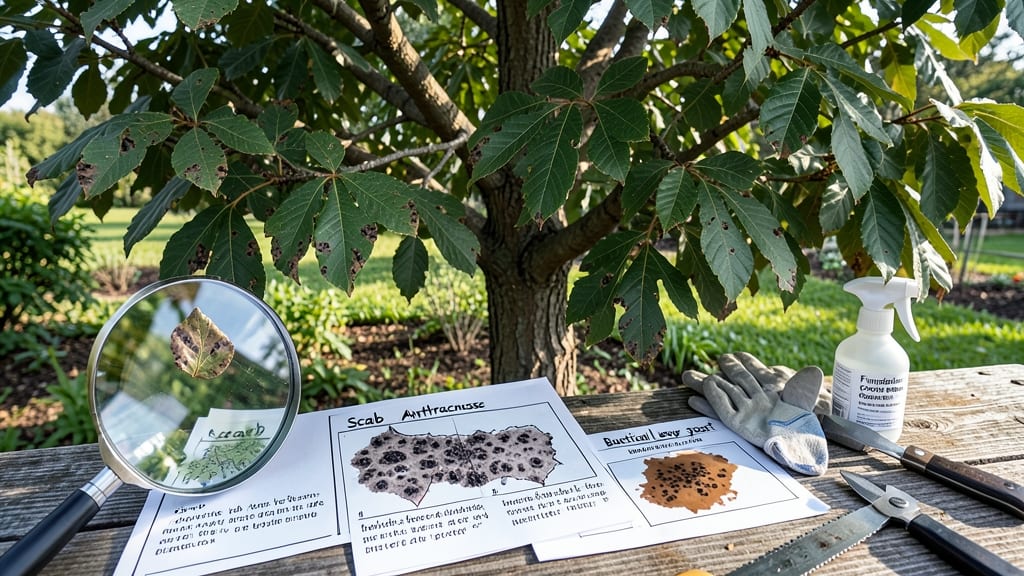
Black spots on pecan tree leaves usually indicate fungal infections such as anthracnose or scab, overwatering stress, or mite infestations. First, examine the leaf undersides, stems, and any powdery buildup to pinpoint the exact issue. Address it with targeted treatments—fungicides for diseases, adjusted irrigation for moisture stress, or horticultural oil for pests—to stop further damage and preserve your tree's health.
These leaf blemishes often appear when humidity levels are high and temperatures hover around 75-85°F, creating perfect conditions for fungal spores to thrive. 🌱 The key to effective treatment lies in accurate diagnosis—anthracnose typically shows as irregular dark spots with yellow halos, while scab presents as raised, crusty patches.
Overwatering, on the other hand, causes yellowing between leaf veins before spots develop, signaling poor drainage. For organic solutions, I recommend a copper fungicide spray every 7-10 days during wet seasons, paired with proper pruning to improve airflow through the canopy.
Mite damage often gets overlooked because it starts subtly with tiny webbing and pale stippling before progressing to blackened leaves. 🕷️ If you spot these signs, apply horticultural oil in early morning or late evening to avoid harming beneficial insects.
The sooner you intervene, the better—fungal infections can spread rapidly, leading to premature leaf drop and reduced nut production next season. Regular monitoring and preventive sprays can save your pecan tree from long-term decline.
💡 In This Article
- Identifying Fungal and Pest Causes of Leaf Spots
- Organic and Chemical Treatment Options for Pecan Leaf Spot Diseases
Identifying fungal and pest causes of leaf spots
Black spots on pecan leaves form primarily when fungal spores encounter ideal conditions—warmth (75-85°F), high humidity, and prolonged leaf wetness. Fungal pathogens like Colletotrichum (anthracnose) and Venturia (scab) thrive in these environments by producing spores that germinate within 6-12 hours of landing on damp leaves.
The tree's natural defenses weaken when stressed by poor nutrition or overcrowding, making it more susceptible to infection. 🌿 Anthracnose typically starts as small, water-soaked spots that expand into irregular dark patches with yellow halos, while scab appears as raised, crusty lesions that may crack open.
Pest-related damage often presents differently—mites, for instance, create tiny white or yellow stipples that eventually coalesce into blackened areas as the leaf tissue dies. These pests feed on sap, weakening the leaf's ability to photosynthesize. 🕷️ Another clue: check the leaf undersides for fine webbing or tiny moving specks.
Scale insects may also cause black sooty mold buildup on leaves, which appears as a velvety black coating. Unlike fungal spots, pest damage usually starts on younger leaves and spreads outward in a more uniform pattern, rather than developing random irregular patches.
Leaf texture changes provide crucial diagnostic clues.
Fungal infections often cause leaves to become leathery or brittle, while mite damage leads to a papery, crinkled appearance. 🌱 The key difference lies in the infection pattern: fungal spots typically appear on both leaf surfaces, while mite damage often concentrates on the undersides.
For accurate identification, collect a few affected leaves and examine them under magnification—this can reveal fungal spores or pest eggs that aren't visible to the naked eye.
Environmental stress from overwatering creates a distinct pattern—yellowing between leaf veins (chlorosis) appears first, followed by black spots as the leaf tissue collapses.
This condition often occurs when soil remains saturated for more than 48 hours, depriving roots of oxygen. 💧 The spots may appear waterlogged and spread rapidly across the leaf surface.
Unlike fungal infections, these spots don't have defined edges and often occur in clusters where water pools on the tree's branches.
Seasonal timing also helps differentiate causes. Fungal diseases peak during spring and fall when temperatures are moderate and moisture is abundant.
Pest infestations, however, may appear at any time but often worsen during dry spells when natural predators decline. 🌳 By correlating the spot pattern with these environmental factors, you can narrow down the most likely culprit and choose the appropriate treatment strategy.