
Pruning
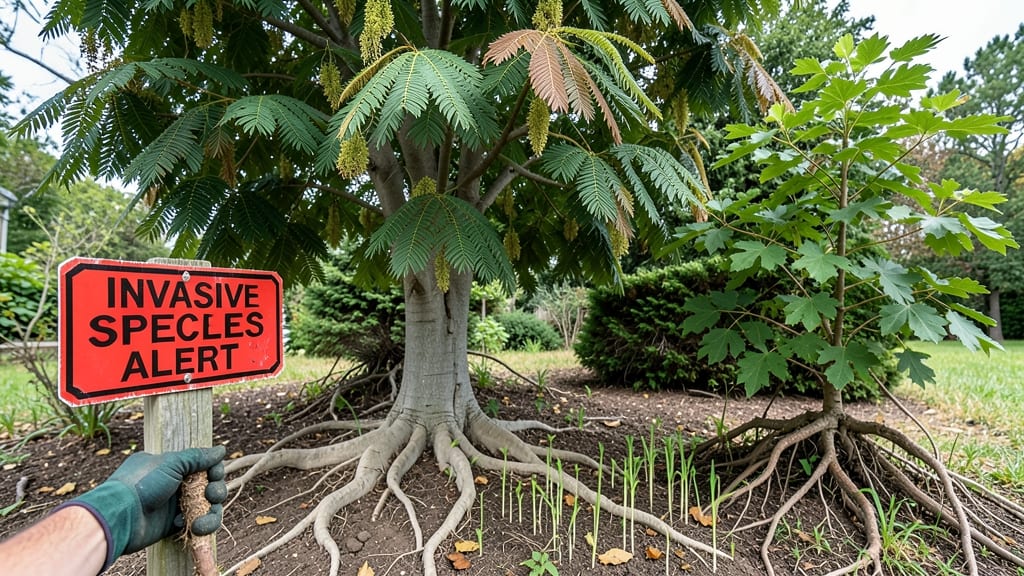
The tree of heaven is bad because it crowds out native plants by spreading aggressively through underground roots and airborne seeds, while releasing toxic chemicals that suppress other vegetation. Once established, its relentless growth chokes forests and gardens, creating ecological imbalances that are difficult to reverse.
This invasive species earned its notorious reputation through a combination of biological warfare and sheer persistence. 🌳 The tree's roots can spread up to 100 feet underground, forming dense networks that starve native plants of water and nutrients.
Even worse, it releases a chemical called "juglone" that poisons surrounding flora, creating a 50-foot exclusion zone where few other plants can grow. Experts warn that its rapid growth—up to 3 feet per year—allows it to dominate landscapes before homeowners even realize it's there.
What makes tree of heaven particularly dangerous is its ability to adapt to nearly any environment, from urban sidewalks to rural forests. Unlike many invasive species, it doesn't rely on human activity to spread—its seeds travel through wind and water, while its roots spread underground, creating new plants from fragments.
This dual invasion strategy makes eradication extremely challenging once established, often requiring specialized equipment and repeated treatments to prevent regrowth.
💡 In This Article
- Ecological Damage: How Tree of Heaven Invades Ecosystems
- Identifying and Controlling Tree of Heaven Growth
Ecological damage: how tree of heaven invades ecosystems
The tree of heaven (Ailanthus altissima) wreaks havoc through a multi-pronged ecological attack that starts with its allelopathic chemicals. These compounds, primarily juglone and related naphthoquinones, leach from every part of the plant—leaves, bark, and roots—creating a toxic zone around it.
Studies show juglone can inhibit seed germination and stunt growth in over 100 plant species, including valuable crops like tomatoes and peaches. The chemical's persistence means even fallen leaves continue poisoning the soil for years, ensuring no competitors can establish themselves nearby.
Its underground root system is equally devastating, forming extensive networks through a process called "suckering." A single tree can produce roots that spread 100 feet or more horizontally, creating a dense underground web that monopolizes water and nutrients.
This root dominance is why tree of heaven often appears in large, uniform stands—each plant is genetically identical, having sprouted from the same root system. The roots also contain growth hormones that suppress nearby vegetation, creating what ecologists call a "monoculture desert" where biodiversity collapses.
The tree's rapid growth—up to 3 feet per year—gives it an unfair advantage over slower-growing native species. Its compound leaves (with 7-41 leaflets) create dense canopies that block 90% of sunlight from reaching the forest floor, smothering understory plants.
What's particularly insidious is its seed dispersal strategy: each tree produces 30,000-50,000 seeds per year that remain viable for up to 3 years, while its seeds can travel 1 mile or more via wind.
This combination of chemical warfare, root dominance, and prolific seeding creates an ecological bulldozer that few native plants can withstand.
Foresters have documented cases where tree of heaven invasions reduced native plant diversity by 70-90% in affected areas. The impact extends to wildlife too—many native bird and insect species rely on specific plant communities that disappear when tree of heaven takes over.
Even its bark contains toxic compounds that can harm livestock if consumed, though this is less common than the ecological damage. The tree's ability to thrive in disturbed soils (like construction sites) and urban areas makes it particularly problematic for suburban ecosystems.
What makes this invasion especially troubling is the tree's resilience to control methods. Its deep roots can regenerate from fragments as small as 1 inch, and even stump treatments often fail because the roots continue growing.
This persistence means that once established, tree of heaven can dominate an ecosystem for decades without natural checks. The ecological cost is particularly high in forests where native trees like oaks and maples struggle to regenerate under its shade and chemical assault.
Consider this real-world example: In the Mid-Atlantic region, tree of heaven has invaded over 1 million acres of forest and urban land, with infestations spreading at rates of 5-10% annually in some areas.
The economic cost of control efforts runs into the millions annually, as municipalities and land managers scramble to contain its spread before it becomes irreversible.
The tree's ability to transform diverse ecosystems into monocultures demonstrates why experts universally classify it as one of the most destructive invasive species in North America.