
Container Gardens
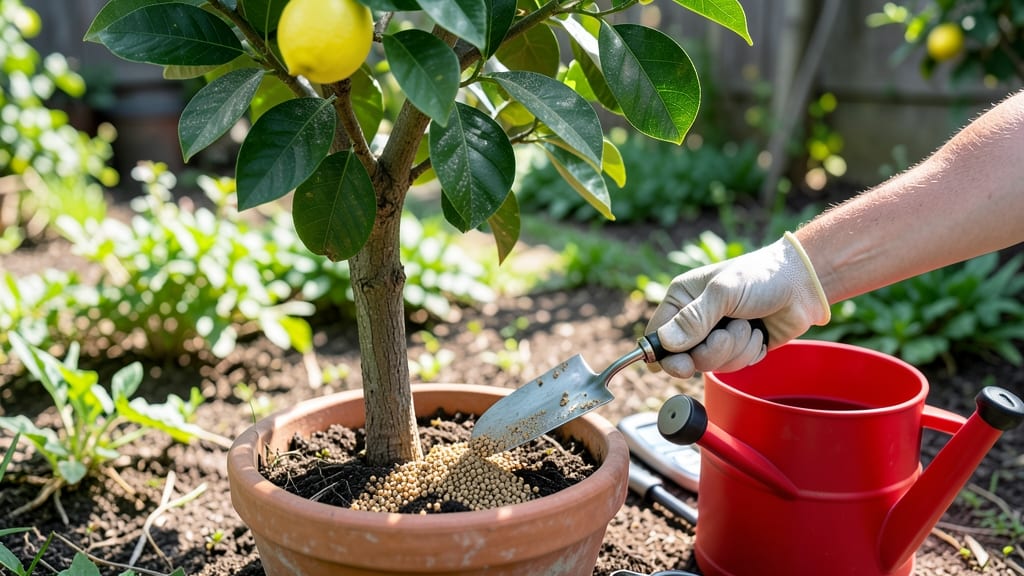
Fertilizing your potted lemon tree 🍋 at the right times is the key to keeping it healthy and productive—spring and fall are the critical windows for feeding.
Your potted lemon tree is thriving—until you realize its growth slows down, despite your best care. The secret? Timing your fertilizer applications to match its natural cycles can mean the difference between a lush, fruit-bearing tree and a struggling houseplant.
Container-grown lemon trees need more frequent feeding than in-ground varieties because their roots are confined, so the soil drains nutrients faster. Missing the spring awakening or the fall recharge can leave your tree lacking the energy it needs to produce those sweet, tangy lemons.
In this guide, I’ll walk you through the best times to fertilize, how to spot when your tree is hungry (or overfed), and which fertilizers work best for potted citrus. No guesswork—just science-backed tips to keep your lemon tree happy year-round.

Optimal fertilization schedule for potted lemon trees by season
Potted lemon trees thrive when their fertilization schedule aligns with their natural growth cycles. Unlike in-ground trees, container-grown citrus need more frequent but lighter feeding due to limited soil volume. The key is understanding when to boost growth and when to let roots rest—especially in dormancy periods.
Lemon trees in pots have two critical feeding windows: spring awakening (March-May) when new growth begins, and early fall recharge (September-October) to strengthen roots before winter. Summer heat and winter dormancy require special handling—over-fertilizing during these times can burn roots or stress the tree.
For organic vs. synthetic fertilizers, both work, but dilution ratios differ. Organic options like fish emulsion (1-2 tbsp per gallon) release nutrients slowly, while synthetic citrus blends (like 8-3-9 NPK) provide immediate results. Always water thoroughly before and after applying fertilizer to prevent salt buildup in container soil.
🌱
| Season | Key Growth Stage | Fertilizer Type | Frequency | Dilution Ratio | Avoid |
|---|---|---|---|---|---|
| Spring (Mar-May) | New growth, flowering | Citrus-specific (6-6-6 or 8-3-9 NPK) | Every 4 weeks | ½ tsp per gallon water | Over-salting soil |
| Summer (Jun-Aug) | Fruit development, heat stress | Light organic (fish emulsion) | Every 6-8 weeks | 1 tbsp per gallon | Fertilizing in 90°F+ heat |
| Fall (Sep-Oct) | Root strengthening | Balanced slow-release | Every 8 weeks | ¼ tsp per gallon | High-nitrogen blends |
| Winter (Nov-Feb) | Dormancy, no growth | None | — | — | Any fertilizer application |
In spring (March-May), your lemon tree enters its growth peak. This is when you should apply citrus-specific fertilizer every 4 weeks. Look for products with a balanced NPK ratio (like 6-6-6) to support both foliage and fruit development.
For organic options, composted manure or worm castings work well when mixed into the topsoil.
During summer (June-August), reduce feeding to every 6-8 weeks to prevent root burn from heat stress. If your tree shows signs of nutrient deficiency (like yellowing leaves), switch to a light organic feed like diluted fish emulsion. Always water deeply before applying fertilizer to help nutrients penetrate the soil.
As temperatures drop in fall (September-October), shift to a slow-release fertilizer to strengthen roots before winter. Avoid high-nitrogen blends, which can encourage late-season growth that won’t harden off before cold weather. A light application every 8 weeks is ideal during this transition period.
Winter (November-February) is dormancy time—no fertilizer should be applied. This rest period allows your tree to recharge energy stores for next year’s growth.
If your lemon tree is indoors near a south-facing window, you might see slight growth, but even then, hold off on fertilizing until you spot new leaves in early spring.
Pro tip: If your potted lemon tree is over 3 years old or shows signs of root-bound growth, increase fertilizer amounts by 20-30% to support its larger size. Always adjust based on your pot’s diameter—bigger pots need more nutrients but spread them out over a larger soil volume.
🌿
Signs your potted lemon tree needs fertilizer (and when to wait)
Your potted lemon tree might be silently begging for nutrients even when it looks healthy. One of the first signs is yellowing leaves that start between the veins—this classic nitrogen deficiency often appears on older leaves first.
If you notice new growth slowing down or small, pale leaves forming, your tree isn't getting enough to fuel its expansion.
Another red flag is slow growth despite ideal light and water conditions. Healthy lemon trees in pots should grow 6-12 inches per year, but stunted branches or sparse foliage signal nutrient starvation.
Even worse, small, deformed fruit or flowers that drop before opening mean your tree lacks the energy to complete its life cycle.
When to Fertilize Your Potted Lemon Tree
✅ DO Fertilize When:
- 🌱 New growth appears in spring (March-April)
- 🍋 Flowers form (indicates active growth phase)
- 📏 Leaves are dark green and healthy-sized
- 🌡️ Temperatures stay above 55°F consistently
❌ Wait to Fertilize When:
- 🍂 Leaves turn brown at tips (over-fertilization)
- 🧂 White crust forms on soil surface
- 🌡️ Temperatures drop below 50°F (dormancy)
- 🌱 New growth stops suddenly (natural slowdown)
Over-fertilizing is just as damaging as under-fertilizing. Watch for brown leaf tips or crispy edges—this salt burn occurs when fertilizer salts accumulate in the soil. A white crust on the soil surface confirms excess fertilizer.
If you see these signs, flush the soil with water immediately and wait 4-6 weeks before feeding again.
To test your soil's fertility, perform a simple DIY pH test using a kit or vinegar/baking soda. Mix 1 tbsp soil with ½ cup water, then add a few drops of vinegar—fizzing means alkaline soil (ideal for lemons is 6.0-7.0 pH).
For a deeper check, send a sample to your local extension office for a nutrient analysis ($15-$25 typically).
Young lemon trees (under 3 years old) need feeding every 4-6 weeks during growing season, while mature trees can stretch to 6-8 weeks between feedings.
Adjust based on pot size: small pots (under 10 gallons) dry out faster and may need more frequent light feedings, while large containers (20+ gallons) hold nutrients longer.
Remember, timing matters most. Fertilize in early morning when roots are active, and always water before and after applying fertilizer to prevent root burn. If your tree shows signs of stress, pause fertilizing for 2-3 weeks to let it recover before reassessing.