
Pruning
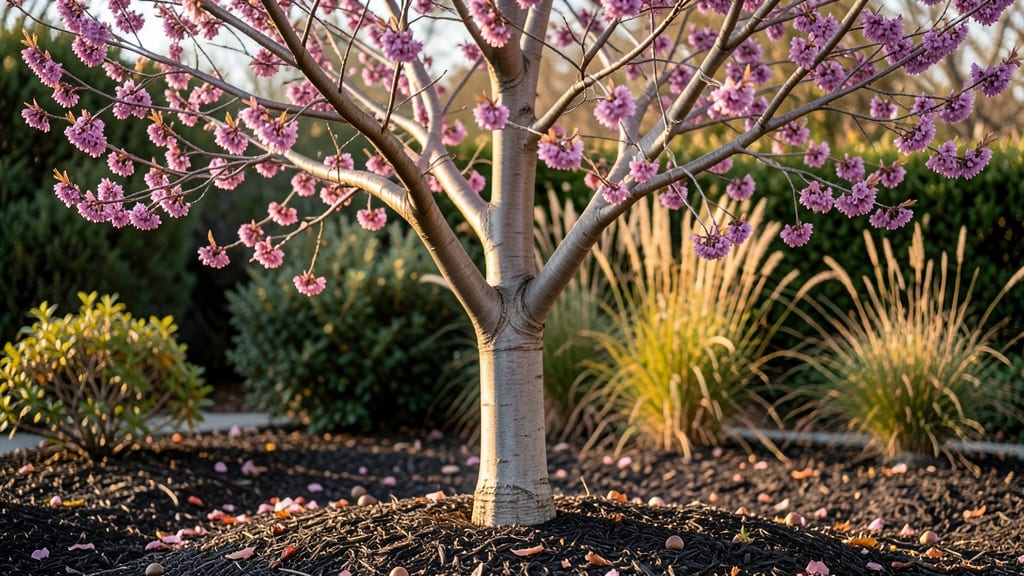
Early spring is the perfect time to prune redbud trees for vibrant pink blooms that’ll steal the show. 🌸 I’ve learned the hard way—skipping this step means fewer flowers and leggy branches.
The key is timing: wait until after blooms fade but before new leaves emerge, usually in late March or April, depending on your zone.
You’ll need just a few tools: sharp pruning shears, gloves, and a bucket for clippings. Focus on removing dead wood first, then thin out crowded branches to improve airflow. Aim to open up the center so sunlight reaches all sides—this keeps the tree healthy and encourages more blooms next year.
The payoff? A canopy bursting with shockingly lush pink flowers by early April, followed by heart-shaped leaves that turn golden in fall. Pruned correctly, your redbud will reward you with disease resistance and stronger growth, making it the star of your landscape.
Works for redbuds in zones 4-9, though timing shifts slightly north vs. south. Northern gardeners should wait until after last frost; southerners can start earlier. Here’s how to do it without stressing the tree—or yourself.
📚 In This Guide
- What you need
- Instructions
- Tips and common mistakes
- Wrapping up and next steps
What you need
- ● Pruning shears: Bypass pruners (for cuts up to ½ inch thick) – 1 pair (look for sharp, stainless steel blades for precision).
- ● Loppers: Bypass or anvil type (for branches ½ to 1½ inches thick) – 1 pair (extendable loppers are a game-changer for taller trees!).
- ● Pruning saw: Curved-tooth hand saw (for branches thicker than 1½ inches) – 1 saw (avoid cheap saws—they dull quickly!).
- ● Gloves: Heavy-duty, cut-resistant gloves – 1 pair (protects hands from thorns and rough bark).
- ● Disinfectant: 70% isopropyl alcohol or pruning sealant – small bottle (prevents disease spread between cuts).
- ● Heavy-duty trash bags: – 2-3 bags (for collecting pruned branches).
- ● Ladder: Sturdy, extendable ladder – 1 (if your tree exceeds 6 feet; prioritize safety with non-slip feet!).
- ● Pruning paint/sealant: – For larger cuts (helps wounds heal faster).
- ● Work boots: – With ankle support (for stability on uneven ground).
- ● Safety glasses: – To shield eyes from debris (especially if sawing thick branches).
- ○ Tree wound dressing: – Optional for open wounds (controversial but useful for very large cuts).
- ● Notebook & pen: – To sketch pruning plans (helps visualize cuts before you start).
Step-by-step instructions for redbud tree early spring pruning
Here’s how to refresh your redbud’s shape while keeping those stunning spring blooms intact.
✂️ Step 1: Time Your Pruning for Post-Bloom Growth
Wait until after the redbud’s signature pink blooms fade but before new leaves fully harden (typically late April to early May in most climates). Pruning too early risks cutting off next year’s flower buds, which form on old wood. I always check for fallen petals as my cue—once they’ve cleared, it’s safe to start.
If your tree bloomed late due to cold weather, delay pruning 2-3 weeks to ensure buds have fully developed. Redbuds are early bloomers, so patience here prevents losing next season’s show. Grab your pruners and work on a dry, overcast day to reduce stress on the tree.
✂️ Step 2: Remove Dead, Crossing, or Weak Branches
Start by scanning the tree for dead branches (no green bark, hollow centers) or crossing limbs (rubbing against each other). Cut these first—they compete for energy and can create entry points for disease. Use clean, sharp pruners to make 45-degree cuts just outside the branch collar (the swollen area where the branch meets the trunk).
Next, target weak or spindly branches growing inward or upward. Redbuds naturally form an open, vase-like shape, so aim to maintain that airy structure. If a branch is thinner than a pencil, it’s likely not strong enough to support blooms. Snip it at the base—this opens the canopy for better airflow and sunlight penetration.
☀️ Step 3: Thin Out for Light and Airflow
Step back and assess the tree’s overall shape. Redbuds thrive with dappled sunlight, so thin branches to let light reach the center. Focus on removing 10-20% of the smallest branches—this prevents over-pruning, which stresses the tree. I target branches that cast dense shade on others, especially near the trunk.
Make your cuts just above a bud or side branch (never leave a stub). For larger branches over ½ inch thick, use loppers and cut ½ inch above a bud on the underside of the branch. This ensures the wound seals properly and reduces the risk of disease. Avoid "heading back" (cutting back to a lateral branch)—redbuds bloom on old wood, so this practice removes next year’s flowers.
🌿 Step 4: Shape and Clean Up
Now’s the time to refine the tree’s natural form. Redbuds have a graceful, weeping habit, so avoid heavy shaping—just lightly guide the structure by trimming errant branches that disrupt the silhouette. If a branch grows at a sharp angle (like a "V"), it’s a candidate for removal to prevent future splits.
Finish by sanitizing your tools with rubbing alcohol to kill any lingering pathogens. Rake up and dispose of all clippings (never compost redbud debris—it can harbor fungal spores). Water the base of the tree deeply to help it recover from the pruning stress. You’ll see fresh, vibrant growth within 2-3 weeks, and next spring’s blooms will be even more spectacular.
Tips & tricks for perfect redbud tree early spring pruning
These simple yet game-changing tips will help you prune your redbud like a pro while keeping those show-stopping blooms coming back year after year.
Timing is Everything: The late April to early May window is critical because redbuds bloom on old wood. If you prune too early, you risk cutting off next year's flower buds before they form. I like to mark my calendar for when the petals have completely fallen—this is your perfect cue. If your tree bloomed late due to cold weather, wait those extra 2-3 weeks to ensure buds have fully developed. Trust me, this patience pays off with a spectacular spring display.
Tool Prep Prevents Problems: Before you start, sharpen your pruners and loppers so they make clean cuts—dull tools crush branches, which invites disease. I also bring rubbing alcohol to sanitize tools between cuts, especially when dealing with larger branches. This small step prevents spreading pathogens throughout your tree. And remember, always cut at a 45-degree angle just outside the branch collar—this helps wounds heal properly and reduces the risk of infection.
Shape with Purpose: Redbuds naturally grow in an open, vase-like shape, so avoid heavy shaping. Instead, focus on removing branches that grow inward or upward to maintain that airy structure. When thinning, aim to remove 10-20% of the smallest branches—this opens the canopy for better airflow and sunlight penetration. The goal is to enhance the tree's natural form, not drastically alter it. Think of it as giving your redbud a spa day rather than a makeover.
Post-Pruning Care: After you're done, water the base of the tree deeply to help it recover from the stress of pruning. You'll notice fresh, vibrant growth within 2-3 weeks, and next spring's blooms will be even more spectacular. I also recommend avoiding heavy fertilization right after pruning—let the tree focus on healing first. A little patience now means more blooms later.
Pro Tips for Redbud Tree Early Spring
- These simple yet game-changing tips will help you prune your redbud like a pro while keeping those show-stopping blooms coming back year after year.
- Timing is Everything: The late April to early May window is critical because redbuds bloom on old wood.
- Tool Prep Prevents Problems: Before you start, sharpen your pruners and loppers so they make clean cuts—dull tools crush branches, which invites disease.
Frequently asked questions
Got questions about pruning your redbud tree for early spring blooms? Here are some of the most common concerns—and their answers—to help you keep your tree thriving and stunning!
When is the absolute latest I can prune my redbud tree before the flowers appear?
Prune your redbud tree after it blooms but before new growth hardens (typically late April to early May, depending on your climate). Cutting too late risks removing next year’s flower buds, which form on old wood. If you miss this window, wait until summer for light shaping—just avoid heavy pruning then!
Will pruning early (like winter) harm my redbud’s spring flowers?
Yes! Redbuds bloom on old wood, so pruning in late winter (before buds swell) can remove up to 50% of potential flowers. If you must prune early, limit cuts to dead or diseased branches only. Save major shaping for post-bloom. Patience pays off—your tree will thank you with a dazzling display!
What if my redbud tree isn’t blooming much? Could pruning be the problem?
Over-pruning (especially in winter) is a top culprit for sparse blooms. Check for:
- Too many cuts: Redbuds need old wood—avoid removing more than 20% of branches at once.
- Wrong timing: Never prune during dormancy (Dec–Feb) unless removing dead wood.
- Stress factors: Poor soil, drought, or pests can also reduce flowers. Test soil pH (ideal: 6.0–7.0) and mulch well.
Can I prune a young redbud tree differently than a mature one?
Young redbuds (under 3 years) benefit from structural pruning to encourage a strong shape:
- Remove competing central leaders to create one dominant trunk.
- Thin out crossing branches to improve airflow (reduces disease).
- Avoid heavy cuts—focus on 30% or less of new growth.
What’s a good alternative if I miss the pruning window entirely?
Don’t stress! If you skip post-bloom pruning, try these low-risk fixes:
- Summer trimming: Lightly shape in June–July to remove only water sprouts or overly vigorous branches.
- Fertilize: A balanced 10-10-10 fertilizer in early spring can boost health (but avoid high-nitrogen—it encourages leafy growth over flowers).
- Mulch & water: Keep roots moist (1 inch/week) and mulch with 2–3 inches of organic matter to reduce stress.
Wrapping up and next steps
As spring unfolds, your redbud tree can become a stunning focal point with just the right pruning touch! Remember, the key is to prune early—before buds swell—to encourage vibrant blooms and maintain that picturesque shape.
Whether you're trimming for health, aesthetics, or both, patience and precision are your best tools. 🌸
Ready to transform your yard? Grab your tools, lace up your boots, and give your redbud the care it deserves. Start small—even a few strategic cuts can make a big difference! For more pruning tips or seasonal care, explore our gardening resources and keep nurturing that natural beauty.