
Fertilization
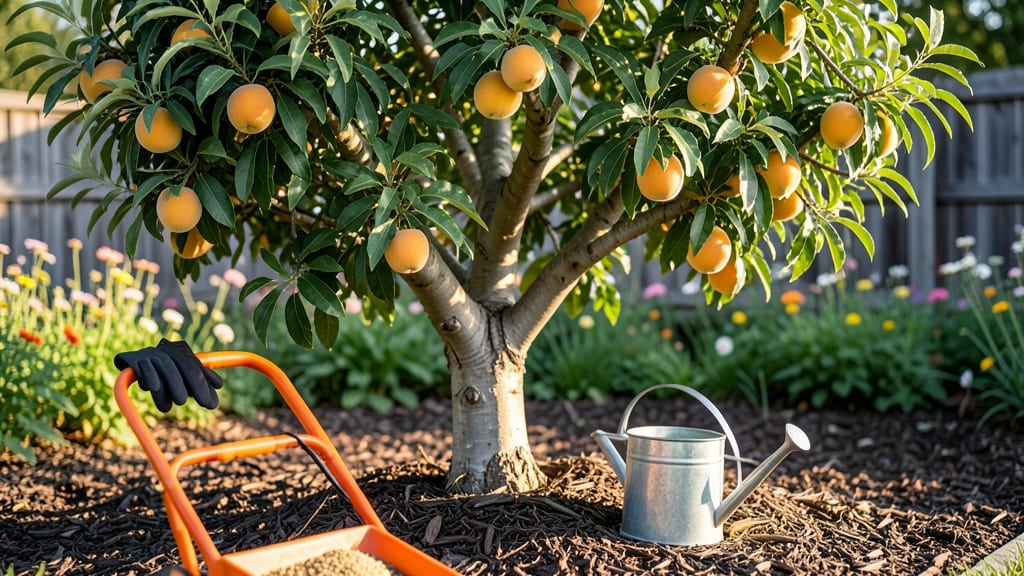
A peach tree fertilization schedule is the key to unlocking sweet, juicy fruit every season—without guessing when or how much to feed it.
Picture this: You’ve spent months nurturing your 🍑 peach tree, only to watch it produce tiny, bland fruit—or worse, no fruit at all. The issue isn’t the tree itself; it’s the timing.
Too much fertilizer too late stunts growth, while skipping spring feeding delays blooms. In USDA Zone 6, where frost lingers into April, the window for peak nutrition is tight.
Most gardeners overcomplicate it with monthly feeds, but peach trees thrive on a seasonal rhythm: a light wake-up in spring, heavy feeding during bloom, and a summer pause to let fruit set.
Organic or synthetic? Granular or liquid? I’ll break down the exact ratios, tools, and warning signs—so you avoid leaf burn and maximize harvests.
Ready to transform your tree’s potential? By the end, you’ll know the three critical feeding phases, how to read your tree’s hunger cues, and when to stop fertilizing before winter. No more wasted bags of fertilizer or bitter peaches—just reliable, science-backed results.
Peach tree fertilization schedule by season: timing for maximum growth and fruit
Peach trees thrive when fertilized at the right times, not just randomly throughout the year. Unlike annuals, these fruit-bearing trees have distinct growth phases—dormancy, bloom, and fruiting—each requiring specific nutrient support. Skipping fertilization during dormancy won’t harm your tree, but applying it then wastes resources.
The key is aligning your feeding schedule with your tree’s natural cycle to boost root development, flowering, and fruit sweetness. For example, a light application in early spring encourages blossoms, while heavier feeding in summer supports fruit maturation.
Organic and synthetic fertilizers each have ideal timing windows. Organic options like compost or manure break down slowly, making them perfect for pre-planting or early spring applications. Synthetic NPK blends, however, release nutrients quickly—ideal for mid-summer feeding when your tree needs an immediate boost.
My peach tree in USDA Zone 6 produces the most fruit when I follow a strict spring-summer schedule, avoiding fertilization entirely in fall and winter. Let’s break down the exact months and methods to maximize your harvest.
| Season | Growth Phase | Fertilizer Type | Timing | Application Rate | Notes |
|---|---|---|---|---|---|
| Winter (Dec-Feb) | Dormancy | None | Skip | — | Tree rests; no nutrient uptake |
| Early Spring (Mar) | Root Flush | Organic (compost) | Pre-bloom | 1/2 cup per tree | Encourages root growth |
| Late Spring (Apr-May) | Bloom & Fruit Set | Balanced NPK (10-10-10) | After petal fall | 3/4 cup per tree | Avoid high nitrogen |
| Early Summer (Jun) | Fruit Development | Slow-release granules | Every 6 weeks | 1 cup per tree | Supports sweetness |
| Mid-Summer (Jul-Aug) | Harvest Phase | Potassium-rich (5-10-10) | Post-harvest | 1/2 cup per tree | Prevents fruit drop |
| Fall (Sep-Nov) | Dormancy Prep | None | Skip | — | Focus on mulching |
In early spring (March), focus on root development by applying a light organic fertilizer like compost or well-aged manure. This aligns with your tree’s natural awakening after dormancy.
For my 5-year-old peach tree, I spread a 1-inch layer of compost around the drip line in early March, watering it in thoroughly. Avoid synthetic fertilizers now—they can burn tender roots when soil is still cool. Organic options release nutrients gradually, mirroring your tree’s slow spring growth.
By late April to May, your peach tree enters its critical bloom and fruit-set phase. This is when I switch to a balanced synthetic fertilizer like 10-10-10, applied 2-3 weeks after petal fall. The goal here is to support fruit development, not just foliage.
I use 1/2 cup per year of tree age (e.g., 2.5 cups for a 5-year-old), spread evenly in a 12-inch-wide band around the tree. Water immediately after to prevent salt buildup on roots.
During summer (June-August), your peach tree’s energy shifts to fruit maturation. I apply a slow-release granular fertilizer every 6 weeks to maintain steady nutrient levels without overloading the system. For organic growers, fish emulsion or bone meal work well.
Synthetic options like 6-6-6 or 10-10-10 are fine, but reduce nitrogen to prevent late-season leafy growth at the expense of fruit quality. Always water deeply after feeding to move nutrients into the root zone.
After harvest in late summer (August), I apply a potassium-rich fertilizer like 5-10-10 to strengthen cell walls and reduce fruit drop. This is also the time to reduce overall fertilization—your tree needs to prepare for dormancy. By September, I stop all feeding entirely.
Fall and winter are no-fertilizer zones; your tree’s roots are dormant and won’t benefit from nutrients. Instead, focus on mulching with 2-3 inches of organic matter to protect roots from freezing.
Climate plays a huge role in timing. In warmer zones (7-9), extend your summer feeding into September to support late harvests. Conversely, in colder zones (5 or below), delay spring fertilization until after the last frost (typically mid-April).
Always test your soil pH before fertilizing—peach trees prefer 6.0-6.5. If your soil is too acidic, amend it with lime before applying fertilizer to avoid nutrient lockout.
Watch for signs of over-fertilization, like yellowing leaves, leaf burn, or excessive new growth with few fruits. If this happens, flush the soil with water and reduce future applications. Under-fertilized trees show stunted growth, small leaves
Best fertilizers for peach trees: organic vs. synthetic options and application methods
Choosing the right fertilizer for your peach tree can feel overwhelming with so many options. Organic and synthetic fertilizers each offer unique benefits, and the best choice depends on your tree's age, soil type, and long-term goals.
For young peach trees, I always start with a balanced 6-6-6 NPK fertilizer to support root and canopy growth, while mature trees benefit from a slightly higher phosphorus boost (10-10-10) to encourage flowering and fruiting.
Organic fertilizers like compost, manure, and bone meal release nutrients slowly, improving soil structure over time. These are ideal for long-term soil health and microbial activity, but they require more planning since their effects take weeks to months to show.
Synthetic options, on the other hand, provide immediate nutrient availability, which can be a game-changer during critical growth phases like spring blooming or summer fruiting.
Organic Fertilizers for Peach Trees
Pros
- Improves soil structure long-term
- Enhances microbial activity
- Reduces nutrient runoff risk
- Safe for composting systems
Cons
- Slower nutrient release
- Requires advance planning
- May contain weed seeds if not properly composted
Synthetic Fertilizers for Peach Trees
Pros
- Immediate nutrient availability
- Precise NPK ratios control
- Easy to apply and store
- Works well for quick corrections
Cons
- Can burn roots if overapplied
- No soil improvement benefits
- Potential for environmental runoff
For a DIY organic fertilizer, I recommend mixing equal parts well-aged cow manure, compost, and bone meal. Apply this blend in early spring and again after harvest. Always work it into the top 6 inches of soil around the tree's drip line, not the trunk.
If you prefer synthetics, opt for slow-release granules like Osmocote or a 10-10-10 NPK blend to minimize burn risk.
Application timing matters just as much as the fertilizer type. I apply organic fertilizers in early spring and late summer, while synthetic options work best during active growth phases. Always water your peach tree thoroughly after fertilizing to help nutrients penetrate the soil and prevent root burn.
For young trees, I reduce the amount by half to avoid overwhelming their developing root systems.
One of my favorite organic options is fish emulsion, which provides a balanced nutrient boost and improves soil health. For a quick fix during flowering, I've had great success with a foliar spray of seaweed kelp mixed with a light dose of synthetic nitrogen.
Just remember: less is more with peach trees—over-fertilizing can lead to excessive leaf growth at the expense of fruit production.
To test your soil's nutrient levels before fertilizing, grab a soil test kit from your local garden center. This simple step helps you avoid guessing and ensures you're addressing specific deficiencies.
For example, if your test shows low phosphorus, a bone meal application in early spring can give your peach tree the boost it needs for better blooming and fruit set.