
Pruning
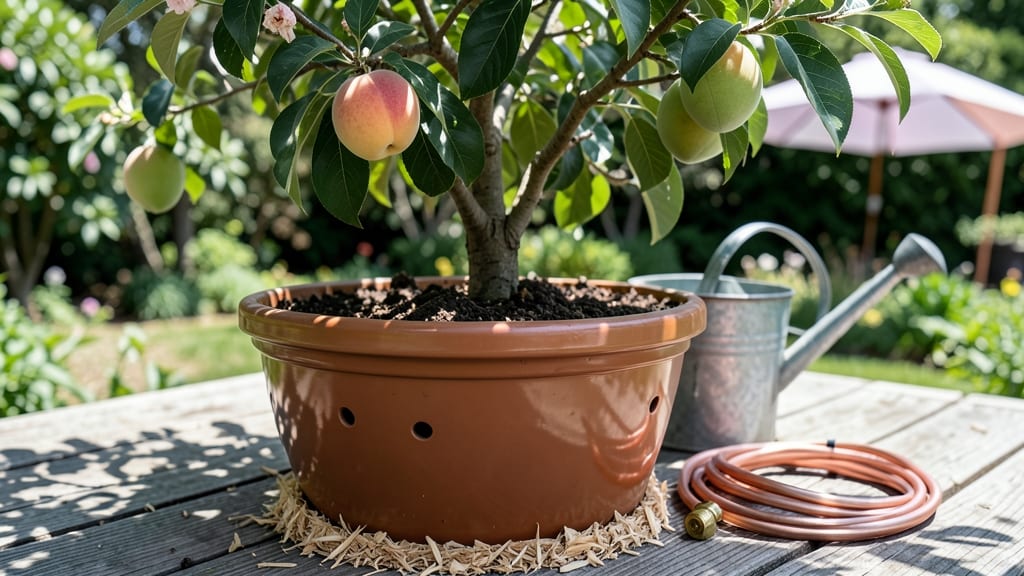
Caring for a patio peach tree means turning a small space into a fruit-bearing oasis—if you prune like a pro. 🌱 The key isn’t just trimming branches; it’s shaping the tree to thrive in containers while maximizing those sweet summer peaches.
My first patio tree nearly choked on its own growth until I learned the right cuts and timing. Start with the basics: 5-gallon containers with drainage, well-draining soil, and 6+ hours of sunlight daily.
Water deeply when the top inch feels dry, but avoid soggy roots—container peaches hate wet feet. Fertilize lightly in spring with a balanced formula, then switch to fruit-specific feed once blossoms appear.
Strategic pruning in late winter opens the canopy for airflow and sunlight, which means more fruit and fewer pests. Cut back one-third of the oldest branches each year to keep the tree compact and productive. The payoff? A tree that fits your patio but still bears 20+ peaches per season.
This works for dwarf varieties like ‘Bonanza’ or ‘Bonanza Red’—just adjust container size as the tree grows. Skip the heavy-handed pruning, and you’ll have a tree that looks stunning and tastes even better.
📚 In This Guide
- What you need
- Instructions
- Tips and common mistakes
- Wrapping up and next steps
What you need
- ● Pruning shears: Bypass pruners (sharp, 6–8" blades) for clean cuts on small branches.
- ● Loppers: 1 pair (18–24" handles) for thicker branches (½"–1.5" diameter).
- ● Pruning saw: 1 handheld saw (for branches >1.5" diameter).
- ● Disinfectant: 70% isopropyl alcohol or 10% bleach solution (1 part bleach to 9 parts water) to sterilize tools between cuts.
- ● Gloves: Heavy-duty, cut-resistant gloves (1 pair) for protection.
- ○ Tree wound paint: Pruning sealant (optional but recommended for cuts >½" diameter; 8 oz bottle).
- ● Tarp or drop cloth: 1 (4’x6’ or larger) to catch debris.
- ● Watering can or hose: With adjustable nozzle for post-pruning hydration.
- ● Organic mulch: 2–3 inches of wood chips or straw (spread in a 3’ radius around the base).
- ● Extension pole: For hard-to-reach branches (10–12’ pole with pruner attachment).
- ● Fertilizer: Balanced 10-10-10 or citrus-specific fertilizer (1 lb for young trees; 2–3 lbs for mature trees).
- ● Tree staking kit: If planting a sapling (4 stakes + 1" nylon straps).
- ● Pest control: Neem oil spray (for aphids/mites) or copper fungicide (for fungal issues).
- ● Label tags: Waterproof markers to track pruning dates and notes.
Step-by-Step instructions for patio peach tree care
Keep your dwarf peach tree thriving with these seasonal techniques that balance fruit production and small-space constraints.
🌱 Step 1: Plant with Proper Spacing and Drainage
Choose a location with 6+ hours of direct sun and well-draining soil—peaches hate soggy roots. Dig a hole twice as wide as the root ball but no deeper, then mix the excavated soil with 2-3 inches of compost to boost nutrients. Position the tree so the graft union sits 2-3 inches above soil level—this prevents root suckers from forming.
Backfill with the amended soil, firming gently around the roots to eliminate air pockets. Water deeply right after planting to settle the soil and encourage root contact. Mulch with 2-3 inches of organic mulch (like wood chips) in a 2-foot radius, keeping it 6 inches away from the trunk to prevent rot.
☀️ Step 2: Prune for Structure and Airflow in Late Winter
Prune your patio peach tree in late February or early March, before buds swell but after the worst winter cold passes. Remove 30-40% of last year's growth, starting with dead, crossing, or inward-growing branches. Cut just outside the branch collar to avoid leaving stubs that invite disease.
Open the center of the tree to improve airflow—peaches need sunlight on all fruit. Aim for an open vase shape with 3-5 main scaffold branches. Thin out water sprouts (fast-growing vertical shoots) since they steal energy from fruit production. Sterilize pruning tools between cuts with rubbing alcohol to prevent bacterial spread.
💧 Step 3: Water Deeply During Fruit Development
Peaches need 1-1.5 inches of water weekly during flowering and fruit set, but reduce to 1 inch weekly once fruit reaches golf-ball size. Water at the base in the morning to prevent fungal issues from evening moisture. Let the top 2-3 inches of soil dry between waterings—overwatering causes blossom end rot in fruit.
Use drip irrigation or soaker hoses to deliver water slowly at the roots. Avoid wetting leaves during irrigation, as this encourages brown rot—a common peach disease. If your tree shows signs of stress (wilting, yellowing leaves), increase water slightly but never let it sit in waterlogged soil.
✂️ Step 4: Thin Fruit and Prune Lightly After Harvest
When peaches reach 1-2 inches in diameter, thin them to 6-8 inches apart on each branch. This ensures larger, higher-quality fruit and prevents branch breakage. Remove smaller, misshapen, or damaged fruit first. Leave the largest, healthiest peaches that are evenly spaced along the branch.
After harvest, do a light pruning to remove any broken or diseased branches. This also encourages next year's growth. Apply a balanced fertilizer (10-10-10) in early fall to replenish nutrients. Stop fertilizing by mid-August to allow the tree to harden off for winter.
⏰ Step 5: Winter Protection for Young Trees
Wrap the trunk of young patio peach trees with tree wrap or burlap in late fall to protect against sunscald and rodent damage. Cover the root zone with 4-6 inches of mulch to insulate roots. For trees in Zone 6 or colder, wrap the entire canopy loosely with frost cloth on cold nights.
Peach trees are moderately cold-hardy but benefit from protection in harsh winters. Avoid heavy pruning in winter—wait until late winter when new growth signals the tree is breaking dormancy. This timing ensures you're not removing buds that could have survived the winter.
Tips & tricks for patio peach tree care
Small adjustments in technique can transform your patio peach tree from struggling to spectacular—here's what I've learned after years of trial and error.
Planting Precision: When positioning your tree in Step 1, pay special attention to the graft union placement—this 2-3 inch clearance above soil level is critical. I once planted a tree with the graft union too low, and within months, those root suckers took over completely. Also, that 2-3 inches of compost isn't optional—it's the difference between a tree that thrives and one that just survives. For heavy clay soils, consider mixing in sand to improve drainage.
Pruning Strategy: In Step 2, when you're removing 30-40% of last year's growth, focus on creating that open vase shape with 3-5 main branches. I've found that leaving too many branches creates a dense canopy that blocks sunlight from reaching the center fruit. Sterilizing your tools between cuts with rubbing alcohol isn't just good practice—it's essential for preventing bacterial canker, which can be fatal to peach trees.
Watering Wisdom: The 1-1.5 inches of water during flowering is non-negotiable—this is when your tree is most vulnerable to stress. I've seen blossoms drop completely when water was inconsistent. For the 2-3 inches of soil drying between waterings, use your finger to check moisture—surface dry doesn't mean properly dry. And that morning watering rule? It's not just about preventing fungal issues; it gives leaves time to dry completely before evening dew sets in.
Fruit Thinning Technique: When thinning in Step 4, don't just focus on spacing—look for fruit that's evenly distributed along the branch. I once left a cluster of peaches too close together, and they all ended up small and misshapen. The 6-8 inch spacing gives each peach room to grow to its full potential. For the 1-2 inch diameter threshold, think of a ping-pong ball as your guide—when peaches reach that size, it's time to thin.
Pro Tips for Patio Peach Tree Care
- Small adjustments in technique can transform your patio peach tree from struggling to spectacular—here's what I've learned after years of trial and error.
- Planting Precision: When positioning your tree in Step 1, pay special attention to the graft union placement—this 2-3 inch clearance above soil level is critical.
- Pruning Strategy: In Step 2, when you're removing 30-40% of last year's growth, focus on creating that open vase shape with 3-5 main branches.
Frequently asked questions
Got questions about keeping your patio peach tree thriving with strategic pruning? Here are some of the most common concerns—and their answers—to help you care for your tree like a pro!
When is the best time to prune a patio peach tree?
Prune your patio peach tree in late winter or early spring (before buds swell) to encourage healthy growth. Avoid heavy pruning in fall, as it can stimulate new growth that’s vulnerable to cold. Light shaping can be done in summer after harvest, but focus on removing dead or diseased branches.
How much can I prune my peach tree without harming it?
For young trees, remove no more than 25% of the canopy per year. Mature trees can handle up to 30-40% of selective pruning if done correctly. Always prioritize removing dead, crossing, or overcrowded branches first. Over-pruning weakens the tree and reduces fruit production.
What should I do if my peach tree’s branches are damaged by frost?
If frost damages branches, prune back to healthy, green wood just above a bud or branch collar. Avoid cutting into old, woody tissue, as it won’t regrow. Apply a thin layer of mulch around the base to protect roots from further cold stress. Monitor for signs of disease or pests after pruning.
Can I grow a peach tree in a patio container successfully?
Yes! Choose a large, sturdy container (at least 20 gallons) with drainage holes and use well-draining potting mix. Dwarf varieties like ‘Bonanza’ or ‘Redhaven’ thrive in containers. Prune regularly to control size, and move the tree to a sunny spot (6+ hours of light daily). Expect smaller fruit yields but better manageability.
Why are my peach tree’s leaves curling, and how does pruning help?
Curling leaves often signal peach leaf curl fungus (common in wet springs) or pests like aphids. Prune to improve airflow by removing dense foliage, and sterilize tools between cuts. Apply fungicide in early spring as a preventative measure. Remove heavily infected leaves promptly to stop the spread.
Wrapping up and next steps
With the right patio peach tree care, your tree can thrive year-round and reward you with luscious fruit and stunning blooms! 🌸 Pruning strategically—whether for shape, health, or harvest—is key, and now you’ve got the know-how to tackle it like a pro.
Don’t wait until next season to start; give your tree the attention it deserves today.
Ready to transform your patio into a flourishing oasis? Grab your pruners, sketch a quick plan, and get started! Your future peach harvest (and neighbors’ envy) will thank you. 🍑✨