
Pruning
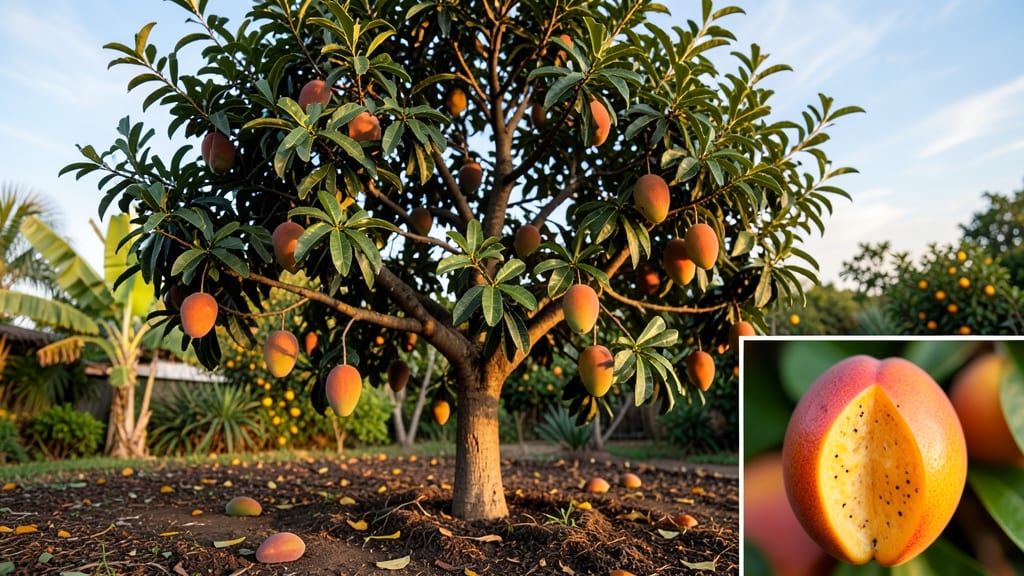
A mango tree 🥭 with ripe fruits transforms your garden into a tropical paradise, but nailing the harvest timing is the secret to sweet, juicy rewards instead of mealy disappointments.
There’s nothing quite like the moment you spot your first ripe mango hanging heavy on the branch—but timing the harvest wrong can mean the difference between a sweet, juicy reward and a mealy, underripe disappointment.
In tropical and subtropical zones, where these trees thrive year-round, the right placement and companion plants can turn your yard into a vibrant, fruit-filled showcase. Imagine a mango tree as the centerpiece, its glossy leaves framing clusters of vibrant fruit that draw the eye and invite admiration.
Below, I’ll share the key tricks for spotting the perfect ripeness, harvesting without damage, and even avoiding common mistakes that turn your mangoes into flavorless flops. Let’s make your garden the talk of the neighborhood!


How to identify the perfect ripeness in mango fruits
There’s nothing like the sweet, tangy aroma of a ripe mango wafting through your garden—but spotting the perfect harvest time takes practice. Mangoes don’t ripen like bananas on your counter; they must be picked at the ideal stage for peak flavor.
Even experienced growers rely on a mix of visual cues, tactile tests, and scent checks to avoid the disappointment of underripe or overripe fruit.
Most mango varieties—like the popular Haden or Kent—change color dramatically as they ripen, but color alone isn’t enough. You’ll also need to twist the stem and gentle squeeze the fruit to confirm ripeness.
Skipping these steps can lead to fruit that’s too firm (underripe) or too soft (overripe), both of which ruin the juicy, sweet experience you’re craving.
Visual cues are your first clue: look for a shift from bright green to yellow, orange, or red, depending on the variety. For example, Haden mangoes turn deep red near the stem, while Keitt mangoes develop a golden-yellow hue. Pair this with a slight softening of the skin—press gently near the stem. If it gives just a tiny bit, it’s likely ready.
Scent is the ultimate test: a ripe mango releases a fragrant, sweet aroma near the stem. Hold the fruit close to your nose—if you catch that tropical, floral whiff, it’s a green light to harvest. Pro tip: Never trust color alone—some varieties stay green even when ripe, like Carrie or Ice Cream mangoes.
Stem response is non-negotiable. Gently twist the stem near the fruit—if it snaps cleanly (not pulls away), the mango is ready. A stubborn stem means it’s not ripe yet. This trick works because the fruit’s natural separation layer forms as it matures, making the stem easier to detach.
Texture matters most. A ripe mango should yield slightly to gentle pressure—like pressing a soft tennis ball. If it’s rock-hard, it needs more time on the tree. Overripe mangoes feel mushy or leathery, with skin that’s too soft or wrinkled. The perfect balance is a firm yet yielding feel.
Don’t overlook the weight test: a ripe mango feels surprisingly heavy for its size. This indicates juicy flesh inside. Pair this with the color shift and stem snap, and you’ve got a foolproof method.
For varieties like Ataulfo (the "ice cream mango"), the skin turns bright yellow, but the stem test is still critical.
Timing your harvest is an art, but these five key tests—color, stem snap, scent, texture, and weight—will help you never miss the sweet spot.
Once you master them, you’ll consistently pick mangoes at their peak flavor, ready to enjoy fresh or store for a few days at room temperature. Pro growers even harvest slightly underripe and let them ripen indoors for extra control over sweetness.
Remember: Patience is key. Rushing the harvest leads to underripe, bland mangoes, while waiting too long results in overripe, mealy fruit. With practice, you’ll develop an instinct for ripeness that turns your mango tree into a year-round sweet reward.
Best harvesting techniques to preserve sweetness and flavor
Once you’ve identified your mango tree with ripe fruits, the next step is harvesting them with care to preserve that peak sweetness and juicy texture. The wrong technique can bruise the fruit or damage the tree, so I’ve perfected my method over years of tropical gardening.
Timing and gentleness are everything—especially when dealing with delicate varieties like Haden or Keitt mangoes.
Harvesting at the right moment isn’t just about color—it’s about stem response and fruit firmness. A ripe mango will yield slightly when you apply gentle pressure near the stem, but it shouldn’t feel mushy.
If you twist the stem and it snaps cleanly, that’s your cue. This technique prevents tearing the fruit from the branch, which can introduce bacterial infections and shorten shelf life.
How to Harvest Mangoes Without Damaging the Tree or Fruit
-
Step 1: Gather Tools
Pruning shears (clean and sharp), gloves, and a bucket or cloth to catch fallen fruit. -
Step 2: Locate the Stem
Find the point where the mango attaches to the branch—this is the stem attachment. -
Step 3: Twist Gently
Grasp the stem between your thumb and forefinger, then twist slowly and firmly until it snaps cleanly. -
Step 4: Avoid Pulling
Never pull the fruit—this can tear the skin and expose it to pests and rot. -
Step 5: Handle with Care
Place harvested mangoes in a soft cloth or bucket to prevent bruising. -
Step 6: Post-Harvest Inspection
Check for bruises or cracks—discard any damaged fruit immediately.
After harvesting, post-harvest handling is just as critical as the picking process itself. Mangoes continue to ripen after being picked, so store them at room temperature for 2-3 days to let them soften further.
Once ripe, refrigerate them to slow down the ripening process and extend shelf life by up to 5-7 days. Place them in a paper bag with a banana or apple to speed up ripening if needed—ethylene gas from these fruits triggers the process naturally.
If you’re not ready to eat your mangoes right away, freezing is an excellent option for preserving flavor. Peel, pit, and slice the fruit, then spread the slices on a tray to freeze solid. Once frozen, transfer them to a sealed bag or container.
Frozen mangoes retain their vitamin C and natural sweetness for up to 6 months, making them perfect for smoothies or desserts later in the year.
One common mistake I see gardeners make is harvesting mangoes too early just because they’re colorful. Underripe mangoes lack sweetness and have a fibrous texture, while overripe ones become mushy and lose their vibrant flavor.
Always prioritize the stem snap test and gentle pressure test over color alone—these cues are far more reliable for determining true ripeness.
With these techniques, you’ll enjoy mangoes at their peak sweetness while keeping your tree healthy for years to come. The key is patience and precision—just like pruning or fertilizing, harvesting is an art that rewards careful attention to detail. 🌱🥭✂️