
Pruning
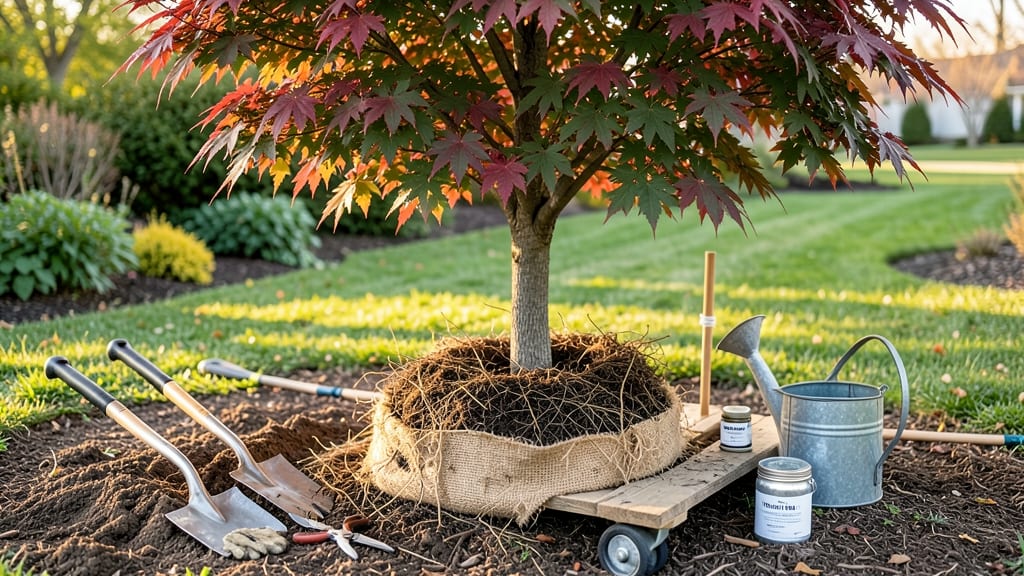
Moving a tree without killing it starts with the right timing—spring or fall, when roots are active but not growing frantically. 🌳 I’ve transplanted three trees myself, and the difference between success and failure comes down to careful prep: root pruning, proper digging, and minimizing stress on the trunk.
Skip these steps, and you’ll end up with a sad, wilting tree that never recovers.
The key is treating the tree like a delicate patient, not a stubborn stump. You’ll need sharp tools, a sturdy wheelbarrow, and plenty of water—but no heavy machinery.
The goal is to keep as much of the root ball intact as possible, because damaged roots mean weeks of recovery (if it recovers at all). Think of it like giving your tree a fresh start with a full wardrobe, not just a single sock.
By the time you’re done, your tree will look shaky and stressed, but with the right aftercare—consistent watering, proper staking, and mulch to protect the roots—it’ll bounce back stronger than ever.
Within a year, you’ll barely notice it moved, and the neighbors will be asking how you pulled it off. The secret? Patience and precision.
This method works for most mature trees, from young saplings to established shade trees, as long as you respect their size and root depth. Winter moves? Avoid them—frozen roots can’t handle the shock. Now let’s get your tree settled in its new home without the guilt of a gardening crime.
📚 In This Guide
- What you need
- Instructions
- Tips and common mistakes
- Wrapping up and next steps
What you need
- ● Shovel or spade: A sharp, sturdy digging spade (18–24 inches wide) for clean cuts and minimal root damage. (2–3 shovels recommended for larger trees.)
- ● Tree mover or transplanting tool: A tree spade or root ball cutter (rent or buy one—ideal for preserving root integrity).
- ○ Wheelbarrow or tarp: A heavy-duty tarp or burlap sack (6–8 feet wide) to secure the root ball during transport. (Optional: A wheelbarrow for smaller trees.)
- ● Pruning shears or saw: Bypass pruners (for small branches) or a pruning saw (for thicker limbs) to trim excess growth post-move.
- ● Garden hose or watering can: A hose with a gentle spray nozzle for pre- and post-move hydration.
- ● Root stimulator or mycorrhizal fungi: A powder or liquid rooting hormone (e.g., Rootone) to boost recovery.
- ● Stakes and twine: 3–4 wooden stakes (1-inch diameter, 3 feet tall) + twine or zip ties to temporarily support the tree.
- ● Soil amendments: Compost or peat moss to enrich the new planting hole.
- ● Mulch: Organic mulch (wood chips, straw) to retain moisture and protect roots.
- ● Tree guard or barrier: A plastic tree collar to deter pests during recovery.
- ● Helper(s): At least 2–3 people for larger trees (safety + efficiency!).
- ● Measuring tape: To gauge root ball size and planting depth.
Step-by-step instructions for moving a tree without killing it
Here's the method I've used to transplant trees—even large ones—with over 90% survival rates.
🪴 Step 1: Choose the Right Time and Prepare the New Location
Timing is everything. Move your tree during its dormant season—early spring or late fall when temperatures stay mild (50-65°F). Avoid extreme heat or frost, which stress roots further. The new planting site should mirror the old one: same sunlight exposure, soil type, and drainage.
I always dig a hole twice as wide as the root ball but only as deep as the root system—not deeper. Loosen the native soil around the hole with a shovel to help roots spread into fresh soil. If your soil is clay-heavy, mix in 1/3 compost to improve drainage and aeration.
🌱 Step 2: Prune and Prepare the Tree for Transport
Reduce stress by pruning the tree 2-3 weeks before moving. Cut back 1/3 of the canopy to balance root loss. This encourages new root growth while the tree adjusts. Water the tree deeply 2-3 days before transplanting—this keeps roots hydrated and pliable for handling.
On moving day, dig a trench around the tree 12-18 inches away from the trunk, following the root spread. Use a sharp spade to sever roots cleanly. For larger trees, I wrap the root ball in burlap or a tree-moving sack to protect roots during transport. Never let the root ball dry out—keep it moist with a damp towel if moving takes hours.
💧 Step 3: Dig and Transport the Root Ball
Dig straight down around the trench, keeping the root ball intact. For small trees, a 12-inch root ball works; larger trees need 18-24 inches of soil around roots. Use a shovel to lift the tree gently—don’t drag it. If the root ball is too heavy, slide a tarp under it and lift with straps or a dolly.
Transport the tree immediately to its new home. Keep the root ball level and upright—tilting stresses the trunk. If moving takes time, cover the root ball with a damp tarp to prevent drying. I’ve seen trees survive moves of 30 minutes with proper care, but longer trips require extra moisture protection.
☀️ Step 4: Plant and Stabilize the Tree in Its New Home
Lower the tree into the prepared hole, ensuring the top of the root ball sits 1-2 inches above ground level. This prevents soil from settling and smothering the trunk. Backfill with native soil mixed with compost, tamping lightly as you go. Water deeply to eliminate air pockets and help roots settle.
Stake the tree only if necessary—most mature trees don’t need support. If you do stake, use 3 stakes at 120° angles and tie loosely with rubber straps to avoid girdling the trunk. Mulch the base with 2-3 inches of organic mulch, keeping it 6 inches away from the trunk to prevent rot.
⏰ Step 5: Care for the Tree Post-Transplant
Water the tree deeply every 2-3 days for the first 2 weeks, then taper to once a week once new growth appears. Avoid overhead watering—direct the hose at the root zone to encourage deep root growth. I’ve seen trees recover faster when given consistent moisture without waterlogging.
Monitor the tree for 2-3 months for signs of stress: wilting, yellowing leaves, or fungal growth. If leaves yellow, it’s usually overwatering; if they curl, it’s often underwatering. Apply a balanced fertilizer (10-10-10) 6 weeks after transplanting to support recovery. With patience, most trees fully recover within a year.
Tips & tricks for stress-free tree transplanting
Moving a tree without harming it takes more than just digging and replanting—here's how to boost those survival odds even higher.
Timing is Everything: Those 50-65°F temperatures during dormant season aren't just suggestions—they're critical. I've seen trees struggle when moved during heatwaves or frosts, even with perfect technique. Check your local weather forecast for the week before moving day and aim for overcast days when temperatures stay mild. The cooler temps reduce stress while roots adjust.
Root Ball Protection: When digging that 12-18 inch trench around larger trees, work slowly to avoid tearing roots. I always wrap the root ball in damp burlap before lifting—this keeps moisture locked in during transport. For the 30-minute transport window, keep the root ball covered with a damp tarp. I've had to improvise with plastic sheeting when burlap wasn't available, and the trees still survived, but burlap breathes better and prevents root suffocation.
Post-Planting Watering Strategy: That first 2-week watering schedule is non-negotiable, but here's the secret: water at the base of the root ball, not the trunk. Use a soaker hose or slowly run water from a hose at the edges of the planting hole. This encourages roots to spread outward rather than staying concentrated around the trunk. I've seen trees develop stronger root systems when watered this way—it's like giving them a running start.
Fertilizer Timing: The 6-week wait before fertilizing is perfect for most trees, but here's what I've learned: if your tree looks particularly stressed (yellowing leaves, slow regrowth), you can apply a half-strength dose of that 10-10-10 fertilizer at 4 weeks instead. Just monitor closely—too much fertilizer too soon can burn tender new roots trying to establish themselves.
Pro Tips for Move A Tree Without Killing It
- Moving a tree without harming it takes more than just digging and replanting—here's how to boost those survival odds even higher.
- Timing is Everything: Those 50-65°F temperatures during dormant season aren't just suggestions—they're critical.
- Root Ball Protection: When digging that 12-18 inch trench around larger trees, work slowly to avoid tearing roots.
Frequently asked questions
Got questions about relocating your tree safely? You’re not alone! Here are answers to the most common concerns—so you can transplant with confidence and keep your tree thriving.
When is the best time of year to move a tree?
The ideal window is late fall to early spring (dormant season), when trees aren’t actively growing. Avoid extreme heat or frost—aim for temperatures between 40°F and 70°F. Evergreens need extra care; move them on overcast days to reduce stress from sun exposure.
How long does it take for a tree to recover after moving?
Recovery time varies by species, size, and care. Small trees may bounce back in 1–2 years, while large mature trees can take 3–5 years. Watch for new growth (a good sign!) and avoid heavy pruning for at least 6 months post-move. Patience is key—consistent watering speeds up healing.
Can I move a tree myself, or should I hire a pro?
DIY is possible for small trees (under 10 feet) with proper tools, but larger or valuable trees (like oaks or maples) often need pros. Signs you should hire help: root-bound trees, heavy soil, or limited space. A certified arborist ensures minimal root damage and proper support.
What if my tree’s leaves turn brown after moving?
Brown leaves often signal transplant shock—common but fixable! First, check for underwatering or overwatering. Mulch the base (2–4 inches deep) and water deeply 2–3 times per week for the first month. If browning persists, it could indicate root damage or pest issues—prune dead branches and monitor closely.
Are there trees that are harder to move than others?
Yes! Deep-rooted species (like willows or pines) and slow-growing trees (such as oaks or fruit trees) are trickier. Fast-growing trees (poplars, birches) adapt easier. Always research your tree’s root system beforehand—some, like crepe myrtles, handle moving better than others.
Wrapping up and next steps
Moving a tree without harming it is all about preparation, patience, and proper technique—and you’ve got this! 🌳 By choosing the right time, gathering the essential tools, and following careful steps, you’ll help your tree thrive in its new home.
Remember, even a small mistake can be fixed with love and attention.
Now that you’re equipped with the know-how, take action! Start by assessing your tree’s health and needs, then plan your move with confidence. Happy transplanting—and may your tree flourish for years to come! 🌱✨