
Propagation
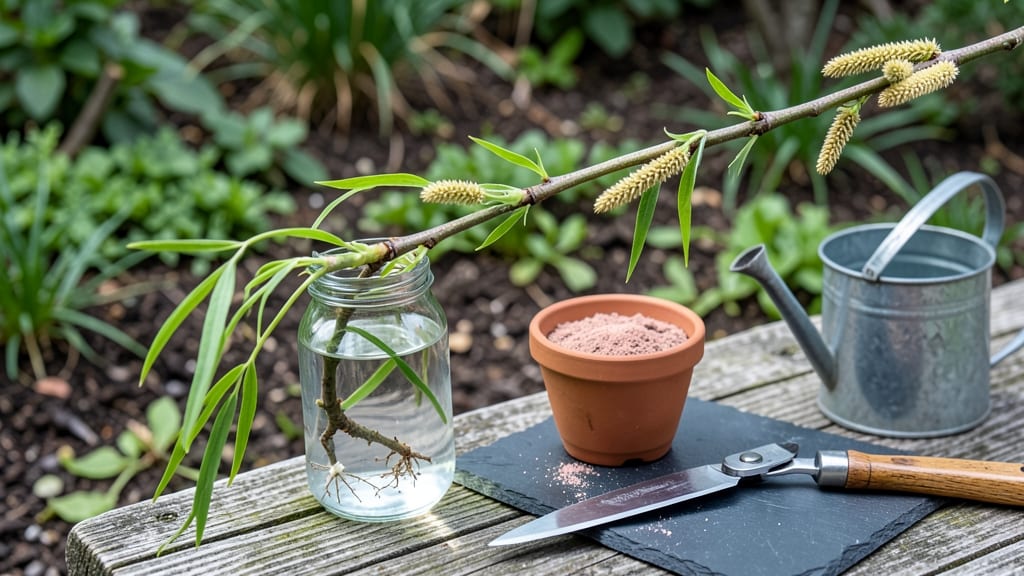
Growing a willow tree from a single branch is easier than you think—just water, patience, and a sunny spot. 🌿 I’ve turned floppy willow cuttings into sturdy trees by following this foolproof method, and you can too.
The secret lies in letting nature do most of the work while you wait for roots to form.
Start with a 4-6 foot branch from a healthy willow, cut just after winter dormancy when sap is rising. Place it in a jar of water, changing it weekly until roots sprout in 4-8 weeks.
Willow branches root like weeds—just give them a chance. Once roots are 2-3 inches long, transplant into moist soil and watch them take off.
Your new willow will reward you with fast growth and that signature weeping shape within a year. Keep the soil damp but not soggy, and give it full sun for best results. The first few weeks are critical—wilting means too much sun, while slow growth means it needs more water.
This method works for willow varieties like white, crack, or pussy willow, and even works in containers if your space is limited. Just avoid planting near foundations—willows spread aggressively. Ready to grow your own? Let’s get those cuttings rooting!
📚 In This Guide
- What you need
- Instructions
- Tips and common mistakes
- Wrapping up and next steps
What you need
- ● 1 healthy willow branch: 12–18 inches long, with at least 3–5 buds (nodes) and a diameter of ¼–½ inch. Choose from Salix varieties like weeping willow (Salix babylonica) or pussy willow (Salix discolor).
- ● 1 clean container: A jar, vase, or bucket (6+ inches deep) filled with room-temperature water (2–3 quarts). Use dechlorinated water if possible (let tap water sit out for 24 hours or use filtered water).
- ● Pruning shears or sharp knife: Sterilized to make a clean, angled cut (about ¼ inch above a node).
- ○ Rooting hormone (optional but helpful): A powder or gel to encourage faster root growth (e.g., Clonex or Rootone).
- ● Potting soil: A well-draining mix (e.g., 50% peat moss, 30% perlite, 20% sand) for transplanting. A 1–2 gallon pot works for early stages.
- ● Grow lights or sunny windowsill: 6+ hours of bright, indirect light daily (south-facing window or LED grow lights).
- ● Hydrogen peroxide (1 tsp per gallon of water) to prevent bacterial growth.
- ● Plastic wrap or humidity dome to retain moisture during rooting.
- ● Fertilizer (balanced 10-10-10) for soil transplanting after 4–6 weeks.
- ● Mulch (e.g., straw) to protect roots once planted outdoors.
Step-by-Step instructions for growing a willow tree from a branch
Here's my foolproof method for turning a simple willow cutting into a thriving tree—no fancy tools needed.
🌱 Step 1: Choose and Prepare Your Willow Branch
Look for healthy, flexible willow branches about 1/4 to 1/2 inch thick and at least 18-24 inches long. The best ones have small buds along the stem—these are your future leaves. Cut a 6-inch section just below a bud using clean, sharp shears or pruners. I always make the cut at a slight angle to increase surface area for root growth.
Remove any leaves from the bottom 6 inches of the branch—this section will become your roots. Strip off leaves because they’ll just rot underwater and attract pests. Keep the top leaves intact for photosynthesis while it roots. Store your cutting in a cool, shaded spot until you’re ready to plant.
💧 Step 2: Root Your Willow Cutting in Water
Fill a clean glass or jar with room-temperature water and place your prepared cutting in it, making sure the stripped bottom 6 inches are submerged. Change the water every 2-3 days to prevent bacteria buildup. You’ll see tiny root hairs forming within 1-2 weeks, and roots will grow about 1 inch per week after that.
Keep the container in bright, indirect light—direct sun can overheat the water and stress the cutting. I place mine on an east-facing windowsill where it gets morning sun but stays cool in the afternoon. If the water gets cloudy or smells funky, dump it and refresh immediately. Roots should be 3-4 inches long before transplanting to soil.
🪴 Step 3: Transplant Rooted Cutting to Soil
Once your cutting has strong roots, pick a sunny spot in your yard with moist, well-draining soil. Willow trees love water but hate soggy roots, so avoid low-lying areas where water pools. Dig a hole just as deep as the rooted cutting and about twice as wide as the root ball.
Gently place the cutting in the hole and backfill with soil, pressing lightly to remove air pockets. Water deeply right after planting to help settle the roots. I like to add a 1-inch layer of mulch around the base to retain moisture and keep weeds down—just keep it a few inches away from the trunk to prevent rot.
☀️ Step 4: Care for Your New Willow Tree
Willows need plenty of water, especially in their first year. Water deeply 2-3 times per week during dry spells, giving about 1-2 gallons each time. You’ll know it’s getting enough when the soil feels moist 2-3 inches deep between waterings. Young willows grow fast, so fertilize lightly in spring with a balanced 10-10-10 fertilizer to encourage strong growth.
Prune any dead or crossing branches in late winter to shape the tree and encourage a sturdy structure. Willow trees can grow 3-6 feet per year, so keep an eye on its size—it’ll quickly fill out your space. In just a few years, you’ll have a lush, fast-growing tree that provides shade and beauty.
Tips & tricks for growing a thriving willow tree from a branch
These simple tricks will help you skip the common pitfalls and turn your willow cutting into a sturdy, fast-growing tree.
Branch Selection Tip: Look for branches that bend slightly without snapping—they’re young enough to root well. Avoid branches with cracks or dried-out sections, as these won’t grow roots. In Step 1, when you make your angled cut, try to angle it downward slightly—this helps water flow toward the base, encouraging root growth from the start.
Rooting Environment: In Step 2, keep your water container away from drafts or heating vents, which can cause temperature swings. I’ve found that placing a small piece of charcoal in the water (like aquarium charcoal) helps prevent algae growth and keeps the water fresher between changes. This is especially helpful if you’re rooting for more than 2 weeks.
Transplanting Success: When you’re ready for Step 3, soak the rooted cutting in water for 30 minutes before planting. This hydrates the roots and reduces transplant shock. After planting, create a small basin around the base with a mound of soil—this helps direct water straight to the roots during your 2-3 weekly waterings.
Long-Term Growth: In Step 4, don’t be tempted to fertilize more than once a year—willows grow fast naturally, and over-fertilizing can lead to weak, leggy growth. Instead, focus on keeping the soil moist and adding a thin layer of compost around the base in spring. This mimics their natural wetland environment without the risk of root rot.
Pro Tips for Grow A Willow Tree From A Branch
- These simple tricks will help you skip the common pitfalls and turn your willow cutting into a sturdy, fast-growing tree.
- Branch Selection Tip: Look for branches that bend slightly without snapping—they’re young enough to root well.
- Rooting Environment: In Step 2, keep your water container away from drafts or heating vents, which can cause temperature swings.
Frequently asked questions
Got questions about growing a willow tree from a branch? You’re not alone! Here are some of the most common concerns—plus straightforward answers to help you succeed.
Can I grow a willow tree from any branch?
Not quite! For best results, choose green, flexible branches (about pencil-thick) from the current year’s growth. Avoid woody, brown, or brittle stems—they’re less likely to root. Look for healthy branches with leaf buds or small leaves still attached.
How long does it take for a willow cutting to root?
Willow cuttings are fast growers! In water, you’ll often see roots in 2–4 weeks. Once transferred to soil, roots may take another 2–4 weeks to establish. Patience pays off—keep an eye out for new leaves or root growth at the base.
Do I need to change the water when rooting a willow branch?
Yes! Change the water every 3–5 days to prevent bacteria or algae buildup. Use room-temperature water, and trim any brown, mushy areas on the cutting to encourage fresh growth. Stagnant water = slower (or failed) rooting!
What if my willow cutting rots before rooting?
Don’t worry—this happens! Rot is usually caused by too much water, poor air circulation, or a weak cutting. To fix it: Trim the rotted section, let it dry for a day, and replant in fresh water or moist soil. If the cutting is too far gone, try a new one!
Can I plant a rooted willow branch directly in the ground?
Once roots are 1–2 inches long, you can transplant it to soil. Choose a moist, sunny spot with well-draining soil. Water thoroughly after planting, and mulch around the base to retain moisture. Just avoid planting near structures—willows grow fast and wide!
Wrapping up and next steps
Growing a willow tree from a branch is a rewarding journey that blends simplicity with nature’s magic! 🌱 With just a few supplies and patience, you’ve got the power to nurture a stunning tree from a single cutting.
Whether you’re adding shade, beauty, or a touch of whimsy to your space, your willow’s journey from water to soil is well worth the wait.
Now that you’re armed with the know-how, why not take the next step? Share your progress with fellow gardening enthusiasts or experiment with different willow varieties—each brings its own unique charm. Happy growing, and may your willow thrive for years to come! 🌿✨