
How To
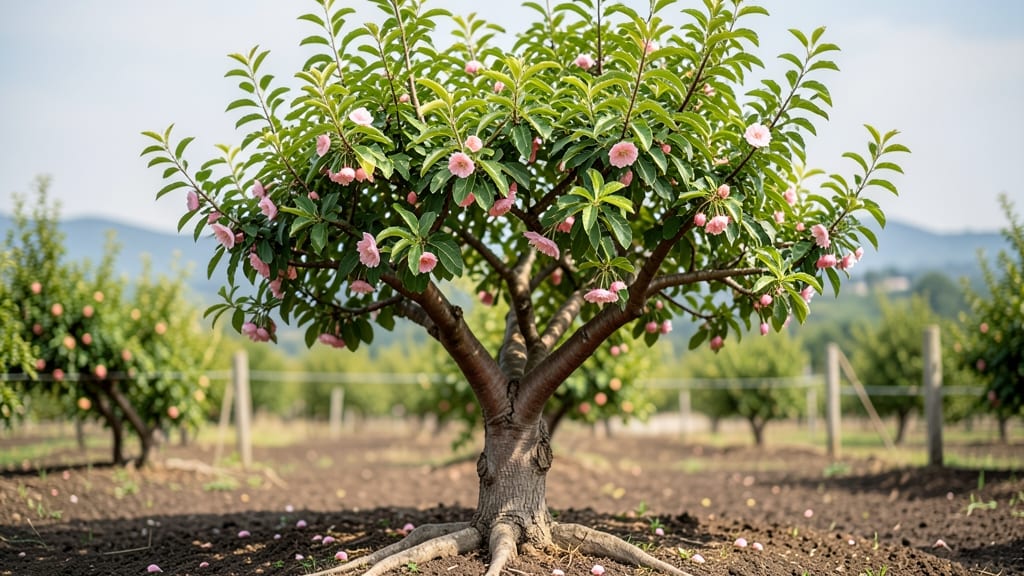
A peach tree grows to 15-25 feet tall at maturity 🍑, but the size depends on the variety and how you prune it—something that can make or break your backyard space.
Picture this: a 20-foot tree looming over your patio, branches scraping your roof, or worse, tangling with power lines. That’s why knowing how tall your peach tree will grow—and how to control it—isn’t just helpful, it’s essential.
Dwarf varieties stay under 12 feet, while standard trees can reach the height of a two-story house. The difference comes down to rootstock, pruning, and a few simple tricks that keep your tree manageable without sacrificing fruit production.
In this guide, I’ll break down the height ranges by variety, share natural pruning techniques to shape your tree, and show you how to balance growth with a bountiful harvest—so you get the best of both worlds.


Peach tree height by variety: dwarf vs standard vs semi-dwarf growth charts
Choosing the right peach tree variety isn’t just about flavor—it’s about space planning. A standard peach tree can reach 20-25 feet, while a dwarf variety stays compact at 8-12 feet.
The difference? Rootstock type determines height, not just the scion (fruit-bearing top). Let’s break down how these categories grow and which fits your yard.
Your peach tree’s mature height depends entirely on its rootstock. Dwarf rootstocks like Lovell or Halford keep trees small, while standard rootstocks like Nemaguard let them grow tall. Even the same peach variety—like ‘Elberta’—can end up 12 feet or 25 feet tall depending on grafting.
The rootstock you choose is the secret weapon for controlling height. For example, ‘Bonanza’ peaches on Lovell rootstock stay 12-18 feet, while the same variety on standard rootstock could hit 25 feet.
Nurseries often sell trees as "dwarf," "semi-dwarf," or "standard," but always check the rootstock label to avoid surprises.
If you’re working with limited space, dwarf varieties like ‘Sanguinelle’ or ‘Bonanza’ are perfect for containers or small yards. These trees reach 8-12 feet at maturity, making them ideal for patio gardens or urban homesteads.
Just ensure they get full sun (6+ hours daily) to maximize fruit production.
For large orchards or rural properties, standard varieties like ‘Redhaven’ or ‘Elberta’ thrive when spaced 20-25 feet apart. Their taller stature (20-25 feet) allows for better air circulation, reducing disease risk.
However, this height means they’ll need regular pruning to keep branches from encroaching on buildings or power lines.
Semi-dwarf peach trees—like ‘Crimson Snow’—strike a balance at 12-18 feet. They’re easier to manage than standard trees but still produce larger fruit yields than dwarfs. These are great for backyard orchards where you want a mix of accessibility and productivity.
One common mistake is assuming a “dwarf” label guarantees a small tree. Some nurseries use the term loosely—always verify the rootstock type. For instance, a ‘Bonanza’ on Nemaguard will grow like a standard tree, while ‘Bonanza’ on Lovell stays compact.
When shopping, ask for the grafting details to avoid disappointment.
Pruning plays a huge role in managing height, even with dwarf rootstock. Young trees need structural pruning to establish a strong central leader or open-center shape. Without proper pruning, even dwarf varieties can become unruly and top-heavy, leading to broken branches.
For container growing, dwarf varieties are your best bet—but don’t forget to repot every 2-3 years as the roots outgrow the pot. Use a large container (18+ inches wide) with drainage holes and a well-draining potting mix.
Even dwarf trees need deep watering (20L weekly) during their first year.
Remember: Height isn’t the only factor. Consider spread width
Natural pruning techniques to control peach tree height without chemicals
Peach trees can grow 15 to 25 feet tall if left unchecked, making height control essential for small yards or urban spaces. The key lies in structural pruning—not just trimming branches, but shaping the tree’s growth pattern from the start.
By mastering these techniques, you can redirect energy toward fruit production while keeping the canopy manageable. Let’s explore how to prune naturally, without relying on chemical growth inhibitors.
First, understand your peach tree’s growth habit. Most varieties grow as a central leader (one main trunk) or open-center (multiple scaffold branches). Dwarf varieties naturally stay shorter, but even they benefit from proper pruning.
The goal is to remove water sprouts (vertical shoots) and crossing branches while encouraging horizontal growth for better sunlight exposure and fruit access.
Step-by-Step Pruning Guide
Identify the central leader or scaffold branches. For open-center varieties, aim for 5-6 main branches spaced evenly around the trunk. Use a sharp pruning saw for thick branches (>1 inch diameter).
Cut out vertical shoots growing from the trunk or branches. These compete with fruit-bearing wood. Prune just above a bud facing outward to encourage horizontal growth. Do this in late winter before buds swell.
Remove branches that rub against each other or grow inward. This prevents wounds and improves air circulation. Aim to leave well-spaced branches (6-12 inches apart) for sunlight penetration.
For young trees, gently bend downward-growing branches to redirect growth. Use soft ties or stakes to hold them in place. This encourages a wider, bushier shape instead of vertical growth.
Lightly trim overly vigorous shoots in summer to promote fruit spurspinch back tips to slow vertical growth.
Seasonal timing matters. Winter pruning (dormant season) is best for structural shaping, while summer pruning focuses on fruit wood development. Avoid pruning in fall, as new growth may not harden off before frost.
Always sterilize your tools with rubbing alcohol to prevent bacterial infections like silver leaf disease.
Common mistakes include over-pruning (removing more than 25% of foliage at once) or pruning too late in the season. Never leave stubs—cut just outside the branch collar to ensure proper healing. For dwarf varieties, focus on selective thinning rather than aggressive height reduction.
With consistent pruning, you can keep your peach tree at a manageable 8-12 feet for dwarf varieties or 12-18 feet for semi-dwarf types. The key is patience and precision—small, regular adjustments yield the best results. Happy pruning! ✂️🌳