
How To
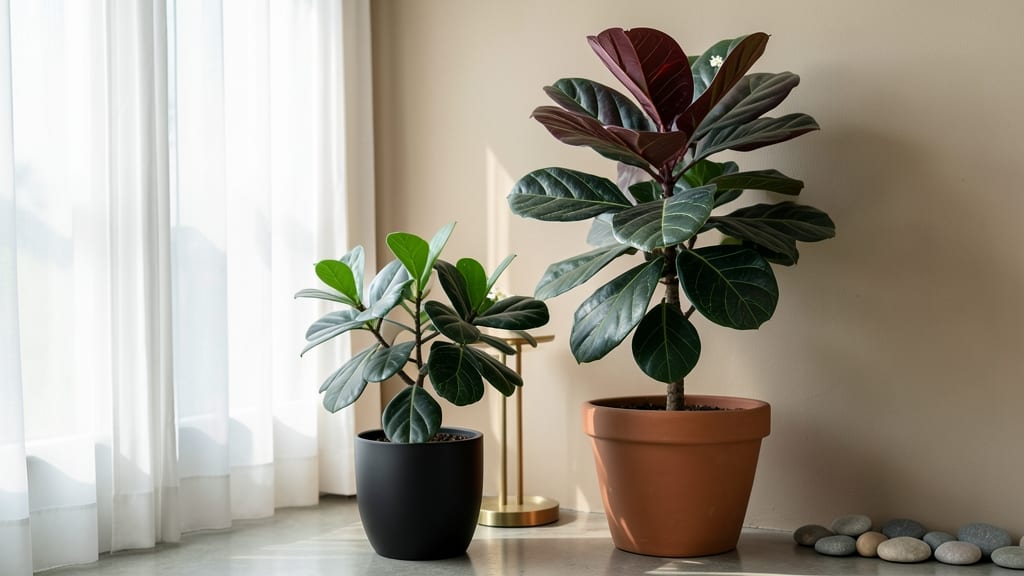
A rubber tree can grow how tall can a rubber tree grow indoors to heights of 10 to 30 feet with the right conditions 🌿 — think ceiling-high giants or even taller if you let it stretch its legs.
If you’ve ever dreamed of having a towering indoor jungle but worried about space, a rubber tree (Ficus elastica) could be your perfect match—these plants can grow surprisingly tall indoors with the right care.
Most varieties start small but shoot up 3 to 5 feet in their first year, then add another 6 to 8 feet by year two. That means your living room could soon have a lush, leafy skyscraper without ever stepping outside.
Here’s how to control its height—whether you want a compact statement piece or a full-blown indoor rainforest—plus the care tweaks that make the difference between a stunted sapling and a soaring giant.


Indoor rubber tree height by variety: small, medium, and giant growth potential
If you're eyeing a rubber tree (Ficus elastica) for your indoor space, one of your first questions is likely, "how tall can a rubber tree grow indoors?" The answer depends entirely on the variety you choose.
Some rubber trees stay compact, while others can reach ceiling heights or beyond with proper care. Genetics play a huge role—some varieties are bred to stay small, while others grow aggressively if given the right conditions.
Your rubber tree's height isn't just about luck—it's about matching the right variety to your space and care habits. For example, a dwarf variety might top out at 3-5 feet, while a standard type could easily surpass 10 feet indoors.
Even within the same species, growth habits can vary dramatically based on factors like light exposure, pot size, and pruning frequency. Let's explore the height ranges you can expect from popular rubber tree varieties.
| Variety | Mature Height (Indoors) | Growth Rate | Best For |
|---|---|---|---|
| Ficus elastica ‘Decora’ (Standard) | 10-15 ft | Moderate (1-2 ft/year) | Large spaces, tall ceilings |
| Ficus elastica ‘Black Prince’ | 8-12 ft | Fast (2 ft/year with ideal care) | Statement plants, dramatic foliage |
| Ficus elastica ‘Burgundy’ | 10-14 ft | Moderate (1-2 ft/year) | Rich color accents, medium rooms |
| Ficus elastica ‘Robusta’ (Dwarf) | 3-5 ft | Slow (6-12 in/year) | Small spaces, desks, shelves |
| Ficus elastica ‘Tineke’ (Variegated) | 6-10 ft | Moderate (1 ft/year) | Bright rooms, unique foliage |
| Ficus elastica ‘Doescheri’ (Variegated) | 5-8 ft | Slow-Moderate (8-12 in/year) | Medium spaces, accent plants |
Note: Heights are estimates for indoor conditions with proper care. Outdoor growth can exceed these ranges significantly.
As you can see, the ‘Robusta’ variety is your best bet for small spaces, while ‘Decora’ or ‘Black Prince’ will give you that dramatic, jungle-like appearance. But here's the catch: even dwarf varieties can outgrow their welcome if you don't prune regularly or limit pot size.
Genetics set the baseline, but your care routine determines how close you'll get to those maximum heights.
One common misconception is that all rubber trees will eventually reach their outdoor maximum height indoors. In reality, indoor rubber trees often grow 30-50% slower than their outdoor counterparts due to limited light and space.
However, with bright indirect light and proper fertilization, you can push even dwarf varieties toward their upper height limits over time. For example, a ‘Robusta’ might stay under 4 feet for years but could eventually reach 5-6 feet with ideal conditions.
If you're aiming for a ceiling-height rubber tree, focus on varieties like ‘Decora’ or ‘Black Prince’ and provide them with consistent bright light (like an east or west-facing window) and regular feeding during the growing season. These conditions encourage vertical growth.
On the flip side, if you want to keep your rubber tree compact, opt for smaller pots or prune aggressively to control height. Root-bound conditions naturally slow height growth, so repotting every 2-3 years can help maintain manageable sizes.
The color of the variety also plays a subtle role in growth habits. Variegated types like ‘Tineke’ or ‘Doescheri’ often grow slightly slower because their white or yellow foliage requires more energy to produce.
This means they might stay in the 6-8 foot range even with excellent care, while solid-colored varieties can reach their full potential more quickly. If you're after height, solid green or deep purple varieties like ‘Black Prince’ are your best bets for rapid vertical growth.
Another factor to consider is the age of your rubber tree when you bring it home.
Younger plants (under 2 years old) will grow faster than mature specimens, so if you're starting from a cutting or a small nursery plant, you'll see more dramatic height increases in the first few years.
Mature rubber trees, on the other hand, may only gain a few inches per year unless you're providing exceptional care. This is why many indoor gardeners prefer to start with younger plants if they want to see rapid growth.
How light, space, and pruning control your rubber tree’s height
Your rubber tree’s height isn’t just luck—it’s a mix of light exposure, pot size, and pruning habits. With bright indirect light, my Ficus elastica grows 12-18 inches per year, while low light slows it to just 6-8 inches.
The right conditions can turn your small tabletop plant into a ceiling-high statement piece within 3-5 years.
Pot size plays a surprising role too. A root-bound rubber tree will focus energy on height rather than leaves, shooting up 2-3 feet faster than one in a spacious pot.
But beware—too much space means bushier growth and slower vertical expansion. Balancing these factors is key to controlling your tree’s final height.
Maximizing vs. Controlling Rubber Tree Height
Maximizing Height
- Light: Place near east/west windows for 4-6 hours daily
- Pot Size: Use small pots to encourage upward growth
- Pruning: Remove only dead/damaged leaves to maintain energy
- Fertilizer: Feed with balanced 10-10-10 every 4-6 weeks
Controlling Height
- Light: Reduce to 2-3 hours/day for slower growth
- Pot Size: Choose large pots to promote bushiness
- Pruning: Top-prune in spring to limit vertical growth
- Fertilizer: Use low-nitrogen feed in summer
💡 Pro Tip: Rotate your tree quarter-turn weekly for even light exposure and balanced growth
Seasonal growth patterns also matter. My rubber tree grows fastest in spring and summer when days are long, but nearly stops in winter. If you want a compact tree, prune back by 1/3 in late winter before new growth begins.
For a tall specimen, avoid heavy pruning and let it grow freely during its active months.
Pruning techniques make all the difference. To encourage height, prune lower branches to remove competition for nutrients. For a bushier look, trim the top 1/3 of the stem—this triggers lateral branching. Just remember: Prune just above a leaf node to promote new growth in the right direction.
Don’t forget about support structures for tall varieties. My 10-foot rubber tree needed a bamboo stake to prevent leaning toward light sources. For ceiling-height trees, consider a floor-mounted trellis or wall-mounted pot to save space while maintaining vertical growth.
With these strategies, you can grow a rubber tree that matches your space perfectly—whether you want a tabletop buddy or a room-dividing giant. Start small, observe how your tree responds, and adjust light, pot size, and pruning as needed. Your rubber tree’s height is entirely in your hands! 🌳