
Blooming
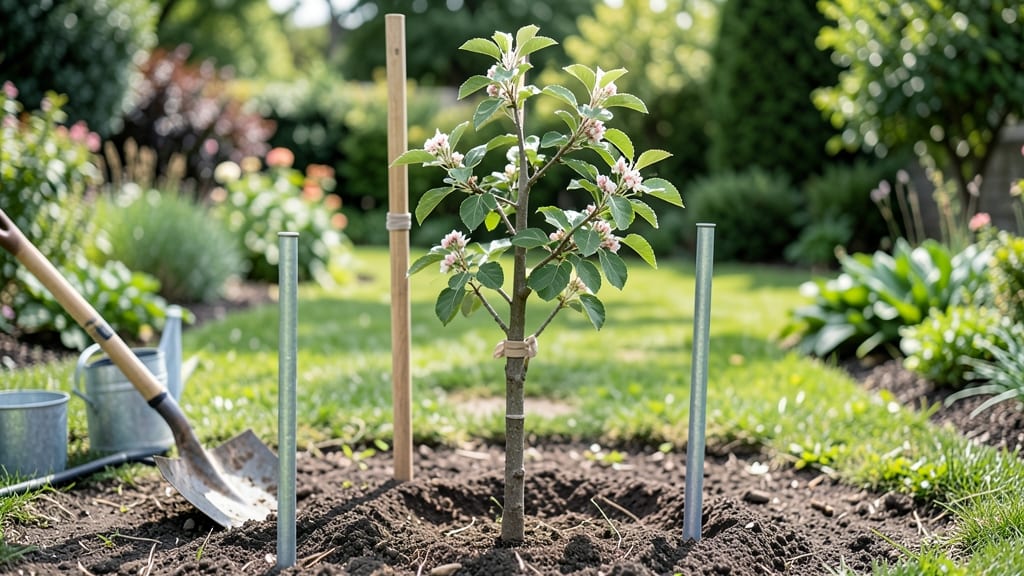
To determine how long a tree should be staked, most species need support for 1 to 2 years, while young saplings typically require 6 to 12 months until their root systems develop sufficient stability. Remove stakes once the trunk reaches about ½ inch in diameter and stands firm without bending.
Staking duration depends on how quickly a tree's roots anchor into the soil while its stem strengthens. 🌳 The goal is to prevent wind damage without restricting natural movement, which actually helps the trunk thicken.
I've seen fruit trees like apples or peaches benefit from slightly longer staking (up to 18 months) because their branches add extra weight, while lighter ornamental trees often stabilize faster.
Always check for trunk sway—if it bends more than 10 degrees in strong winds, the stakes still have work to do.
For container-grown trees or those planted in high-wind areas, you might need to extend staking by 3–6 months. The key is monitoring growth rather than relying on a strict timeline—watch for new leaves at the top and a trunk that feels solid when gently pushed.
Over-staking can actually cause girdling as the trunk rubs against the stakes, so check periodically for any signs of damage.
💡 In This Article
- Tree Staking Science: When Roots Outpace Stem Strength
- Species-Specific Staking Guide: Duration by Tree Type
Tree staking science: when roots outpace stem strength
The biological race between roots and stems determines how long a tree needs staking. When you plant a young tree, its roots grow downward at about 1 inch per week under ideal conditions, while the stem thickens at just 0.1–0.2 inches per year.
This mismatch creates a vulnerable period where wind stress can bend or break the stem before the root system gains enough leverage to anchor it.
The cambium layer—the tree's growth engine—produces new wood cells that gradually increase trunk rigidity, but this process accelerates when the tree experiences controlled movement against stakes.
Here's what's happening at the cellular level: Wind stress triggers the production of thicker cell walls in the xylem (wood tissue), creating a stronger structural support system. 🌱 However, if stakes restrict all movement, the tree becomes dependent on artificial support and fails to develop the natural resilience built through gentle sway.
This is why you'll often see trees with improper staking develop weak, spindly trunks that snap in storms. The goal is to let the tree "exercise" its stem—enough to trigger thickening but not so much that it risks damage.
Species play a huge role in this balance. Fast-growing trees like willows or poplars develop roots and stems quickly, often stabilizing in 6–12 months, while slower-growing oaks or maples may need 2–3 years of support.
The key difference lies in their cambial activity rates—willows produce up to 10 times more wood growth per year than oaks. Even within species, container-grown trees have a head start with more developed root systems, sometimes reducing staking needs by 30–50% compared to bare-root seedlings.
What most gardeners miss is how soil type affects this equation. Sandy soils drain quickly, forcing roots to grow deeper and wider to find moisture, which can actually increase stability faster than in clay soils where roots spread horizontally but struggle to penetrate.
In high-wind zones, the staking timeline extends by 20–30% because the mechanical stress on the stem is constant. You'll notice this in coastal areas where even established trees lean noticeably—proof that wind resistance is an ongoing battle for trees.
The cambium's response to staking creates a visible clue: Look for a slight thickening at the base where stakes meet the trunk. This 0.25-inch diameter increase over 12 months signals sufficient stem strengthening. Without proper movement, this thickening won't occur, leaving the tree vulnerable.
The worst-case scenario is girdling—where the trunk rubs against stakes, creating a permanent scar that can restrict sap flow and weaken the tree permanently.
Consider this real-world example: A 3-foot-tall apple tree planted in spring with proper staking will typically develop a ½-inch trunk diameter by its second summer. At this point, you can safely remove stakes and let the tree develop its natural lean (up to 15 degrees) without risking damage.
The science shows that trees staked beyond this point often develop weaker structural integrity because they've become dependent on artificial support rather than building their own strength through wind resistance.
Remember: The perfect staking scenario creates a 30–45 degree angle between the stake and trunk, allowing just enough movement to trigger cambial activity without risking breakage. This subtle balance is what separates successful tree establishment from long-term weakness. 🌳