
Pruning
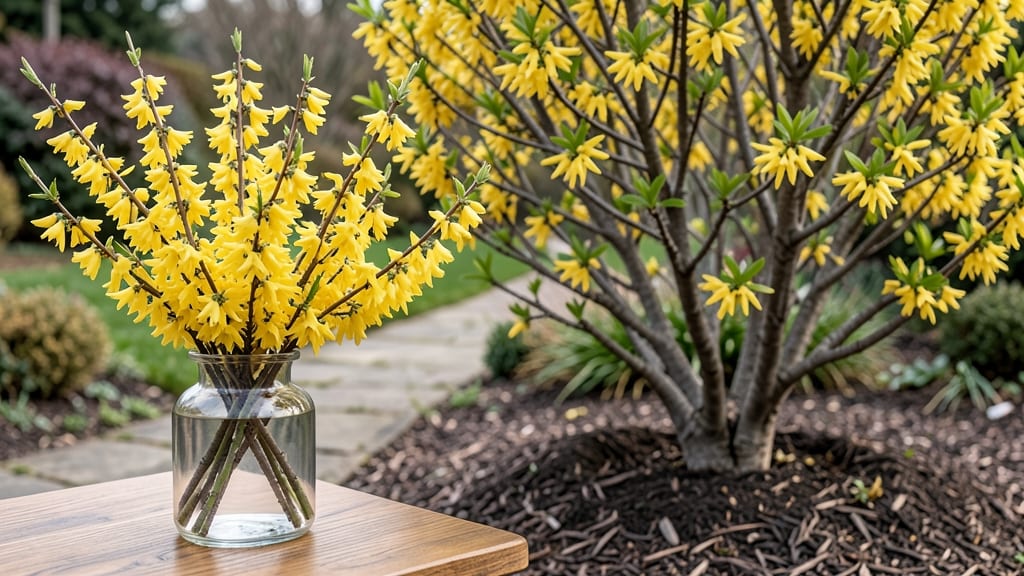
That bold yellow cascade of the forsythia tree form transforms any garden into a springtime masterpiece—but its natural form can be as unruly as it is stunning. ✨ I’ve pruned mine for years, and the secret to keeping it neat, structured, and full of life lies in understanding its growth habits and when to guide them gently.
Forsythia grows in upright, arching branches that spread wider than they grow tall, making it perfect for focal points or layered hedges. The key is pruning right after flowering (late spring) to shape without sacrificing next year’s blooms.
A well-trained forsythia stays compact, balanced, and covered in flowers from top to bottom.
You’ll end up with a tree that looks intentionally designed, not wild—think manicured arches framing a path or a tiered backdrop for perennials. The golden blooms contrast beautifully with deep green foliage, and when paired with purple clematis or blue hostas, it creates a stunning seasonal show.
Works for small yards, urban gardens, or as a standout specimen in a larger landscape. Let’s shape it together—without losing that signature springtime magic.
📚 In This Guide
- What you need
- Instructions
- Tips and common mistakes
- Wrapping up and next steps
What you need
- ● Pruning shears: Bypass pruners with sharp, clean blades (for small branches, ¼"–½" in diameter). Example: Felco F-2 or Corona Tools.
- ● Loppers: For medium branches (½"–1½" in diameter). Look for bypass-style loppers with a 10–12" handle for leverage.
- ● Pruning saw: A curved-tooth saw for thick branches (>1½" diameter). Example: Fiskars X7.
- ● Rubbing alcohol (70% isopropyl) or bleach solution: To sterilize tools between cuts and prevent disease spread.
- ● Garden gloves: Heavy-duty, cut-resistant gloves (e.g., Mechanix Wear or Fox River) to protect hands from thorns and sharp tools.
- ● Disposable pruning bags or bucket: To collect and dispose of trimmings neatly.
- ○ Measuring tape or ruler: For precise branch measurements (optional but helpful for structured forms like espalier or standard shapes).
- ● Twine or plant ties: If shaping forsythia into a standard tree form or espalier, use jute twine or flexible tree ties.
- ● Ladder or stool: For reaching higher branches safely. Ensure it’s stable and rated for your weight.
- ● Hand pruners (anvil-style): For quick, small trims (though bypass is preferred for clean cuts).
- ● Pruning sealant: To coat larger cuts (>½") and reduce sap loss (e.g., Tanglefoot Tree Wound Pruning Sealer).
- ● Spray bottle with water: Keeps tools cool and prevents sap from sticking to blades.
- ● Notebook & pen: To sketch your forsythia’s current form and plan pruning cuts.
- ● Safety glasses: Protects eyes from debris, especially when using a pruning saw.
Instructions for pruning forsythia to maintain year-round structure
Here's how I transform wild, sprawling forsythia into a graceful, balanced tree that blooms beautifully and stays strong through all seasons.
✂️ Step 1: Prune Immediately After Spring Blooming
Wait until 2-3 weeks after spring flowering when the last blooms have faded completely. This ensures you don't remove next year's flower buds hidden within the stems. I always mark my calendar because forsythia blooms early—sometimes as early as February—and you'll want to avoid cutting back too soon.
Start by removing any dead, diseased, or crossing branches first. Use clean, sharp pruning shears to make cuts at a 45-degree angle just above an outward-facing bud. This prevents water from pooling and encourages new growth to angle outward, creating a more open structure. I make sure to step back every few cuts to visualize the overall shape—this helps me see where I'm creating gaps or maintaining density.
✂️ Step 2: Thin the Center and Open the Canopy
Forsythia naturally grows with a dense center that blocks light and air circulation. My goal is to remove 20-30% of the oldest, thickest branches from the center of the tree. These are usually the ones that grew in previous years and are now woody and less productive. Cut these back to their point of origin or to a strong lateral branch.
For the outer branches, I focus on creating an open vase shape. Remove any branches that grow inward or rub against others. You'll see the difference immediately—the tree will look more balanced and allow sunlight to penetrate to the lower branches. This also reduces the risk of fungal diseases that thrive in dense, shaded areas. Think of it like giving your forsythia a spa day—more air, more light, and better overall health.
✂️ Step 3: Shape the Outer Branches for Balance
Now it's time to refine the tree's silhouette. I like to maintain a slightly narrower base that widens toward the middle and then tapers again toward the top. This creates a natural, graceful form that's both strong and visually appealing. Use hand pruners for smaller branches and loppers for anything thicker than ½ inch in diameter.
Look for branches that are growing too upright or too low. Cut these back to a lateral branch that grows at a better angle. The key is to maintain a sense of movement—forsythia branches should flow naturally rather than appear rigid. After pruning, the tree should look like it's reaching upward while still having a balanced, rounded shape. If you're unsure, take a photo before you start and compare it to your progress.
✂️ Step 4: Light Summer Pruning for Maintenance
During the growing season, I do a quick check every 4-6 weeks to remove any suckers or watersprouts that appear at the base of the tree. These are the fast-growing, vertical shoots that steal energy from the main structure. Pinch them off with your fingers or use pruners to cut them at the base. This keeps the tree's energy focused on the branches you want to maintain.
If any branches become overcrowded or start to look leggy, I'll lightly trim them back by ⅓ of their length to encourage bushier growth. The goal here is subtle maintenance—just enough to keep the tree looking its best without disrupting its natural form. I also remove any deadheading that might have missed the first pruning, ensuring the tree stays tidy and healthy.
Tips & tricks for perfecting forsythia tree form
The secret to transforming wild forsythia into an elegant, year-round beauty lies in these precise techniques that go beyond basic pruning. These insights will help you create a tree that not only blooms spectacularly but maintains its structure through every season.
Timing is Everything: That 2-3 week window after spring blooming is non-negotiable. I've learned this the hard way—cutting too early removes next year's flower buds, and you'll be left with a tree that looks great but fails to deliver its signature golden display. Mark your calendar for when forsythia blooms in your area, as early February is common but can vary by climate zone. The key visual cue is when the last flowers have completely faded and turned brown.
The 45-Degree Angle Secret: Making cuts at a precise 45-degree angle just above an outward-facing bud isn't just about aesthetics—it's about directing growth. This technique prevents water from pooling in the cut, which can lead to rot or disease. I always visualize the bud as a compass pointing in the direction I want new growth to emerge. For thicker branches, use your pruning shears to make the angled cut first, then make a second cut just outside the branch collar to avoid tearing the bark.
Visualization Technique: Step back every 5-10 cuts to assess your progress—this is where the magic happens. I've found that working in sections (north, south, east, west) helps me maintain balance. Look for symmetry in the overall shape while keeping in mind that nature prefers organic forms over geometric perfection. The goal is to create an open vase shape that allows sunlight to reach all parts of the tree, which is especially important for forsythia's lower branches that often get shaded.
Seasonal Maintenance Insight: Those regular 4-6 week checks during summer aren't just about appearance—they're about redirecting the tree's energy. Suckers and watersprouts may look harmless, but they divert nutrients from your main structure. When you remove them at the base, you're essentially telling the tree, "Focus your energy here instead." For the ⅓ length trimming of overcrowded branches, I use the "third rule"—never remove more than one-third of any branch's length in a single cut to avoid shocking the tree.
Pro Tips for Forsythia Tree Form
- The secret to transforming wild forsythia into an elegant, year-round beauty lies in these precise techniques that go beyond basic pruning.
- Timing is Everything: That 2-3 week window after spring blooming is non-negotiable.
- The 45-Degree Angle Secret: Making cuts at a precise 45-degree angle just above an outward-facing bud isn't just about aesthetics—it's about directing growth.
Frequently asked questions
Got questions about shaping your forsythia tree? Here are some common ones—plus expert answers to help you prune with confidence!
When is the best time to prune a forsythia for optimal form?
The ideal time to prune forsythia is right after flowering (late spring), but you can also do light shaping in early summer or late winter (before buds swell). Avoid pruning in fall—it encourages tender new growth that may not survive winter. For dramatic reshaping, prune in stages over 2–3 years to avoid stressing the plant.
How do I prune forsythia to encourage a more compact, bushy form?
To create a denser, bushier forsythia, focus on selective pruning:
- Remove 1/3 of the oldest stems at the base to stimulate new growth.
- Trim back last year’s growth by 1/3 to encourage branching.
- Avoid "heading back" (cutting into old wood)—it can reduce flowering.
Why did my forsythia stop blooming after pruning?
Forsythias bloom on last year’s wood, so aggressive pruning (cutting back into old growth) can reduce flowers. If blooms disappeared:
- Check if you pruned too late in spring (after buds set).
- Ensure you’re not removing all the oldest stems—these hold next year’s flowers.
- Fertilize lightly in early spring with a balanced 10-10-10 formula to encourage blooming.
Can I prune forsythia into a tree form, or is it better as a shrub?
Forsythias are naturally shrub-like, but you can train one into a small tree with patience:
- Select 1–3 strong central stems and remove competing branches at the base.
- Prune to shape the canopy, keeping it open for airflow (prevents disease).
- Expect fewer flowers than a shrub—tree forms prioritize structure over blooms.
What should I do if my forsythia looks leggy or overgrown?
Leggy forsythias often result from under-pruning or poor sunlight. Revive it with:
- Rejuvenation pruning: Cut back all stems by 1/2 in early spring (sacrificial but effective).
- Move to full sun (6+ hours/day)—forsythias thrive with light.
- Fertilize with high-phosphorus (e.g., 5-10-5) to boost root and branch growth.
Wrapping up and next steps
Transforming your forsythia into a showstopping, year-round focal point is totally within reach—just follow the right pruning techniques! Whether you’re shaping a weeping cascade, a multi-stemmed masterpiece, or a compact hedge, consistency and patience will reward you with vibrant blooms and sturdy structure. 🌸
Ready to take the next step? Grab your pruners and schedule a seasonal check-in—spring, summer, and late winter are your best friends for maintaining that graceful form. And if you’re feeling ambitious, experiment with creative topiary designs for a truly one-of-a-kind garden statement!