
Blooming
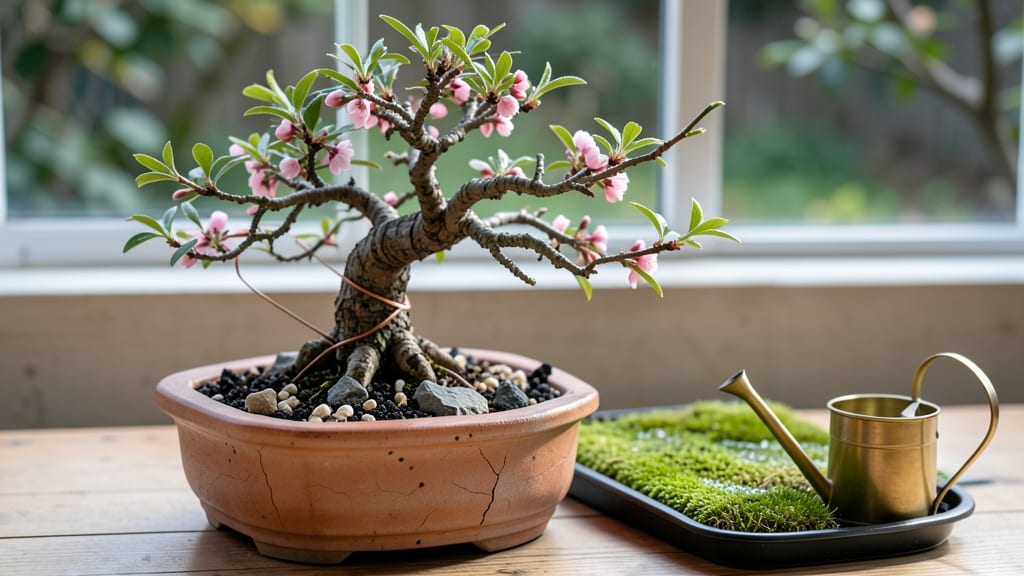
Your cherry blossom bonsai tree care begins with understanding its delicate balance between art and science. ✨ The key to those iconic pink blooms lies in pruning precision—not just cutting branches, but sculpting a living masterpiece that thrives year-round.
I’ve watched my own tree transform from a tangled mess into a graceful centerpiece, and the secret isn’t complicated: it’s about timing, technique, and patience.
The right tools and soil make all the difference. You’ll need sharp bonsai shears, a well-draining soil mix (like 60% akadama, 20% pumice, and 20% organic matter), and a pot with drainage holes—no shortcuts here.
Watering should be consistent but never soggy, and fertilizing in early spring kickstarts that vibrant bloom cycle. Most beginners overwater, so let the top inch dry before adding more moisture.
By summer, your tree will reward you with delicate pink blossoms that last weeks, but the real magic happens in winter. Prune back dead branches in late fall, and protect it from frost with a light frost cloth.
The result? A bonsai that stays lush, blooms reliably, and becomes the conversation piece of your space. It’s not just a plant—it’s a living sculpture.
Whether you’re a first-timer or refining your skills, cherry blossom bonsai care is about small, deliberate actions that add up to big beauty. Start with these basics, and you’ll be nurturing a tree that brings spring’s grace to your home every year. Let’s get growing!
📚 In This Guide
- What you need
- Instructions
- Tips and common mistakes
- Wrapping up and next steps
What you need
- ● Cherry Blossom Bonsai Seedling or Sapling: 1 healthy Prunus serrulata (Japanese cherry) bonsai tree (3–5 years old recommended for easier shaping).
- ○ Optional: Pre-bonsai tree (1–2 years old) if you’re starting from scratch.
- ● Bonsai Pot: 1 shallow, well-draining pot (4"–8" diameter) with drainage holes. Material: Unglazed ceramic or plastic.
- ○ Optional: Decorative pot (for display) + nursery pot (for repotting).
- ● Bonsai Soil Mix: 3 parts akadama (Japanese clay soil).
- ● 2 parts pumice or perlite (for aeration).
- ● 1 part peat moss or organic compost (for moisture retention).
- ● Pruning Tools: 1 pair concave bonsai scissors (for precise cuts).
- ● 1 bypass pruning shears (for larger branches).
- ● 1 root hook (for root pruning and soil aeration).
- ○ Sunlight: Full sun (6+ hours daily) or bright indirect light. Optional: Grow light for winter supplementation.
- ● Watering Supplies: 1 spray bottle (for misting leaves).
- ● 1 watering can with a fine rose nozzle.
- ● Fertilizer: 1 balanced liquid fertilizer (10-10-10 or 20-20-20, diluted to half-strength).
- ○ Optional: Organic bonsai fertilizer (e.g., fish emulsion or seaweed extract).
- ● Seasonal Extras: Winter: Frost cloth or indoor grow light.
- ● Spring: Bloom booster fertilizer (high in phosphorus).
- ● Wiring: 1–2 aluminum or copper bonsai wires (1–3mm thickness) for branch shaping.
- ● Pest Control: Neem oil or insecticidal soap (for aphids/spider mites).
- ○ Humidity Tray: Optional for dry climates (fill with pebbles + water).
Instructions for cultivating a cherry blossom bonsai tree
Here’s how to keep your cherry blossom bonsai thriving with seasonal adjustments and pruning finesse.
🌱 Step 1: Master Spring Pruning for Blossoms
Start in late winter or early spring, just as buds swell but before they burst. This is the moment that matters: prune back 1/3 of the new growth from last season, focusing on branches that cross or grow inward. I use sharp bonsai scissors to make clean cuts just above a leaf node—never tear or crush the wood.
Remove any dead or weak branches entirely. You’ll see new growth emerge within 4-6 weeks, and those fresh shoots will become your blossom-bearing branches. Avoid heavy pruning after buds open—you’ll sacrifice flowers for foliage.
☀️ Step 2: Position for Sunlight and Airflow
Cherry blossom bonsai crave 4-6 hours of morning sun and gentle afternoon shade, especially in hot climates. Place your tree near an east-facing window or under a sheer curtain to filter harsh afternoon rays. You’ll notice leaves scorch if exposed to full sun after 10 AM—adjust placement immediately if you see crispy edges.
Ensure good airflow by spacing your tree 6-12 inches from walls or other plants. Stagnant air breeds fungal diseases like powdery mildew, which appears as white dust on leaves. A small oscillating fan on low setting near the tree mimics natural breeze and strengthens stems.
💧 Step 3: Water with Precision Daily
Check soil moisture every morning by inserting your finger 1 inch deep. Water thoroughly when the top layer feels dry to the touch, until water runs freely from the drainage hole. I use room-temperature water to avoid shocking the roots—cold water can stunt growth. Empty the saucer after 10 minutes to prevent root rot.
Mist the foliage lightly in dry conditions, but avoid wetting the blossoms themselves. Wet flowers invite fungal infections and shorten their lifespan. You’ll see leaves perk up within hours of proper watering—wilting is your first sign of thirst.
✂️ Step 4: Shape and Wiring in Summer
After blossoms fade, focus on shaping the canopy. Use aluminum bonsai wire to gently guide branches into your desired form—wrap wire around the trunk first, then spiral outward to support branches. Check the wire every 3-4 weeks; if it cuts into the bark, remove it immediately to prevent scarring.
Pinch back new growth tips to encourage bushier branching. You’ll see secondary buds form along the stems within 2-3 weeks, creating a denser, more balanced silhouette. Avoid heavy pruning now—save it for late summer to prepare for winter dormancy.
⏰ Step 5: Winter Care for Next Year’s Blooms
Reduce watering as temperatures drop below 50°F, letting the top 1-2 inches of soil dry between waterings. Move your bonsai to a cool, bright location (like a garage with natural light) where temperatures stay between 35-50°F—this mimics natural winter dormancy and ensures robust blooming next spring.
Apply a light layer of akadama soil over the surface to insulate roots. You’ll see buds form in late winter—this is your reward for consistent care. Resist the urge to fertilize during dormancy; the tree needs rest to store energy for spring’s floral display.
Tips & tricks for perfect cherry blossom bonsai care
Real talk: the difference between a thriving cherry blossom bonsai and one that barely survives comes down to these small but mighty details.
Pruning Precision: In Step 1, when you're pruning back that 1/3 of last season's growth, focus on the "golden third" rule—keep the strongest, most outward-facing branches. I learned this the hard way after ruining three bonsai by over-pruning. The new growth you see in 4-6 weeks will determine next year's blossoms, so don't rush this step. Use a magnifying glass to spot tiny buds forming at leaf nodes—these are your future flowers.
Sunlight Strategy: That 4-6 hours of morning sun in Step 2 is non-negotiable, but here's what nobody tells you—rotate your bonsai quarter-turn every week. This prevents one-sided growth and ensures even sunlight exposure. I place mine on a lazy Susan for effortless rotation. For afternoon shade, try a sheer white curtain rather than moving it constantly—it creates a more stable environment.
Watering Wisdom: The 1 inch deep moisture check in Step 3 is your best friend, but here's the secret: water at the same time every morning. Consistency matters more than exact timing. I set a timer for 8:00 AM sharp. Also, if you notice water beading on leaves after watering, that's a sign you're overwatering—let the soil dry slightly more before the next watering. The 10-minute saucer drain prevents root rot, but if your bonsai has no drainage hole, use a shallow tray with pebbles underneath to catch excess water.
Winter Preparation: When temperatures drop below 50°F in Step 5, move your bonsai gradually over 3-4 days to its winter location. Sudden temperature changes shock the tree. I also wrap the pot in bubble wrap (except the top) for extra insulation. The akadama soil layer should be about 1/4 inch thick—any thicker and it traps too much moisture, any thinner and it doesn't insulate properly. This is when your bonsai stores energy for next spring's spectacular blossoms.
Pro Tips for Cherry Blossom Bonsai Tree Care
- Real talk: the difference between a thriving cherry blossom bonsai and one that barely survives comes down to these small but mighty details.
- Pruning Precision: In Step 1, when you're pruning back that 1/3 of last season's growth, focus on the "golden third" rule—keep the strongest, most outward-facing branches.
- Sunlight Strategy: That 4-6 hours of morning sun in Step 2 is non-negotiable, but here's what nobody tells you—rotate your bonsai quarter-turn every week.
Frequently asked questions
Got questions about keeping your cherry blossom bonsai thriving? You’re not alone! Here are some of the most common queries—plus straightforward answers to help you nurture your tree with confidence.
How often should I prune my cherry blossom bonsai?
Prune lightly during the growing season (spring/summer) to shape the tree, but avoid heavy cuts—focus on removing dead or overgrown branches. For flowering branches, prune after blooms fade to encourage next year’s blossoms. Winter is for structural pruning only.
Can I keep my cherry blossom bonsai indoors?
Outdoors is ideal (they love full sun and cooler nights), but if you must bring it inside temporarily, place it near a bright window (6+ hours of light) and avoid drafts. Warning: Indoor conditions can stress the tree, leading to fewer blooms. A greenhouse or sunroom is a better compromise!
Why aren’t my cherry blossom bonsai flowers blooming?
Blooms need cold exposure (6–8 weeks below 45°F/7°C) to trigger flowering. If indoors all year, try a cool winter dormancy (50–60°F/10–15°C) or move it outside in fall. Over-fertilizing or inconsistent watering can also stunt blooms—stick to a balanced bonsai fertilizer in spring/summer.
How do I know if my bonsai is overwatered or underwatered?
| Overwatered | Underwatered |
|---|---|
| Yellowing leaves, mushy soil, root rot (smells sour), wilting despite wet soil. | Crispy/brown leaf edges, dry soil pulling away from pot, slow growth. |
Pro tip: Stick your finger 1–2 inches into the soil—water when it’s slightly dry (not bone-dry). Use a pot with drainage holes!
What’s the easiest alternative to a cherry blossom bonsai for beginners?
Start with a Japanese maple bonsai (hardy, colorful foliage) or a juniper (tolerates neglect). Both are forgiving and still stunning! If you love blooms, try a crabapple bonsai—it’s slightly easier to train for flowers than cherry blossoms.
Wrapping up and next steps
Caring for your cherry blossom bonsai is a rewarding journey that blends patience, precision, and passion. 🌸 By mastering pruning, watering, and seasonal adjustments, you’ll cultivate a living masterpiece that blooms with grace year after year. Now that you’re equipped with the essentials, why not take the next step?
🌱 Your Next Move:
- Start with a small pruning session to refine your tree’s shape.
- Join a bonsai community for tips and inspiration.
- Experiment with seasonal care to keep your bonsai thriving.
Your cherry blossom bonsai deserves the best—go ahead and make it bloom! 🌿