
How To
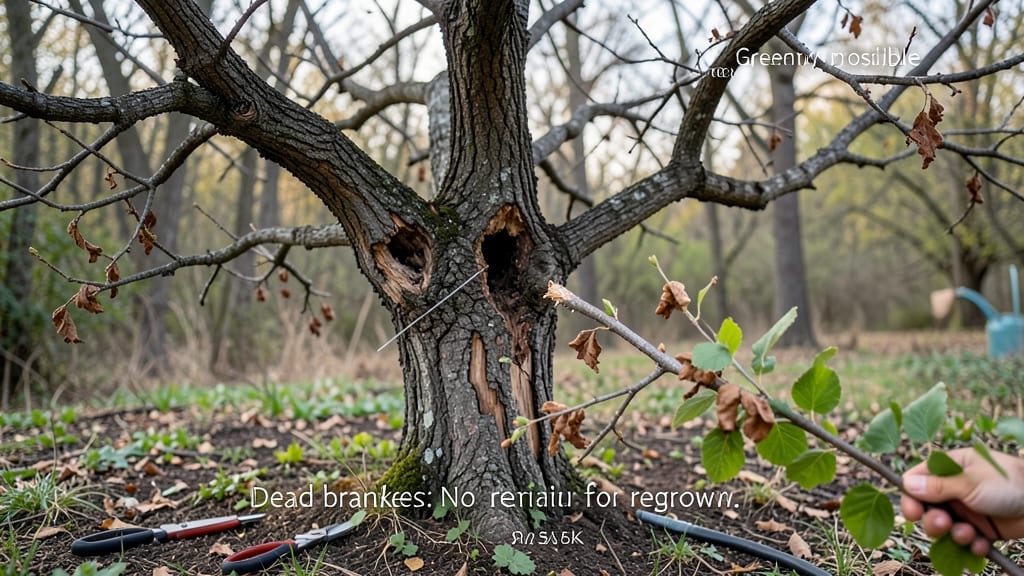
Dead tree branches can't come back to life once completely dried out or frozen solid, but some branches with partial damage might recover if the tree's core stays healthy and you provide proper care like pruning and consistent hydration.
Not all hope is lost when a branch looks lifeless.
The key lies in whether the branch's vascular system—its internal plumbing—has been completely severed or just temporarily compromised. 🌿 Even branches that appear dead in winter may still hold life, especially if the tree's root system remains strong and environmental conditions improve.
I've seen oak branches that looked hopeless in drought conditions sprout fresh leaves within weeks of proper watering and pruning.
What often trips people up is distinguishing between truly dead branches and those in dormancy. A simple scratch test can reveal the difference: if green layers appear under the bark, the branch might still have a chance.
For branches that are only partially damaged, strategic pruning to remove dead sections while preserving healthy growth points can trigger remarkable recovery. The secret is patience—some trees take months to show signs of revival.
💡 In This Article
- How to Identify If a Tree Branch Is Truly Dead or Dormant
- Step-by-Step Salvage Guide for Reviving Partially Damaged Tree Branches
How to identify if a tree branch is truly dead or dormant
The first step in determining if a branch can revive is understanding its biological state. A branch is truly dead when its vascular system—xylem and phloem—has been completely severed or dried out, cutting off all nutrient and water flow.
This often happens after prolonged drought, extreme cold (-10°F for most tree species), or physical damage like splitting. Look for brittle, snap-like bark when bent; healthy branches bend slightly before resisting.
Dormancy, however, is a different story. Many trees enter a semi-dormant state during winter, where branches appear lifeless but remain viable. Test for moisture by cutting a small section: if the wood is dry and hollow inside with no green tissue, it’s dead.
But if you see green layers under the bark (especially in conifers or broadleaf trees), the branch may still be alive. Sap flow is another clue—healthy branches ooze sap when cut in spring, while dead ones release nothing.
Seasonal factors dramatically affect revival chances. In late winter or early spring, branches that looked dead in winter may show signs of life as temperatures rise above 40°F. For example, maple branches often appear dead in January but sprout buds by March.
Conversely, branches damaged in summer heat (95°F+) have less time to recover before winter dormancy sets in.
Color and texture also reveal secrets. Healthy branches have smooth, slightly flexible bark with minor cracks, while dead branches turn grayish-brown and feel powdery when rubbed. Even the smell matters—healthy branches emit a faint woody aroma when scratched, whereas dead ones smell stale or musty.
Don’t overlook the leaf scars on twigs; fresh scars indicate recent growth.
Consider the tree’s overall health. If the root system is intact and the rest of the tree shows signs of vitality (new leaves, green foliage), branches have a better chance of revival. For instance, fruit trees like apple or cherry can regrow limbs if the trunk remains healthy.
But if the entire tree is stressed (yellowing leaves, wilting), even partially damaged branches may not recover.
Time of year matters most. Prune dead branches in late winter or early spring (just before buds swell) to maximize recovery potential. Summer pruning can stress the tree further, while winter cuts (below 32°F) risk freezing the fresh cuts.
The key is acting during the tree’s natural growth window—usually April to June in temperate climates.
Remember: patience is critical. Some branches take 6-12 months to show signs of revival, especially larger limbs. The moment you see tiny green buds or new bark growth, you’ll know your efforts were worth it. 🌱