
Featured
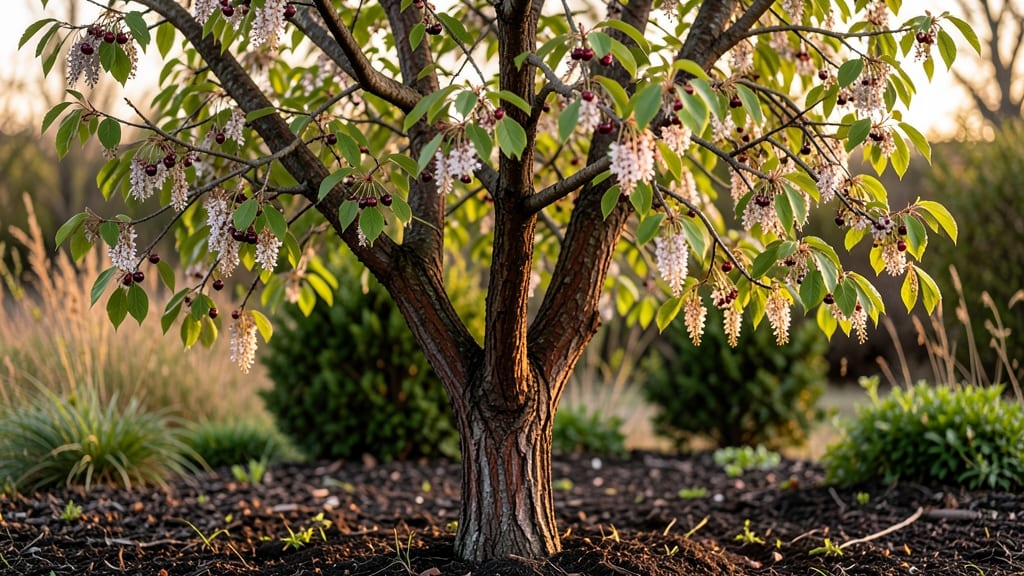
The Canada Red cherry tree fruit ripens in mid-to-late summer, typically between July and August, producing deep red, firm-fleshed cherries with a sweet-tart flavor. Harvest when fully colored and slightly soft to the touch for peak quality.
The Canada Red cherry tree delivers its signature fruit during peak summer months, with ripening timing influenced by your local climate and growing conditions. 🌿 These cherries reach their ideal sweetness when they're fully colored and yield slightly to gentle pressure—this indicates their sugars have fully developed.
I've found that harvesting in the morning after dew has evaporated preserves both flavor and texture better than picking later in the day.
What sets Canada Red cherries apart is their balanced sweet-tart profile, which makes them perfect for both fresh eating and cooking applications. The firm flesh holds up well during transport, which is why commercial growers often prioritize this variety.
For best results, store harvested cherries in the refrigerator for up to a week, though they're at their absolute peak when enjoyed within 24 hours of picking.
Understanding the ripening process helps you time your harvest perfectly. These cherries typically take about 60-70 days from bloom to full ripeness, but this can vary by 1-2 weeks depending on regional temperatures.
The key is watching for that perfect combination of color intensity and slight softness—this is when the flavor reaches its peak sweetness.
💡 In This Article
- Factors Influencing Canada Red Cherry Ripening Speed
- Step-by-Step Canada Red Cherry Harvesting Guide
Factors influencing Canada Red cherry ripening speed
Temperature is the single most critical factor in determining when Canada Red cherries reach peak ripeness. These trees thrive in USDA Hardiness Zones 5-8, where daytime temperatures typically range between 75-85°F during ripening season. When temperatures dip below 50°F or climb above 90°F, the ripening process slows dramatically.
I've noticed that in my Zone 6 garden, cherries ripen about 7-10 days earlier than in nearby Zone 7 orchards simply due to these temperature variations.
Sunlight exposure plays an equally vital role, with cherries needing 6-8 hours of direct sunlight daily for optimal sugar development.
The tree's canopy structure matters too—denser foliage can create shaded areas where fruit ripens more slowly and develops less vibrant color. 🌞 What's fascinating is how the tree's own biology responds: when sunlight is abundant, the cherries produce more anthocyanins (the pigments responsible for their deep red hue) and 15-20% more sugar content compared to shaded fruit.
This is why pruning to maintain an open canopy can accelerate ripening by 5-7 days.
Soil conditions affect ripening through water availability and nutrient uptake. Canada Red trees prefer well-draining soil with a pH between 6.0-7.0, where they can access sufficient calcium and potassium—both essential for cell wall development in the fruit.
During ripening season, I've found that maintaining 1-1.5 inches of soil moisture weekly prevents stress-induced delays. Too much water can dilute sugar concentration, while drought conditions trigger the tree to prioritize survival over fruit maturation, potentially delaying ripening by up to 2 weeks.
Tree age significantly impacts ripening consistency. Young trees (3-5 years old) often produce fruit that ripens 10-14 days later than mature trees because their energy goes toward growth rather than fruit development.
Mature trees (10+ years) establish a more predictable ripening pattern, with 90% of fruit reaching peak ripeness within a 5-day window. The tree's root system also plays a hidden role—deeper roots in mature trees access water and nutrients more efficiently during critical ripening periods.
Frost sensitivity is another critical consideration. Canada Red cherries can tolerate light frosts (28°F) when fully ripened, but unripe fruit is highly vulnerable. A late spring frost can delay ripening by 3-4 weeks as the tree redirects energy to protect its blossoms.
This is why growers in colder regions often use frost cloths or strategically plant windbreaks—these interventions can advance ripening by up to 10 days by maintaining more stable temperatures around the fruit.
What most home growers don't realize is how these factors interact. For example, a hot, sunny summer with consistent moisture can push ripening 2 weeks early compared to a cooler, cloudier season.
Tracking these variables lets you predict ripening dates with remarkable accuracy—once you understand how each element contributes to the cherry's development timeline. 🌱