
Pruning
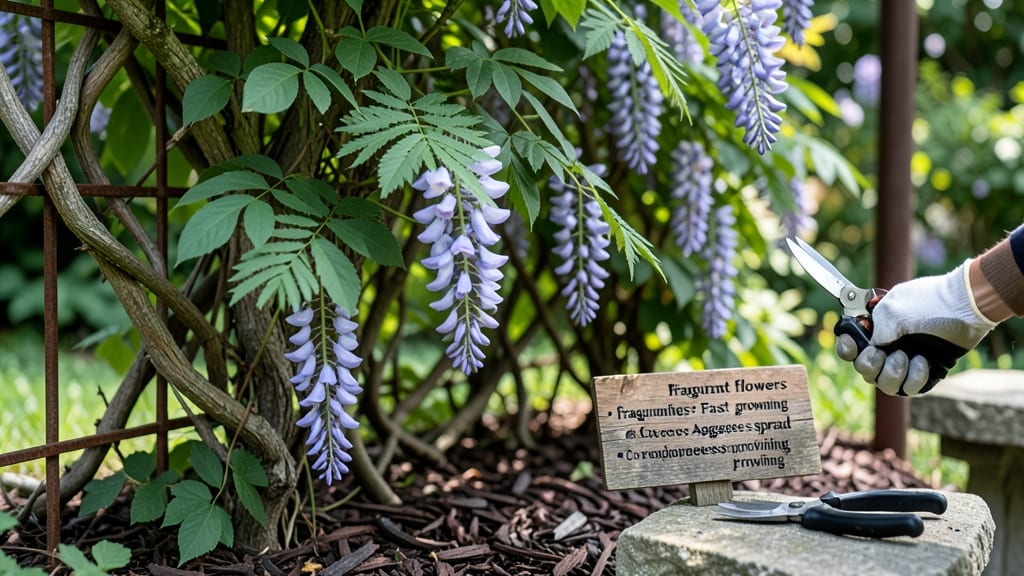
The blue Chinese wisteria tree offers pros and cons that every gardener should weigh before planting—its rapid growth is breathtaking, but so is its potential to overwhelm a yard if neglected. ✨ Blue Chinese wisteria grows 20+ feet per year, making it a gardener’s dream for quick shade and drama.
But before you plant, know this: its fragrant lavender blooms come with a price tag of pruning, space, and patience. I’ve seen it transform patios into romantic arbors, then watched it strangle nearby plants when left unchecked.
The pros? Fast growth, drought tolerance once established, and those iconic cascading flowers that perfume the air in spring. It thrives in zones 5-9, handles heat and humidity, and even fixes nitrogen in the soil—free fertilizer for your garden.
But the cons? Aggressive vines need strong support, regular pruning to control sprawl, and can become invasive if not contained.
You’ll end up with a showstopper that attracts hummingbirds and fills your yard with fragrance—but only if you commit to the upkeep. The vines are woodier than other wisterias, making them harder to train, and the seeds are toxic if ingested.
Still, for gardeners with space and time, the payoff is unmatched seasonal interest from spring blooms to autumn foliage.
Perfect for large gardens with sturdy trellises or arbors, but skip it for small spaces or if you dislike maintenance. Here’s how to decide if it’s right for your yard—and how to tame it if you do plant one.
The first product explained
Looking for a showstopper in your garden? Meet the Blue Chinese Wisteria (Wisteria sinensis 'Amethyst Falls')—a fast-growing, vibrant climber that transforms any outdoor space into a dreamy, fragrant paradise! 🌸✨ This stunning variety is a favorite among gardeners for its heavenly blue-purple blooms and lush, cascading foliage.
But is it the right fit for your yard? Let’s dive into the key specs, features, and details that make this wisteria a must-have (or a maybe) for your landscaping plans.
🌿 Key Specifications & Features
The Blue Chinese Wisteria is a deciduous woody vine that’s as impressive as it is practical. Here’s what sets it apart:
- Growth Rate: Rapid! Expect 3–5 feet of growth per year under ideal conditions.
- Mature Size: Can climb 30–50 feet (or more!) when supported by a sturdy trellis, fence, or arbor.
- Bloom Time: Late spring to early summer, with clusters of 12–20 inch-long flowers in a breathtaking lavender-blue hue.
- Foliage: Deep green, compound leaves that turn golden-yellow in fall, adding seasonal interest.
- Fragrance: Heavenly! Sweet, intoxicating scent that fills the air during bloom season.
- Hardiness Zone: USDA Zones 5–9, making it versatile for most climates.
- Sunlight Needs: Full sun (6+ hours daily) for optimal blooming and growth.
- Soil Preference: Well-draining, slightly acidic to neutral soil. Tolerates clay but thrives in loamy soil.
🎯 Who Is This Wisteria For?
The Blue Chinese Wisteria is a dream pick for:
- 🌆 Urban gardeners with trellises, pergolas, or balcony railings.
- 🏡 Homeowners looking to add vertical interest and shade to patios or decks.
- 🌸 Romantic landscapers who love fragrant, showy blooms for weddings or outdoor events.
- 🌳 Nature lovers who want to attract hummingbirds and butterflies.
- 💡 Pruning enthusiasts (since it requires regular trimming to manage growth and encourage blooms!).
💰 Price Point & Availability
Ready to bring home this beauty? Here’s what you can expect to invest:
| Product Form | Size | Price Range (USD) | Where to Buy |
|---|---|---|---|
| Container-Grown Plant | 1–3 gallons | $40–$80 | Local nurseries, Home Depot, Lowe’s, or Etsy |
| Bare-Root Plant | Dormant season | $30–$60 | Specialty plant sellers, Fast-Growing-Trees.com, or garden centers |
| Established Vine (5+ years) | Varies | $150–$300+ | Landscape yards or private sellers (check Facebook Marketplace or Craigslist) |
Pro Tip: 💡 Buy from reputable sellers to avoid invasive varieties (like Japanese wisteria) that can become aggressive. Always ask for certified disease-free plants!
The second product explained
If you're looking for a low-maintenance yet high-impact alternative to the classic Chinese wisteria, the Wisteria sinensis 'Amethyst Falls' (often called Blue Chinese Wisteria) is a standout choice.
This stunning cultivar offers vibrant purple-blue blooms and a slightly more manageable growth habit compared to traditional varieties. Here’s why it’s worth considering:
🌿 Key Specs & Features
- Growth Habit: Vigorous climber (20–30 ft tall, 10–15 ft wide) with semi-deciduous foliage—great for trellises, pergolas, or arbors.
- Bloom Time: Late spring to early summer (earlier than standard wisteria), with fragrant, cascading clusters of blue-purple flowers.
- Hardiness: USDA Zones 5–9, making it adaptable to most U.S. climates.
- Soil Preferences: Thrives in well-draining, slightly acidic soil (pH 6.0–7.0) but tolerates partial shade better than full sun.
- Pruning Needs: Moderate maintenance—requires annual pruning to control growth and encourage blooms (unlike invasive varieties, it’s less aggressive).
🎯 Target Users
This wisteria is perfect for:
- 🏡 Homeowners seeking a privacy screen, shade structure, or vertical garden without the high upkeep of roses or ivy.
- 🌸 Gardeners who love color but want softer, cooler blooms (purple-blue instead of traditional lavender).
- 🐝 Pollinator-friendly landscapers—its fragrance attracts bees and butterflies!
- 🏡 Small-space gardeners (with proper pruning, it can be kept compact compared to wild wisteria).
💰 Price Point & Availability
The Blue Chinese Wisteria typically costs $40–$80 per plant (1–3 gallon size) from specialty nurseries or online retailers like Fast-Growing-Trees.com or Monrovia. Larger specimens (15+ gallons) may run $150–$300.
Pro Tip: 💡 Buy from reputable sellers—avoid "wild" or unrooted cuttings, as they may struggle to establish.
⚠️ Considerations Before Buying
While this wisteria is less invasive than its cousins, it still requires:
- 🔨 Regular pruning (late winter/early spring) to prevent overgrowth.
- 🌱 Patience—it may take 3–5 years to fully bloom.
- ⚠️ Toxic seeds/pods (like all wisteria)—keep away from pets/kids.
Head-to-head comparison
Ready to dive into the blue Chinese wisteria tree? Whether you're a seasoned gardener or a newbie with a green thumb, understanding its strengths and trade-offs will help you decide if this stunning climber is right for your space.
Below, we break down the pros and cons in a clear, side-by-side comparison to help you weigh your options like a pro. 🌿💡
🌟 Growth Performance
The blue Chinese wisteria (Wisteria sinensis) is famous for its rapid growth and vigorous climbing habits. Here’s how it stacks up:
| Pros | Cons |
|---|---|
|
|
🌸 Blooms and Aesthetics
If you’re dreaming of vibrant blue-purple flowers, this wisteria delivers—but there are a few caveats to consider:
| Pros | Cons |
|---|---|
|
|
💰 Cost and Maintenance
Budget-friendly? Not always. Here’s the financial and labor breakdown:
| Pros | Cons |
|---|---|
|
|
🏡 Durability and Longevity
How long will your blue wisteria last? Let’s talk resilience and lifespan:
| Pros | Cons |
|---|---|
|
|
🌱 Ease of Planting and Care
New to gardening? Here’s what you need to know about getting started:
| Pros | Cons |
|---|---|
|
|
💡 Pro Tip: If you’re not up for the pruning commitment, consider planting your wisteria near a permanent structure (like a pergola) where its vines can be trained
Which one should you choose?
So, is the blue Chinese wisteria tree the right choice for you? The answer depends on your priorities—whether you're dreaming of a dramatic, fragrant garden showstopper or need a low-maintenance, fast-growing climber. Let’s break it down by scenario so you can make the best decision with confidence! 🌿✨
✅ Best for Dramatic, Fragrant Gardens
If you love show-stopping blooms and don’t mind a little extra care, this wisteria is a fantastic pick. Its vibrant blue-purple flowers (when properly cared for) and intoxicating scent make it a standout feature in any landscape. Perfect for:
- Gardeners who enjoy pruning and training vines for structure.
- Those with space for a large, climbing plant (15–25+ feet).
- People who want a seasonal highlight (spring blooms) with year-round interest.
⚠️ Consider Alternatives If...
If you’re looking for a low-maintenance, no-fuss plant, the blue Chinese wisteria might not be the best fit. Here’s when to think twice:
- You lack time for pruning—this vine needs regular trimming to stay manageable and healthy.
- Your climate is extreme (too hot, too cold, or humid)—it thrives in USDA Zones 5–9.
- You’re wary of invasive tendencies—while not as aggressive as Japanese wisteria, it can spread if unchecked.
- You want year-round blooms—this plant puts on a spring-only show.
🌱 Pro Tip for Success
If you’re sold on the blue Chinese wisteria, start small!
Plant it near a trellis, arbor, or sturdy fence to control its growth. Prune aggressively in late winter to encourage bushier blooms and prevent overgrowth. 💡 Bonus: Pair it with complementary climbers like clematis or roses for a layered, lush effect!
Ready to transform your garden? Go for it—just be prepared to put in the work for those stunning, fragrant rewards. If you’re looking for something easier, consider non-invasive alternatives like coral honeysuckle or climbing roses.