
Watering
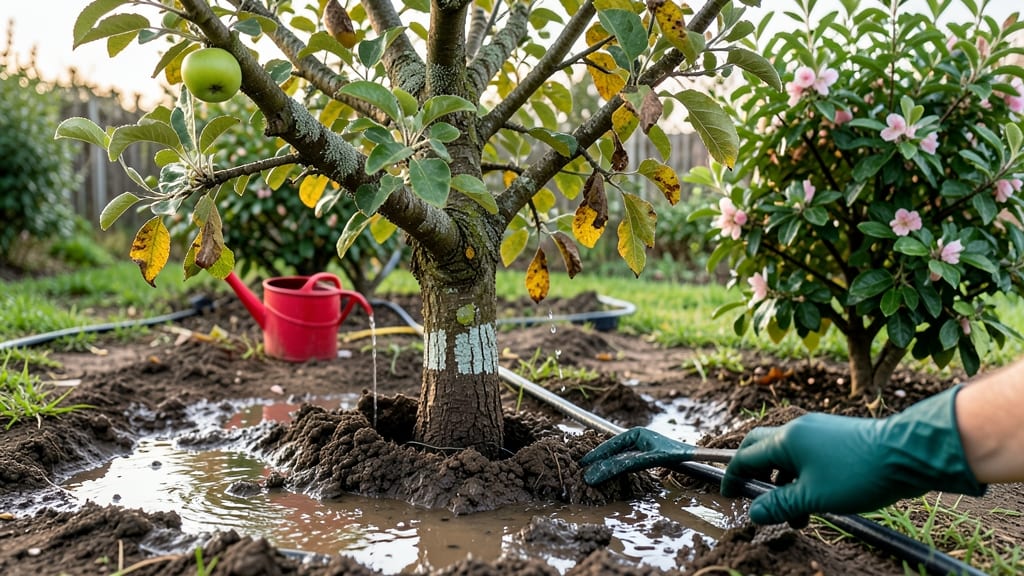
Your apple tree’s yellow leaves and soggy soil scream one problem: overwatering. 🌱 I’ve nursed back more waterlogged apple trees than I’d like to admit, and the fix starts with understanding why roots drown while leaves beg for air.
The moment you see wilting despite damp soil, you’re in the danger zone—root rot and poor fruit development follow fast.
First, check the soil: it should feel like a damp sponge, not a muddy mess. If your fingers sink past the first inch, you’re overdoing it. Apple trees need 1–1.5 inches of water per week, but that includes rain—so adjust your hose accordingly.
Improving drainage with organic matter (like compost) or a raised bed can save a struggling tree, and mulch helps regulate moisture without suffocating roots.
Reviving an overwatered tree takes patience, but pruning back dead branches and aerating compacted soil gives it a fighting chance. Within 4–6 weeks, you’ll see new green growth as roots recover.
The key? Water deeply but infrequently—letting the top 2–3 inches dry out between sessions keeps roots healthy and fruit sweet.
Prevention is simpler than rescue: test your soil’s drainage before planting, and choose a spot with natural slope or amend heavy clay with sand. A well-drained site means fewer crises and more apples—because nobody wants soggy soil or soggy fruit.
The Hidden Triggers Behind Soggy Roots
Overwatering an apple tree isn’t just about pouring too much water—it’s a chain reaction of environmental, soil, and even human factors that create the perfect storm for soggy roots and stressed trees. Understanding these triggers helps you take precise action to fix the problem before it’s too late.
Let’s break down the science behind why your apple tree might be drowning in its own moisture.
Apple trees thrive in well-draining soil, but when the ground holds water like a sponge, roots suffocate from a lack of oxygen. Here’s why this happens:
- Clay-heavy soil: Clay particles pack tightly, trapping water and blocking airflow to roots. Even after rain or watering, clay soil stays saturated for days, creating anaerobic (oxygen-free) conditions where harmful bacteria thrive.
- Compacted soil: Foot traffic, machinery, or heavy rainfall can compress soil, reducing pore space for water to drain. Compacted layers act like a barrier, forcing water to pool around roots instead of seeping deeper.
- Low organic matter: Soil rich in decomposed plant material (like compost) improves drainage by creating air pockets. If your soil lacks organic matter, water lingers, and roots struggle to absorb nutrients.
Actionable fix: Test your soil’s drainage by digging a 12-inch hole, filling it with water, and timing how long it takes to drain. If it takes more than 6 hours, amend the soil with coarse sand, perlite, or compost to loosen it up.
Even the most well-intentioned gardeners can fall into the trap of overwatering. Here’s how it sneaks up on you:
- Watering on a schedule: Apple trees need consistent moisture but not constant soaking. Watering every day (or even every other day) keeps the soil perpetually damp, preventing roots from drying out between sessions—this is a red flag for overwatering.
- Ignoring weather conditions: Rainfall can already saturate the soil, yet many gardeners water as usual. A 1-inch rule applies: Only water if the top 1–2 inches of soil are dry (stick your finger in to check!).
- Using the wrong tools: Drip irrigation or soaker hoses can deliver water slowly, but if left running too long, they turn the soil into a swamp. Sprinklers, while convenient, often wet leaves (encouraging disease) and oversaturate the root zone.
Pro tip: 💡 Morning watering is ideal—it gives excess moisture time to evaporate during the day, reducing fungal risks and root stress.
If your apple tree is planted in a low-lying area or near a natural water source, gravity and groundwater can conspire against it:
- Rising water tables: In spring or after heavy rains, groundwater can seep up from below, drowning roots even if you’re not watering. This is common in low-lying gardens or flood-prone areas.
- Flat or depressed planting sites: Water pools in flat terrain because there’s no slope to carry it away. Even a 1–2% grade (1–2 inches of drop over 10 feet) can improve drainage dramatically.
- Improper planting depth: Burying the graft union (the swollen bump on the trunk) too deep can create a “water trap” where roots sit in a pocket of moisture. Always plant so the graft is above soil level.
Actionable fix: If your yard is prone to waterlogging, consider raising the planting mound or installing a French drain (a perforated pipe surrounded by gravel) to redirect excess water away from roots.
Mother Nature plays a role too—humidity, rain, and temperature swings can turn your watering routine into a disaster:
- High humidity slows evaporation: In muggy conditions, water clings to soil longer, delaying drainage. This is why overwatering symptoms (like yellow leaves) often worsen in summer or rainy seasons.
- Cold, wet soil: Apple trees planted in waterlogged soil during cool weather struggle to absorb nutrients because cold slows root activity. Roots need aerated, slightly moist (not soggy) soil to function optimally.
- Frequent, heavy rains: A single storm can deliver 1–2 inches of water in hours, overwhelming even well-draining soil. If your tree is already thirsty, the shock can lead to root rot within days.
Pro tip: 🌡️ Monitor soil temperature—roots thrive in soil between 50–65°F. If it’s colder, reduce watering and mulch heavily to insulate roots.
Now that you know the science behind soggy roots, the next step is identifying symptoms and correcting the damage. But first—how many of these triggers apply to your apple tree’s environment?
Fixing Overwatered Apple Trees
Overwatering your apple tree can feel like a slow-motion disaster—yellowing leaves, mushy roots, and a tree that just won’t bounce back. But the good news? With the right steps, you can nurse it back to health and keep future soggy soil at bay.
Below, we’ll break down cause-specific fixes, along with prevention tips to ensure your tree thrives without drowning.
If your apple tree’s leaves are turning yellow or dropping, overwatering is likely the culprit. Here’s how to correct it:
🔥 Step 1: Stop Watering Immediately
- Pause all irrigation (including rainwater if the soil is already saturated).
- Let the top 6–12 inches of soil dry out before watering again. Stick your finger in—if it’s damp past 2 inches, wait.
🍳 Step 2: Improve Soil Drainage Poor drainage traps water at the roots.
Fix it with these low-cost hacks: - Add organic matter: Mix in compost or aged manure (1–2 inches) around the base to loosen compacted soil. - Raise the tree’s root zone: If planting in heavy clay, mound soil slightly higher around the trunk to encourage runoff. - Install drainage tiles (if severe): Bury perforated pipes near the roots to redirect excess water.
👨🍳 Step 3: Prune Damaged Roots (If Needed)
If roots are black, mushy, or smelly, they’re rotting. Act fast: 1. Dig carefully around the outer roots (use a trowel, not a shovel).
- Trim away soft, discolored roots with sterilized pruners (rubbing alcohol works).
- Dust cuts with cinnamon or sulfur to prevent fungal infection.
⚠️ Pro Tip: Avoid pruning healthy roots—only remove the obviously diseased ones.
If your apple tree sits in a low-lying area or clay-heavy soil, water pools around the roots. Here’s how to drain the danger:
🔪 Step 4: Create a French Drain (DIY Style)
- Dig a 6-inch-wide trench 1–2 feet away from the tree, sloping away from it.
- Fill with gravel or crushed stone, then top with landscape fabric.
- Cover with soil and plant fast-draining ground cover (like clover) to absorb excess moisture.
⏰ Step 5: Water Deeply but Infrequently
Apple trees hate shallow, frequent watering. Switch to:
- Deep watering (1–2 inches per week)—soak the soil 6–12 inches deep, then let it dry.
- Morning watering only: Wet leaves at night invite fungal diseases (like apple scab).
💡 Prevention Hack: Use a moisture meter ($10–$20) to track soil dampness—aim for 40–60% moisture in the root zone.
Once your tree recovers, lock in healthy habits to avoid future overwatering:
| Problem | Solution | How Often |
|---|---|---|
| Heavy clay soil | Add sand/compost mix to planting hole | Every 2–3 years |
| Poor mulch layer | Use 3-inch mulch ring (wood chips) | Refresh annually |
| Automatic sprinklers | Switch to drip irrigation | Adjust seasonally |
| Rainy season | Cover with shade cloth if needed | During prolonged downpours |
✨ Bonus Tip: Mulch correctly—keep mulch 3 inches deep and 6 inches away from the trunk to prevent rot.
After fixing drainage, watch for these good signs:
- New green leaves (within 2–4 weeks).
- Firm, white roots when checked (healthy!).
- No more yellowing after deep watering.
If your tree doesn’t improve in 6 weeks, consult a local arborist—root rot or fungal issues may need professional treatment.
Remember: Apple trees are tough—they’ll bounce back if you stop the waterlogging and give roots a chance to breathe. With these fixes, your tree will be back to bearing fruit in no time! 🍏🌿
Frequently asked questions about apple tree overwatering
How can I tell if my apple tree is overwatered vs. underwatered?
Check the soil first—overwatered trees have soggy, muddy soil that stays damp for days, while underwatered trees show dry, cracked soil. Look for yellow leaves (overwatered) or crispy brown edges (underwatered). Overwatered roots may smell rotten, while healthy roots are firm and white.
Can overwatering kill an apple tree?
Yes, if left unchecked, overwatering causes root rot, which can kill your tree within weeks. The roots suffocate from lack of oxygen, preventing nutrient absorption. Act fast by improving drainage and stopping watering immediately—trees can recover if caught early!
What’s the best way to fix compacted soil around my apple tree?
Loosen compacted soil by mixing in compost or coarse sand (1–2 inches deep) around the root zone. Use a garden fork to aerate the top 6–12 inches of soil, then mulch with wood chips to prevent future compaction. Avoid heavy foot traffic near the tree.
Will mulch help with overwatering?
Yes, but only if applied correctly! Use 3 inches of organic mulch (like wood chips) and keep it 6 inches away from the trunk. Mulch regulates moisture by slowing evaporation in hot weather and preventing soil from drying too fast. Just avoid piling it against the trunk.
How often should I water my apple tree after fixing overwatering?
Water deeply 1–2 times per week (or less in rainy seasons) to soak the soil 6–12 inches deep. Let the top 2–3 inches dry out between waterings. Use a moisture meter to track soil dampness—aim for 40–60% moisture in the root zone.