
Watering
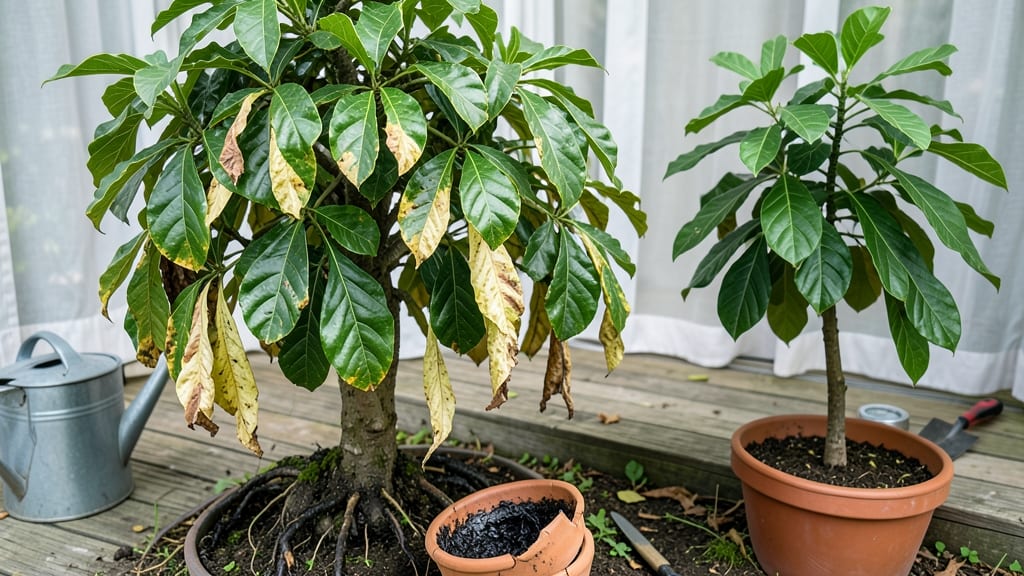
What does an overwatered avocado tree look like? If your avocado tree’s yellowing leaves and droopy branches mean it’s drowning in water—not thirsty. 🌱 I’ve seen this mistake ruin perfectly healthy trees in just weeks, and the signs are harder to spot than you’d think. The roots rot first, turning mushy and black, while the soil stays soggy even days after watering.
Start by sticking your finger 2-3 inches deep into the soil—if it’s damp, that’s your problem. Look for leaves that yellow at the edges first, then spread inward, or stems that wilt despite the pot feeling heavy.
The worst part? These trees often look fine until it’s too late. A simple moisture check could save your plant.
Here’s the good news: fixing it is easier than you’d expect. Drain excess water, repot if needed, and hold off on watering until the top 1-2 inches of soil feel dry.
Within 2-3 weeks, you’ll see fresh green growth if the roots aren’t completely dead. Patience is key—overwatered trees bounce back faster than you’d think.
This works for both potted avocados and young trees in the ground. The same rules apply whether you’re dealing with a 5-gallon container or a backyard sapling. Let’s turn that sad, soggy tree back into a thriving one.
Understanding Root Causes
Overwatering an avocado tree isn’t just a gardening mistake—it’s a silent stressor that disrupts the plant’s delicate balance. Avocados thrive in well-draining soil, but when waterlogged, their roots suffocate, leading to a cascade of visible symptoms.
Let’s break down the real reasons this happens, so you can prevent it before it’s too late.
Avocado trees hate soggy feet. If your soil or container lacks proper drainage, excess water pools around the roots, cutting off oxygen. Here’s why this matters:
- Root asphyxiation: Roots need oxygen to respire (yes, they "breathe"!). Water displaces air in soil pores, forcing roots to switch to anaerobic respiration—producing toxic ethanol and acetic acid as byproducts. 💀
- Fungal feast: Stagnant water creates the perfect environment for Phytophthora (a water mold) and Pythium, which rot roots and block nutrient uptake.
- Soil compaction: Clay-heavy or poorly amended soil stays waterlogged longer, trapping moisture against roots.
Actionable fix: Amend soil with perlite, pumice, or coarse sand (50% organic matter, 50% inorganic grit). For containers, use pots with drainage holes and elevate them on saucers.
Even well-draining soil can drown roots if watered too frequently or deeply. Avocados are drought-tolerant once established—here’s how mistakes happen:
- Ignoring the "soak-and-dry" cycle: Avocados prefer the top 6–12 inches of soil to dry out between waterings. Overwatering keeps the root zone perpetually wet.
- Automatic irrigation oversights: Drip systems or timers may run longer than needed, especially in humid climates where evaporation slows.
- Container quirks: Pots dry out faster at the edges but stay wet in the center. Poking a finger 2–3 inches deep reveals the truth—if it’s damp, wait.
Pro tip: Use a moisture meter or the "squeeze test" (grab a handful of soil—if it clumps, it’s too wet). Water only when the top 2 inches are bone-dry. 🌡️
Avocados in pots are especially vulnerable because their roots hit barriers quickly. Here’s how confinement causes overwatering:
- Limited evaporation: Small pots retain moisture longer, and roots can’t spread to seek drier soil layers.
- Root circling: When roots grow in tight circles, they compete for oxygen and water, leading to waterlogging in the center.
- No escape route: Without upward/downward growth space, roots suffocate faster in wet conditions.
Solution: Repot every 2–3 years into a container 2–4 inches larger in diameter. Use a fast-draining mix (e.g., 60% coco coir, 20% perlite, 20% worm castings).
Your local climate plays a huge role in how quickly soil dries. High humidity or frequent rain can turn a "normal" watering schedule into a disaster:
- Humidity slows evaporation: In tropical or coastal areas, soil stays damp for days longer than in arid regions.
- Rainfall overload: Avocados in ground soil may get too much water from natural rainfall, especially if planted in low-lying areas.
- Wind vs. no wind: Wind increases evaporation, while sheltered spots stay wetter.
Adapt your routine:
- In humid zones: Water only when the top 3 inches are dry.
- After rain: Check soil moisture 48 hours later—don’t assume it’s dry.
- Use mulch (straw or wood chips) to regulate soil temperature and moisture.
Revive Your Avocado Tree Now
Overwatering can feel like a slow-motion disaster for your avocado tree, but the good news is that with the right steps, you can nurse it back to health—even if it’s looking a little worse for wear.
The key is acting fast, diagnosing the exact issues, and adjusting your care routine. Below, we’ll break down practical fixes for the most common overwatering symptoms, plus prevention tips to keep your tree thriving long-term.
If your avocado tree’s leaves are turning yellow, wilting, or falling off, it’s a clear sign of excess moisture stress. Here’s how to turn things around:
🔥 Step 1: Let the Soil Dry Out
- Stop watering immediately for at least 5–7 days to allow the roots to recover.
- Check soil moisture by sticking your finger 2 inches deep—if it’s damp, wait longer.
- Use a moisture meter for accuracy, especially if you’re unsure how dry the soil really is.
🍳 Step 2: Improve Drainage
Overwatering often means poor drainage. Fix it with these tweaks: - Repot if needed: If your tree is in a container, choose a pot with drainage holes (or drill them yourself).
Terracotta pots help wick away excess moisture. - Add perlite or sand: Mix in 20–30% perlite, pumice, or coarse sand to improve aeration.
Avoid compacting the soil when repotting. - Raise the pot: Place it on feet or a saucer with pebbles to prevent water from pooling at the bottom.
👨🍳 Step 3: Prune Damaged Foliage
- Trim yellow or brown leaves with sterilized pruners to redirect energy to healthy growth.
- Avoid over-pruning—remove only what’s necessary to reduce stress.
⏰ Step 4: Adjust Your Watering Schedule
Once the soil is dry, water deeply but infrequently:
- Water only when the top 2–3 inches of soil are bone-dry (test with your finger).
- Water in the morning to allow excess moisture to evaporate.
- Use the “soak-and-dry” method: Water thoroughly until it drains from the bottom, then wait until the soil is dry before repeating.
If your avocado tree has soft, black, or foul-smelling roots, root rot is likely setting in. This is serious but can still be managed:
🔪 Step 1: Remove the Tree (Temporarily)
- Gently dig up the tree (if in a pot) or carefully expose the roots (if in-ground).
- Trim away mushy, black roots with clean shears—only keep firm, white or light-brown roots.
- Disinfect the pot or soil with a 10% hydrogen peroxide solution (1 part peroxide to 9 parts water) to kill fungus.
🌡️ Step 2: Repot in Fresh, Well-Draining Soil
- Use a cactus/succulent mix or amend regular potting soil with perlite and orchid bark (50/50 ratio).
- Add a fungicide like mycorrhizal powder or copper fungicide to prevent reinfection.
- Let the roots air-dry for 1–2 hours before replanting to reduce moisture exposure.
🎯 Step 3: Monitor and Recover
- Keep the tree in bright, indirect light (avoid direct sun until it recovers).
- Water sparingly—only when the soil is completely dry.
- Watch for new growth in 2–4 weeks.
If no improvement, root rot may be too severe, and you may need to propagate from a healthy cutting.
Once your avocado tree is back on track, prevent future overwatering with these habits:
🔥 Choose the Right Pot
- Containers must have drainage holes—no exceptions!
- Avoid saucers that trap water—opt for elevated stands or drip trays with holes.
🌡️ Master the Watering Test
- Stick your finger in the soil—if it’s damp past 2 inches, wait.
- Weigh your pot—if it’s consistently heavy, you’re overwatering.
✨ Optimize Your Growing Conditions
- Avocados hate soggy feet—ensure good airflow around the tree.
- Mulch lightly (1–2 inches of bark or straw) to retain just enough moisture without suffocating roots.
- Fertilize sparingly—over-fertilizing encourages weak growth that’s more prone to rot.
🎯 Know Your Avocado’s Needs
- Mature trees need less frequent watering than young ones.
- Adjust for seasons—water less in winter and more in summer (but still let soil dry between waterings).
By following these steps, your avocado tree should bounce back within 4–8 weeks, with new green leaves and firm, healthy roots. Stay patient, and soon you’ll be enjoying plump, delicious avocados—not just surviving a watering mishap! 🥑✨
Frequently asked questions
What are the first signs of overwatering in an avocado tree?
Look for yellowing leaves starting at the edges, followed by drooping branches despite wet soil. The leaves may also develop brown or black spots. These symptoms appear when roots can't get enough oxygen due to excess moisture.
How can I tell if my avocado tree has root rot from overwatering?
Check the roots - healthy roots are firm and light-colored, while rotten roots are mushy, black, and smell foul. If you see these signs, act fast by trimming affected roots and repotting in fresh, well-draining soil. Root rot spreads quickly, so don't wait!
Why does my avocado tree's soil stay wet even after days without watering?
This usually means poor drainage or compacted soil. Avocado trees need soil that dries out between waterings. Try mixing in perlite or coarse sand (20-30%) to improve aeration, or repot into a container with drainage holes. Clay pots help wick away excess moisture.
Can I save my avocado tree if it's completely wilted from overwatering?
Yes, but you'll need to act quickly. First, stop watering and let the soil dry completely. Then repot in fresh, well-draining mix. If the roots are still salvageable (firm and white), your tree can recover in 2-4 weeks. If roots are completely mushy, you may need to propagate from healthy cuttings.
How often should I water my avocado tree to prevent overwatering?
Water only when the top 2-3 inches of soil are completely dry. For potted trees, this might be every 7-10 days in summer and less frequently in winter. Always use the "soak-and-dry" method - water thoroughly until it drains, then wait until dry before repeating.