
Pruning
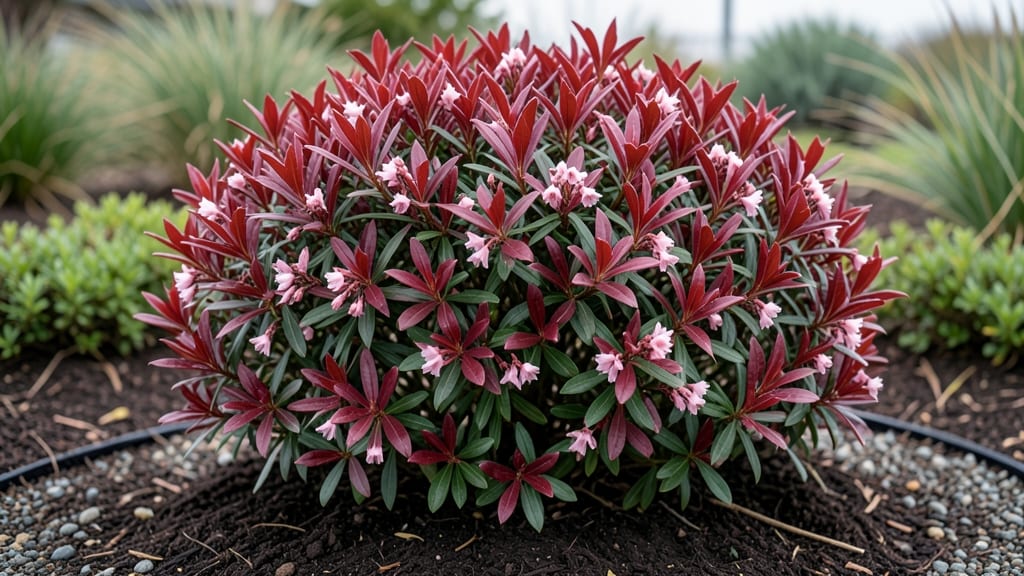
The New Zealand tea tree 'Ruby Glow' transforms any garden with its deep burgundy foliage that stays vibrant all year. 🌿 I’ve pruned mine for three seasons now, and the secret to keeping it lush isn’t complicated—just timing and a sharp pair of shears.
This compact shrub thrives in NZ’s mild climate, but even in colder regions, it rewards patience with striking color and delicate white flowers.
Start by planting in well-draining soil with morning sun and afternoon shade—too much direct heat fades those rich hues. Water deeply once a week unless it rains, but avoid soggy roots.
The real magic happens in late winter or early spring when you prune to shape it: cut back about a third of the oldest growth to encourage fresh, new shoots. These will carry the boldest color and keep the shrub dense.
By summer, your 'Ruby Glow' will be a standout with glossy leaves and clusters of tiny white blooms that hummingbirds adore. The key is consistent light pruning throughout the year—just snip back any leggy stems to maintain that compact, bushy form.
Even in winter, the foliage stays striking, making it a low-maintenance star for borders or containers.
Watch for scale insects, which love tea trees, but a simple spray of soapy water usually clears them up. In NZ’s coastal areas, it’s nearly foolproof, but if you’re in a drier climate, mulch well to retain moisture.
The payoff? A shrub that looks like it belongs in a botanical garden, not just your backyard.
📚 In This Guide
- What you need
- Instructions
- Tips and common mistakes
- Wrapping up and next steps
What you need
- ● Pruning shears: Bypass pruners (sharp, clean, and sterilized with rubbing alcohol to prevent disease). Pro tip: 💡 Invest in felco F-2 or bypass pruners for precision cuts.
- ● Loppers: For thicker branches (up to 2" diameter). Example: Felco 203 or Fiskars X27.
- ● Gloves: Heavy-duty, gardening gloves (cut-resistant for thorns). Recommendation: Wolverine Waffle Grip.
- ● Disinfectant: 70% isopropyl alcohol or hydrogen peroxide (3%) for sterilizing tools.
- ● Pruning sealant: Tree wound dressing (e.g., Tanglefoot Tree Wound Pruning Sealer) for larger cuts.
- ● Bucket or bag: For collecting clippings (preferably biodegradable or labeled for yard waste).
- ● Ladder or step stool: If your tea tree is taller than 6 feet (ensure it’s stable and non-slip).
- ● Hand saw: For stubborn, thick branches (e.g., Fiskars X7).
- ● Pruning saw: Compact, curved blade for precision cuts.
- ● Labeling tags: If you’re propagating cuttings (use waterproof labels).
- ● Safety glasses: Protect your eyes from debris (especially when using a saw).
- ● Notebook & pen: To jot down pruning notes or track growth patterns.
Step-by-Step guide to pruning new zealand tea tree 'Ruby Glow'
Here's how I keep my 'Ruby Glow' tea tree looking vibrant all year—no guesswork, just proven techniques.
✂️ Step 1: Time Your First Prune for Spring Awakening
Prune your 'Ruby Glow' tea tree in early spring, just as new growth begins to emerge. This is when the plant is waking up from dormancy and ready to respond well to shaping. Look for fresh, bright green buds along the stems—these signal it's time to act. Avoid pruning in fall or winter, as the plant needs its foliage to protect it from cold.
I like to prune on a mild, dry day when temperatures are between 50-70°F. Early morning works best, as it gives the plant time to recover before evening. If you're unsure about timing, just check for those new buds—your plant will tell you when it's ready.
✂️ Step 2: Shape for Airflow and Light Penetration
Start by removing any dead, diseased, or crossing branches first. These compete for energy and can block airflow, which invites pests. Cut back to the nearest healthy growth point or outward-facing bud. For 'Ruby Glow', I focus on maintaining a rounded, bushy shape—this highlights its stunning foliage and keeps it compact.
Next, thin out the center by removing about one-third of the oldest, innermost branches. This ensures light reaches all parts of the plant, preventing leggy growth. Use clean, sharp pruners to make cuts at a 45-degree angle just above a bud or leaf node. Never leave stubs—this encourages new growth in the wrong place.
✂️ Step 3: Lightly Trim for Year-Round Color
After shaping, do a light trim to encourage dense, vibrant foliage. Cut back the tips of branches by about one-third to stimulate bushier growth. Focus on the outer edges first—this keeps the plant full and prevents it from looking sparse. For 'Ruby Glow', I avoid heavy pruning, as its rich burgundy foliage is its standout feature.
Watch for new growth emerging from the trimmed areas. Within 4-6 weeks, you'll see fresh, bright green shoots—this is your reward for pruning at the right time. If you notice any leggy growth later in the season, a quick trim in early summer will keep it in check without sacrificing its stunning color.
✂️ Step 4: Maintain Through the Growing Season
Once your 'Ruby Glow' is shaped, it needs minimal upkeep. Throughout the growing season, remove any spent or yellowing leaves as they appear. These can harbor pests and detract from the plant's vibrant look. A quick once-over every 2-3 weeks keeps it tidy and encourages new growth.
If your tea tree starts to look unruly by late summer, do a final light trim to tidy it up before fall. Avoid heavy pruning now—you want the plant to enter dormancy with enough foliage to protect it over winter. A little maintenance now means a lush, colorful display next spring.
⏰ Step 5: Prepare for Winter Dormancy
In late fall, give your 'Ruby Glow' one last check. Remove any dead or damaged branches that might have appeared over the season. While you don’t need to prune heavily, a light cleanup keeps the plant healthy and ready for winter. Avoid pruning in fall or winter, as the plant is less able to heal and may struggle to recover.
Once pruned, give your tea tree a light layer of mulch (if grown in the ground) to protect its roots from freezing temperatures. If you're growing it in a container, move it to a sheltered spot or wrap the pot in burlap for extra protection. With proper care, your 'Ruby Glow' will emerge next spring fuller and more vibrant than ever.
Tips & tricks for pruning new zealand tea tree 'Ruby Glow'
A few key insights that'll help you transform your 'Ruby Glow' into a showstopper all year round.
Timing is Everything: The early spring timing in Step 1 is non-negotiable for 'Ruby Glow'. I learned this the hard way after pruning too early one year and watching my plant struggle to recover. Look for those fresh green buds—this is your plant's way of saying "I'm ready!" The 50-70°F temperature window is perfect because it gives your tea tree just enough energy to heal quickly without stress. If you're in a colder climate, aim for the warmer end of this range.
Pruning Precision: When you're thinning the center in Step 2, focus on removing branches that are growing inward. These create those unsightly gaps where light can't penetrate. I like to make my cuts just above a leaf node at a 45-degree angle—this encourages new growth in the right direction. And remember, those one-third measurements aren't arbitrary: they're based on years of observing how 'Ruby Glow' responds best to this balance of removal and retention.
Growth Observation: The 4-6 week window mentioned in Step 3 is when you'll see the magic happen. That's when new growth emerges from your pruned areas, proving you've done it right. If you notice leggy growth later in summer, don't panic—just do that quick trim mentioned in the instructions. The key is to always work with the plant's natural growth patterns rather than against them. Your 'Ruby Glow' will reward you with that lush, vibrant foliage you're after.
Seasonal Maintenance: That late summer tidy-up in Step 4 is your chance to prevent winter damage. I can't stress enough how important it is to avoid heavy pruning now—your plant needs all that foliage to protect itself during dormancy. Think of this as your final insurance policy before winter sets in. And if you're growing in a container, that burlap wrap is your secret weapon against winter winds—it's like giving your plant a cozy blanket without smothering it.
Pro Tips for New Zealand Tea Tree Ruby Glow
- A few key insights that'll help you transform your 'Ruby Glow' into a showstopper all year round.
- Timing is Everything: The early spring timing in Step 1 is non-negotiable for 'Ruby Glow'.
- Pruning Precision: When you're thinning the center in Step 2, focus on removing branches that are growing inward.
Frequently asked questions
about pruning your New Zealand Tea Tree (Leptospermum scoparium) for that coveted Ruby Glow foliage—because even pros need a little guidance! Here are answers to the most common queries to keep your plant thriving.When is the best time to prune my New Zealand Tea Tree for Ruby Glow?
The ideal window is late winter to early spring (February–March in the Northern Hemisphere), just before new growth begins. This timing encourages vibrant Ruby Glow foliage while avoiding stress during dormancy. Avoid heavy pruning in summer or fall, as it can stunt growth or expose the plant to pests.
How much can I trim back without harming the plant?
You can safely remove up to 1/3 of the plant’s total growth per year. For Ruby Glow varieties, focus on shaping rather than drastic cuts—aim for 10–15% of the canopy annually. Avoid "topping" (cutting the main stem flat), as this can lead to weak, leggy growth. Think of it like a haircut: gradual layers for the best results!
Why isn’t my Tea Tree developing the Ruby Glow color?
Several factors can dull the Ruby Glow hue:
- Insufficient sunlight: These plants thrive in full sun (6+ hours/day). Move it to a brighter spot or supplement with grow lights.
- Over-fertilizing with nitrogen: Too much "green" fertilizer reduces ruby tones. Use a balanced or low-nitrogen formula (e.g., 10-10-10) in spring.
- Age or stress: Young plants or those recovering from transplant shock may take 1–2 years to fully develop color.
Pro tip: Prune in early morning when foliage is hydrated—this can enhance color vibrancy!
Can I use the same pruning techniques for other Tea Tree varieties?
While Ruby Glow benefits from light, frequent pruning to boost color, other varieties like Kew Dawn or Crater Lake may tolerate heavier cuts. Always research your specific cultivar—some, like Tequila Sunrise, are more forgiving with bold shaping. When in doubt, prune conservatively and observe how the plant responds!
What should I do if my Tea Tree looks leggy after pruning?
Leggy growth often means too much shade or inconsistent pruning. Try these fixes:
- Move the plant to a sunnier location (even a south-facing window indoors).
- Pinch back new growth tips (not just old wood) to encourage bushier branching.
- Use a weak fish emulsion fertilizer (diluted to half-strength) to promote foliage density.
Patience is key—leggy Tea Trees can recover with 1–2 seasons of proper care!
Wrapping up and next steps
Mastering the art of pruning your New Zealand Tea Tree (Leptospermum scoparium) for that coveted Ruby Glow foliage is all about timing, technique, and a little patience! 🌿 With the right tools, a sharp eye, and a commitment to seasonal care, you’ll unlock lush, vibrant growth year-round.
Remember, consistency is key—whether you’re shaping, thinning, or revitalizing, each cut brings you closer to a stunning, healthy plant.
Ready to take the next step? Grab your pruners, mark your calendar for the next pruning window, and enjoy the transformation! 🌟 Your Ruby Glow Tea Tree will thank you with bursts of color and vitality that’ll make your garden the talk of the neighborhood.