
How To
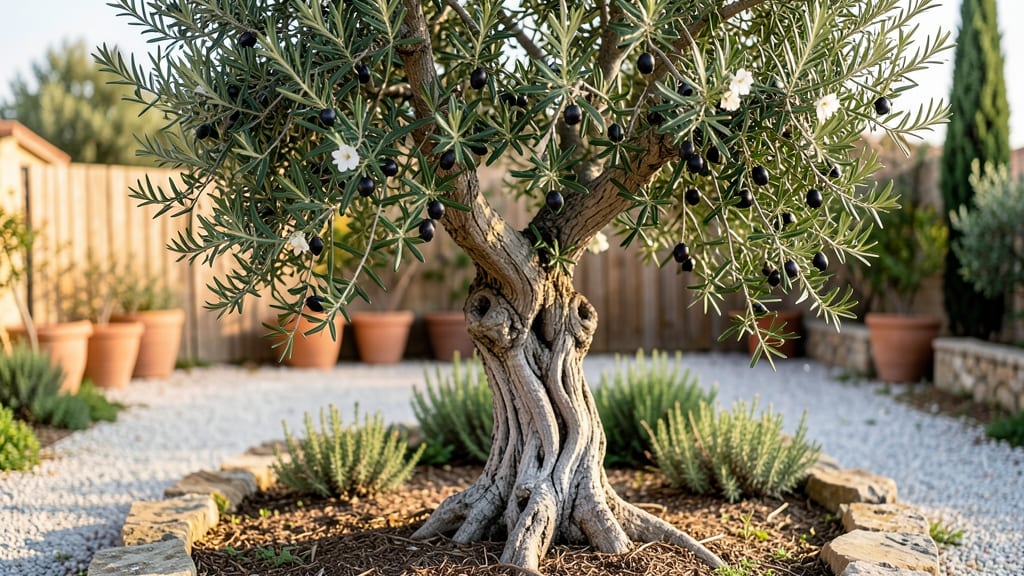
An olive tree 🫒 can grow anywhere from 15 feet to over 50 feet tall, depending on its variety and growing conditions.
If you're dreaming of growing your own olive tree but wondering whether it will dwarf your backyard or tower over your home, the answer depends on the variety—and where you live.
Standard varieties like the Manzanillo can reach 50 feet or more, while dwarf cultivars like 'Little Ollie' stay compact at just 8-12 feet. Even within the same species, factors like pruning, soil quality, and climate play a huge role in how tall your tree will grow.
In this guide, I’ll break down the height ranges for common olive tree varieties, how to control growth in small spaces, and the best practices for keeping your tree healthy—no matter how big (or small) you want it to be.


Olive tree height by variety: dwarf vs standard vs giant sizes
Choosing an olive tree variety is like picking your future backyard skyline—some will stretch toward the sky while others stay cozy and compact. The mature height of an olive tree can vary dramatically, from 8-foot dwarf varieties perfect for containers to 50-foot giants that need acres of space.
Your selection depends on whether you're dreaming of a potted patio centerpiece or a shade-providing landscape staple.
The key to controlling height lies in two factors: the scion variety (the top part of the tree you see) and the rootstock (the hidden underground foundation). Grafting a desirable scion onto a dwarfing rootstock can turn a 30-foot Manzanillo into a manageable 12-foot tree.
This technique is a game-changer for urban gardeners with limited space.
Arbequina olives are a favorite for small gardens because they naturally stay between 15-25 feet tall, while Mission olives can soar to 30-40 feet without intervention. Even within the same variety, a tree grown from seed might reach 50 feet, while a grafted specimen stays predictable. Let's break down the most popular varieties and their growth habits.
For container growing, 'Little Ollie' is my top recommendation—it stays under 12 feet even when grown in a 20-gallon pot. These dwarf varieties are often grafted onto Arbequina rootstock, which naturally restricts growth.
If you're planting in the ground, Arbequina is a balanced choice, reaching 15-25 feet while still producing abundant fruit.
Standard varieties like <
Climate zones and growth factors: how location affects olive tree height
Your olive tree’s mature height isn’t just about the variety—it’s heavily influenced by your local climate. Native to Mediterranean regions, olive trees thrive where summers are hot and dry, but they struggle in extreme cold or humidity.
In USDA zones 8-10, they grow tallest, while zones 6-7 require cold-hardy varieties or winter protection to reach even half their potential height.
In Mediterranean climates (like California or coastal Spain), standard varieties like Manzanillo can reach 40-50 feet with minimal pruning.
But in non-Mediterranean zones (e.g., Florida’s heat or Pacific Northwest’s mild winters), growth slows, and trees often max out at 20-30 feet unless you prune aggressively. Seasonal temperature swings also play a role—rapid shifts can stunt growth or stress roots.
Cold-hardy varieties like 'Arbequina' or 'Frantoio' tolerate USDA zone 7 with winter mulching, but they’ll still grow 20-30% slower than in zone 9. Heat-tolerant types (e.g., 'Mission') thrive in zone 10+ but may suffer in high humidity, leading to fungal issues that indirectly limit height.
If you’re in a non-Mediterranean zone, choose dwarf grafted varieties (e.g., 'Little Ollie') to keep heights under 12 feet. These are grafted onto dwarfing rootstock like 'Olea europaea 'Sylvestris', which naturally limits growth.
Even in ideal zones, pruning in late winter can reduce height by 30-50%—perfect for small yards.
For container growing, height is easier to control, but root-bound stress can stunt growth entirely. In zone 9+, expect 3-4 feet per year for standard trees, while zone 7 trees may only gain 6-12 inches annually.
Always mulch heavily in winter to protect roots and encourage upward growth in spring.
Pro tip: Monitor leaf drop—excessive shedding signals climate stress, which slows height gain. In humid zones, watch for olive knot disease, which weakens trees and limits their ability to reach full height. A south-facing location maximizes sun exposure, helping trees grow taller faster.